
- Posizione BGG
- BGG #1950
- Valutazione BGG
- 7,0
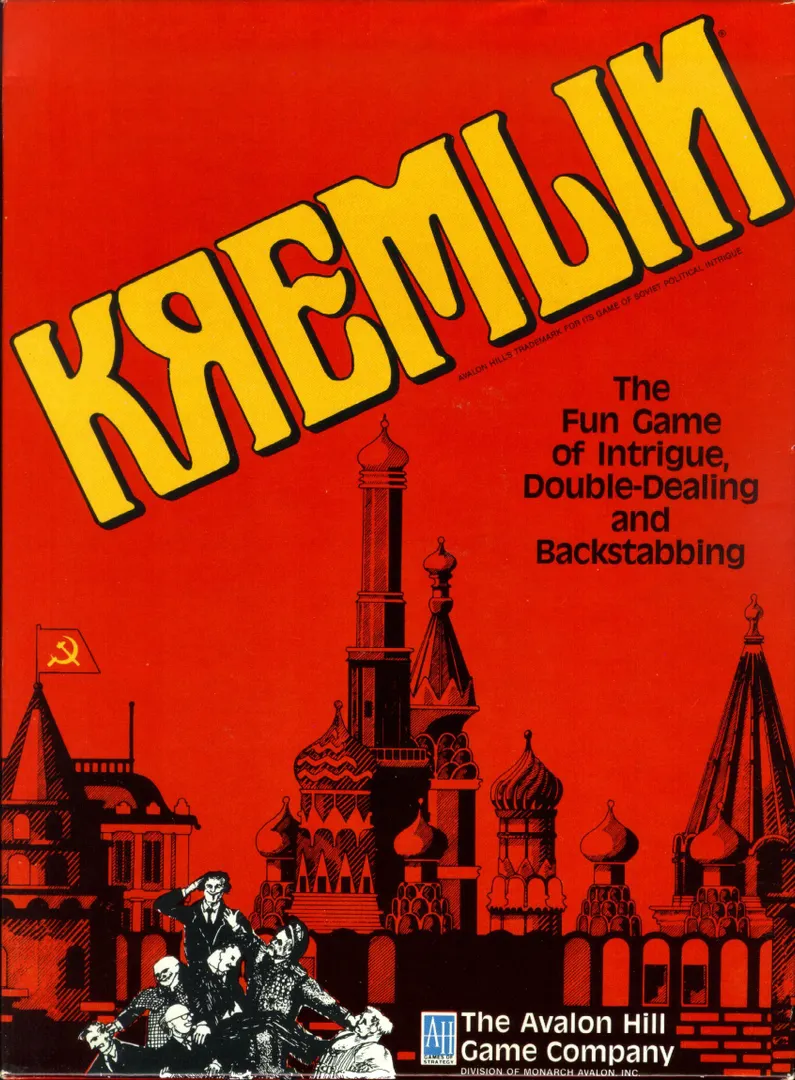
Kremlin
- 3–6 giocatori
- 75 min
- Complessità 2,9/5
- 1986
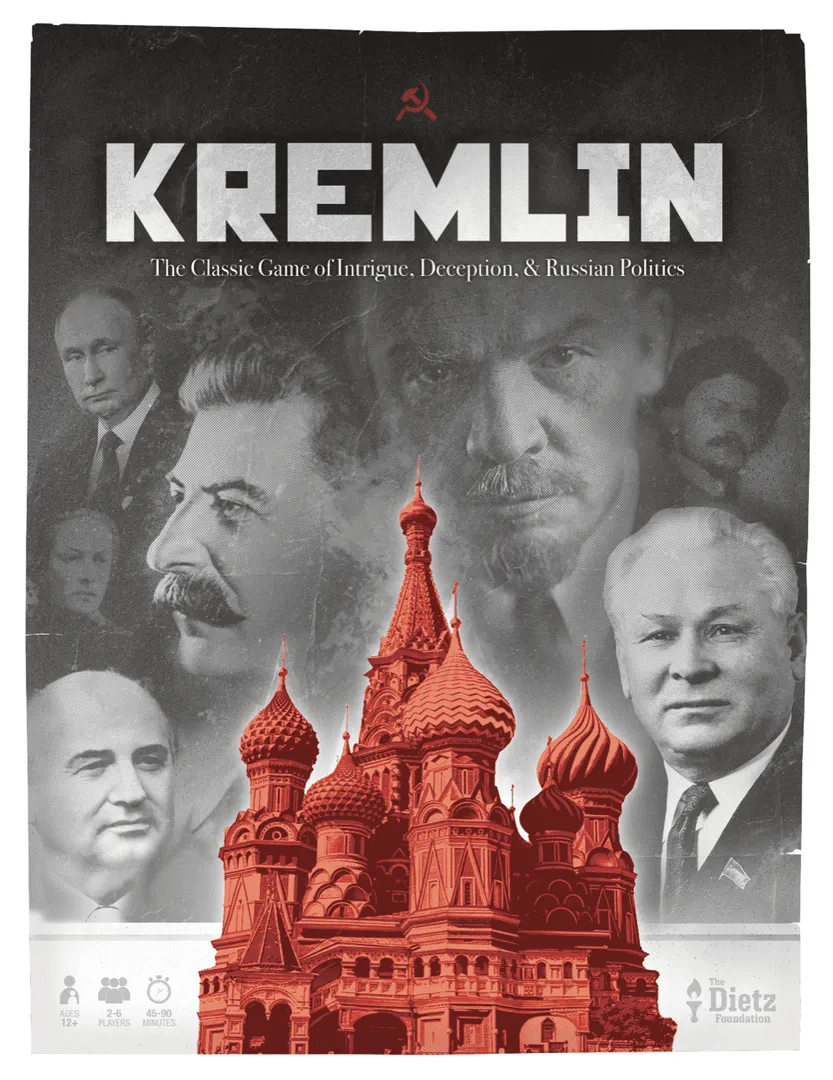
2014
Aiuto con le regole di Kremlin (Fourth Edition)
Spiegazioni chiare di turni, effetti delle carte e situazioni dubbie, con riferimenti alle fonti ufficiali e cronologia delle domande salvata.
Per 2 giocatori
Cosa vuoi sapere?
Le risposte vengono dal regolamento ufficiale, con la pagina da verificare.
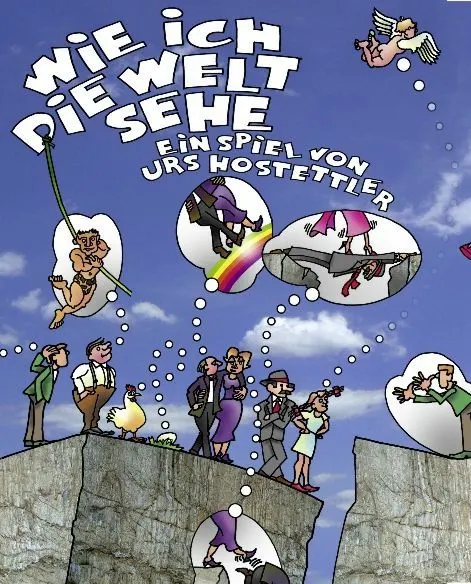
Kremlin (Fourth Edition) è un gioco da tavolo pubblicato nel 2014 per 2–6 giocatori, con partite da 45 a 90 minuti e dai 12 anni in su. È stato ideato da Urs Hostettler e le sue meccaniche principali sono Hand Management, Secret Unit Deployment e Voting.

In inglese
Originally released by Fata Morgana in the 1980s, KREMLIN is a European-style boardgame where players compete to control the Communist Party of the Soviet Union. The Jolly Roger KREMLIN features updated art and better components created in the style of 1930s Soviet poster propaganda. This edition has an error on the board that has the name of the game covering part of the graphics and text on the board. Kremlin is played for up to ten turns, ending as soon as the Party Chief successfully waves three times at the May Day Parade or when so many politicians are dead or in Siberia that the Party Chief can disband the Politburo and take complete power for himself. Each turn has phases. The most important of these are the KGB trials (which can send party members to Siberia or the cemetery) and the Defense Ministry's Spy Investigations which can also force politicians on a winter's gulag holiday. With the KGB, the catch is that the higher up the ladder the target, the more difficult to bring down, and Party Chiefs tend to change KGB leaders who take shots at the top... For the Defense Minister, his investigations require a trial to be successful--and a guilty vote, and that isn't always possible in the Central Committee. The catch? Players allot influence secretly at the start of the game and don't reveal it until it is used, meaning no one knows who controls the KGB or any other ministry, not until Influence is revealed--and even then, who knows who still has undeclared influence on that person? It is possible that players can swap control back and forth over the KGB chief even as he is trying to determine who to assassinate! Once the carnage is done, players have to survive the ravages of aging--and every time a politician takes action, he ages faster than normal...your 50 yr old star of the party? Well, suddenly he's acting like he's 83, Comrade. Life near the top will do that to you. In the Health phase, politicians may die or grow sick--sick politicians can choose to go to the hospital, but while there, they exert no influence and their responsibilities pass on to other politicians. Sometimes this means your man must make the heroic sacrifice to the Rodina and remain on the job even while at death's door. Once we know who is still alive, the Party Chief is allowed to move politicians between posts. After all, he's in control of the bureaucracy. He can move people up and down, and when he's done, upper ministers do so as well--but can only affect politicians below them on the food chain. Heck, politicians can even sponsor comrades in exile in Siberia to come back to the People. Of course, each person you bring back ages you five years....want to bring back five? Age 25 years in the blink of an eye, Tovarich. Intrigue cards allow you to take control of situations or foil other players' schemes. In one of the older versions, you could have things like Chernobyl take place in 1920. That's been corrected--so that while events may be the same, they have now been made era-appropriate. The turn ends with the May Day Parade. If the party chief is healthy, he can wave throughout the day making people happy--clearly our socialist union is prospering. But if he's sick, sometimes he leaves early and is unable to wave, sending doubts through the ranks. If a faction (player) earns three waves, they win the game. The Jolly Roger version provides three different KREMLIN games in one box. The 'original' with fictional politicians, set in a USSR where KGB investigations send those found guilty to Siberia. This version will have victory conditions based on the original Fata Morgana rules. A version inspired by the Avalon Hill variant titled 'Revolution'. Set in the 1920s, it uses historical politicians as well as fictional politicians. It's a more violent game as those arrested by the KGB are shot and removed from the game. A new version, set in the modern USSR and Russia, an era of entrenched bureaucracy and alternatives for escaping KGB persecution. This version introduces the concept of "Going into Exile" to avoid Siberia. It also includes modern politicians from the 1960s onwards, whether it is Kosygin or Putin and Gorbachev.
Secondo il catalogo, Kremlin (Fourth Edition) supporta da 2 a 6 giocatori. L’intervallo corrisponde al numero di giocatori indicato dall’editore, quindi il gioco si può preparare per qualsiasi gruppo entro quei limiti. Preparazione, alcune regole e punteggio possono comunque variare in base al numero di giocatori: controlla la configurazione esatta nel regolamento della tua edizione.
La durata indicata per Kremlin (Fourth Edition) è di 45–90 minuti, la stima dell’editore per una partita completa. La durata effettiva dipende dal gruppo, dal numero di giocatori e dalla conoscenza delle regole: le prime partite durano di più, i gruppi esperti finiscono prima. Preparazione e spiegazione delle regole non sono comprese nella stima.
Il catalogo indica Kremlin (Fourth Edition) dai 12 anni in su. È la raccomandazione dell’editore e tiene conto della lettura richiesta, della complessità delle regole e dei componenti piccoli, non solo del tema. I più giovani spesso possono giocare con l’aiuto di un adulto: controlla l’età consigliata sulla tua edizione e l’esperienza del tuo gruppo con i giochi da tavolo.
Kremlin (Fourth Edition) ha un punteggio di complessità di 2,4 su 5 secondo i giocatori di BoardGameGeek, il che lo rende un gioco piuttosto leggero. Il punteggio riflette quanta conoscenza delle regole, pianificazione e decisioni richiede una partita tipica. I giochi impegnativi richiedono una prima spiegazione più lunga, quindi conviene usare una guida di preparazione.
Kremlin (Fourth Edition) appartiene a queste categorie: Humor, Bluffing e Political. Le sue meccaniche principali sono Hand Management, Secret Unit Deployment e Voting. Le categorie descrivono il tema e l’ambientazione di un gioco, mentre le meccaniche descrivono ciò che i giocatori fanno davvero nel proprio turno. Ogni meccanica porta a una pagina del catalogo con giochi simili.
Gli autori accreditati di Kremlin (Fourth Edition) sono: Urs Hostettler. Questi crediti provengono dai dati pubblicati del gioco e indicano le persone responsabili della sua progettazione, non gli illustratori o gli editori. Le pagine degli autori su MeepleRules raccolgono altri titoli degli stessi autori, utili quando un gioco ti piace e ne cerchi di simili.
Il catalogo classifica Kremlin (Fourth Edition) come gioco base. Si gioca da solo con i componenti presenti nella scatola e non richiede altri titoli. Le espansioni, se esistono, aggiungono nuovo contenuto o nuove regole e sono elencate separatamente nel catalogo con un collegamento a questo gioco base.