

- Posizione BGG
- BGG #6965
- Valutazione BGG
- 7,4
Stalingrad: Inferno on the Volga
- 1–3 giocatori
- 30–60 min
- Complessità 2,3/5
- 2018
2017
Aiuto con le regole di Leningrad '41
Spiegazioni chiare di turni, effetti delle carte e situazioni dubbie, con riferimenti alle fonti ufficiali e cronologia delle domande salvata.
Per 1 giocatore
Cosa vuoi sapere?
Le risposte vengono dal regolamento ufficiale, con la pagina da verificare.
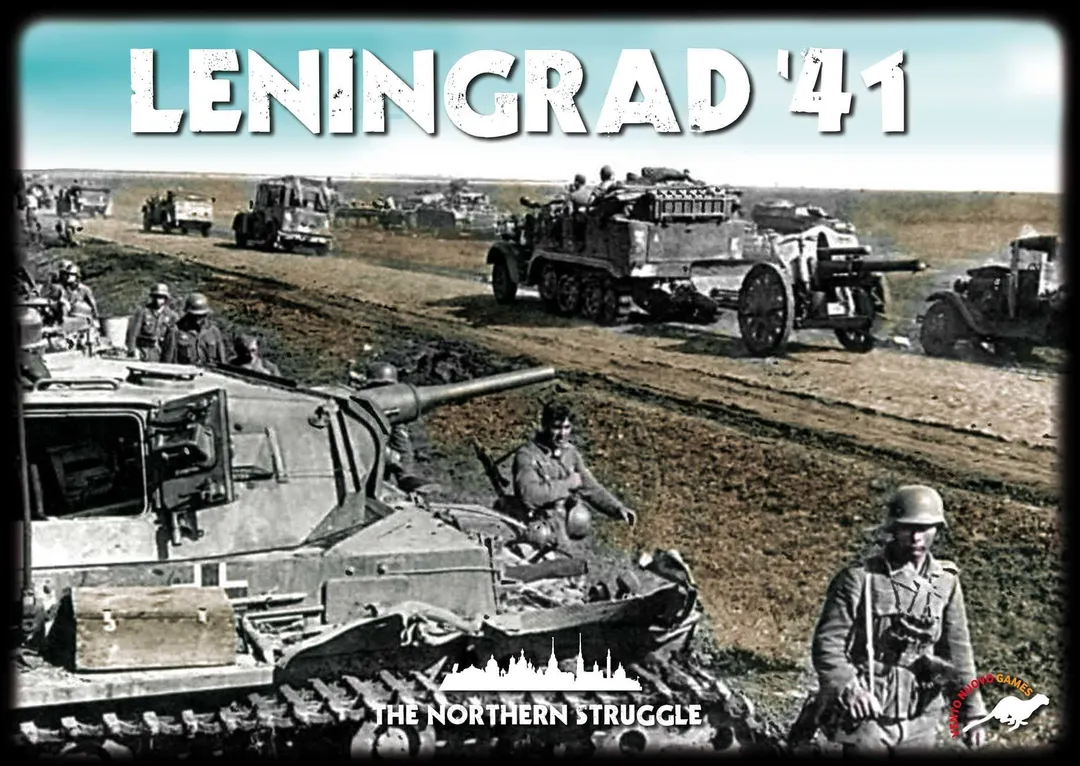
Leningrad '41 è un gioco da tavolo pubblicato nel 2017 per 1–2 giocatori, con partite da 30 a 120 minuti e dai 10 anni in su. È stato ideato da Emanuele Santandrea e le sue meccaniche principali sono Area Movement, Dice Rolling e Area Majority / Influence.


In inglese
This is VentoNuovo's continuation of the system created for Moscow '41, now looking at the campaign of Army Group North in Barbarossa. The final chapter of the Trilogy is Kiev '41. Players take either the German or Soviet Union forces and use colorful wooden blocks to simulate the forces they have involved. Leningrad '41 uses the same basic game engine of Moscow '41, with a few tweaks and changes to suit the differing conditions in the north. The game brings new wrinkles in as well because the Germans have "allies" as part of their forces-- the small but powerful Finnish Army which sought to recover territory lost in the "Winter War" but did not fully match the ambitions of Germany at destroying the U.S.S.R. Four weeks after the commencement of Barbarossa, Hitler visited the headquarters of Army Group North. The Führer’s words were dutifully noted in the army group’s war diary, and culminated in the following observation: “…the loss of Leningrad might result in a complete collapse.” By the end of the third week in July the capture of Leningrad did indeed seem inevitable. The Germans had already covered more than half the distance to the city. And yet, as they advanced into the vastness of Russia, it appeared that everyone on the Axis side of things had a different plan; and as time went by, those plans had a habit of changing. Hitler did not want his tanks entering the city; but then, he did not want his infantry engaged in prolonged street fighting either. So, after another think about things, the Führer decided the city should be simply cut off and starved, or relentlessly bombarded and starved… or the Finns would be welcome to breach Lake Lagoda and flood it. Whatever the means, the Führer purposed that the “Cradle of Bolshevism” was to be wiped off the face of the earth, and its population left to dwindle away to nothing. The problem was, despite the rush of victories, or perhaps because of them, the Germans had precious little idea what to do next. Halder wrote that July: “…there seem to certain differences in von Leeb’s and Hoepner’s views of what the next moves should be.” They waited to be told what to do, or argued between themselves. Manstein, commanding one of Army Group North’s panzer corps, knew what to do, but he was not in charge of the operation. Delays accrued, brought on by lack of supply and the first recovery of Soviet forces. Already within one short drive of Leningrad, the Finns were meant to help, but the Finns had their own plans; and, for the time being, they did not involve doing more than reclaiming what they had lost in the Winter War. And what of Stalin? Beyond the speeches, the threats and the executions, he sent Zhukov to the city in early September 1941, and there the man who would eventually oversee the fall of Berlin organized the workers’ militias and planned a defence that was meant to face the expected German onslaught - an onslaught, which as the weeks went by, never actually came. As the German player, in reaching for a victory that will have meaning, you are up against the clock, the terrain, and alongside Soviet resistance, the loss of units that some other bright idea from somewhere else will impose upon you. The forces of Army Group North are not huge, so you must act to avoid your units being dispersed, and have victory in your grasp before another plan takes the panzers away from you. As the Soviet player you must know what to defend and what to abandon. You cannot be strong everywhere. Limited time is the best ally of those defending with limited forces. Encourage the Germans to use their time up.
Secondo il catalogo, Leningrad '41 supporta da 1 a 2 giocatori. L’intervallo corrisponde al numero di giocatori indicato dall’editore, quindi il gioco si può preparare per qualsiasi gruppo entro quei limiti. Preparazione, alcune regole e punteggio possono comunque variare in base al numero di giocatori: controlla la configurazione esatta nel regolamento della tua edizione.
La durata indicata per Leningrad '41 è di 30–120 minuti, la stima dell’editore per una partita completa. La durata effettiva dipende dal gruppo, dal numero di giocatori e dalla conoscenza delle regole: le prime partite durano di più, i gruppi esperti finiscono prima. Preparazione e spiegazione delle regole non sono comprese nella stima.
Il catalogo indica Leningrad '41 dai 10 anni in su. È la raccomandazione dell’editore e tiene conto della lettura richiesta, della complessità delle regole e dei componenti piccoli, non solo del tema. I più giovani spesso possono giocare con l’aiuto di un adulto: controlla l’età consigliata sulla tua edizione e l’esperienza del tuo gruppo con i giochi da tavolo.
Leningrad '41 ha un punteggio di complessità di 2,6 su 5 secondo i giocatori di BoardGameGeek, il che lo rende un gioco piuttosto leggero. Il punteggio riflette quanta conoscenza delle regole, pianificazione e decisioni richiede una partita tipica. I giochi impegnativi richiedono una prima spiegazione più lunga, quindi conviene usare una guida di preparazione.
Leningrad '41 appartiene a queste categorie: Wargame e World War II. Le sue meccaniche principali sono Area Movement, Dice Rolling e Area Majority / Influence. Le categorie descrivono il tema e l’ambientazione di un gioco, mentre le meccaniche descrivono ciò che i giocatori fanno davvero nel proprio turno. Ogni meccanica porta a una pagina del catalogo con giochi simili.
Gli autori accreditati di Leningrad '41 sono: Emanuele Santandrea. Questi crediti provengono dai dati pubblicati del gioco e indicano le persone responsabili della sua progettazione, non gli illustratori o gli editori. Le pagine degli autori su MeepleRules raccolgono altri titoli degli stessi autori, utili quando un gioco ti piace e ne cerchi di simili.
Il catalogo classifica Leningrad '41 come gioco base. Si gioca da solo con i componenti presenti nella scatola e non richiede altri titoli. Le espansioni, se esistono, aggiungono nuovo contenuto o nuove regole e sono elencate separatamente nel catalogo con un collegamento a questo gioco base.