
- Posizione BGG
- BGG #14.254
- Valutazione BGG
- 7,3
Afrikakorps: Decision in the Desert, 1941-42
- 1–2 giocatori
- 240 min
- Complessità 2,4/5
- 2010
2007
Aiuto con le regole di Manila '45: Stalingrad of the Pacific
Spiegazioni chiare di turni, effetti delle carte e situazioni dubbie, con riferimenti alle fonti ufficiali e cronologia delle domande salvata.
Per 2 giocatori
Cosa vuoi sapere?
Le risposte vengono dal regolamento ufficiale, con la pagina da verificare.
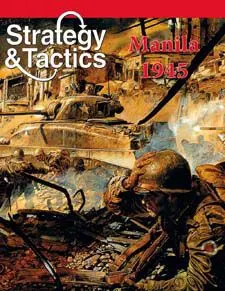
Manila '45: Stalingrad of the Pacific è un gioco da tavolo pubblicato nel 2007 per 2 giocatori, con partite da 180 minuti e dai 12 anni in su. È stato ideato da Joseph Miranda e Ty Bomba e le sue meccaniche principali sono Hexagon Grid.
In inglese
Manila '45: Stalingrad of the Pacific (M'45), is a two-player, low-to-intermediate complexity wargame that simulates the American liberation of the capital of the Philippines in World War II, which took place from 3 February to 4 March 1945. To control complexity and present an overall-force-commander's-view of the battle, the game uses a tactically scaled map and units of maneuver coupled with an operationally scaled game turn length. The American player is generally on the offensive, trying to clear the entire Japanese defending force from the city prior to the end of the game. Each game turn of M'45 equals three days. Each hexagon on the map represents 0.3 miles (0.5 km) from side to opposite side. The units of maneuver in the game are companies, batteries and battalions, representing anywhere from a about 100 to 1,000 men and their equipment. Historically the Japanese fought to the last man (literally, not metaphorically), and the game's victory conditions represent that brutally absolute mindset. To determine the winner, both players examine the map at the end of Game Turn 10. If at that time there's one or more Japanese units still in play anywhere, the Japanese player is declared to have won the game. If there are no Japanese units left on the map at that time, the US player is declared to have won the game. Of course, if all Japanese units are wiped out prior to the end of the last game turn, play stops and the US player is declared the victor. No draws are possible. Tacticians will enjoy the fact there are 22 unit types in the game: heavy artillery, heavy anti-aircraft, heavy mortar, heavy rocket artillery, naval infantry (armed ship crews), regular infantry, combat engineers, heavy weapons (machineguns), anti-aircraft, military police, anti-tank, field artillery, rear echelon ad hoc infantry, glider infantry, paratroopers, bridging engineers, mortars, armored cavalry, tanks, self-propelled artillery, amphibious tractors, and self-propelled anti-tank.
Secondo il catalogo, Manila '45: Stalingrad of the Pacific supporta 2 giocatori. È il numero di giocatori indicato dall’editore, quindi il gioco è pensato esattamente per quel numero di partecipanti. Le varianti per gruppi di altre dimensioni, se esistono, sono descritte nel regolamento della tua edizione: consultalo prima di preparare una configurazione diversa.
La durata indicata per Manila '45: Stalingrad of the Pacific è di 180 minuti, la stima dell’editore per una partita completa. La durata effettiva dipende dal gruppo, dal numero di giocatori e dalla conoscenza delle regole: le prime partite durano di più, i gruppi esperti finiscono prima. Preparazione e spiegazione delle regole non sono comprese nella stima.
Il catalogo indica Manila '45: Stalingrad of the Pacific dai 12 anni in su. È la raccomandazione dell’editore e tiene conto della lettura richiesta, della complessità delle regole e dei componenti piccoli, non solo del tema. I più giovani spesso possono giocare con l’aiuto di un adulto: controlla l’età consigliata sulla tua edizione e l’esperienza del tuo gruppo con i giochi da tavolo.
Manila '45: Stalingrad of the Pacific ha un punteggio di complessità di 2,4 su 5 secondo i giocatori di BoardGameGeek, il che lo rende un gioco piuttosto leggero. Il punteggio riflette quanta conoscenza delle regole, pianificazione e decisioni richiede una partita tipica. I giochi impegnativi richiedono una prima spiegazione più lunga, quindi conviene usare una guida di preparazione.
Manila '45: Stalingrad of the Pacific appartiene a queste categorie: Wargame e World War II. Le sue meccaniche principali sono Hexagon Grid. Le categorie descrivono il tema e l’ambientazione di un gioco, mentre le meccaniche descrivono ciò che i giocatori fanno davvero nel proprio turno. Ogni meccanica porta a una pagina del catalogo con giochi simili.
Gli autori accreditati di Manila '45: Stalingrad of the Pacific sono: Joseph Miranda e Ty Bomba. Questi crediti provengono dai dati pubblicati del gioco e indicano le persone responsabili della sua progettazione, non gli illustratori o gli editori. Le pagine degli autori su MeepleRules raccolgono altri titoli degli stessi autori, utili quando un gioco ti piace e ne cerchi di simili.
Il catalogo classifica Manila '45: Stalingrad of the Pacific come gioco base. Si gioca da solo con i componenti presenti nella scatola e non richiede altri titoli. Le espansioni, se esistono, aggiungono nuovo contenuto o nuove regole e sono elencate separatamente nel catalogo con un collegamento a questo gioco base.