
- Posizione BGG
- BGG #916
- Valutazione BGG
- 7,0
K2
- 1–5 giocatori
- 60 min
- Complessità 2,3/5
- 2010
2013
Aiuto con le regole di Mount Everest
Spiegazioni chiare di turni, effetti delle carte e situazioni dubbie, con riferimenti alle fonti ufficiali e cronologia delle domande salvata.
Per 2 giocatori
Cosa vuoi sapere?
Le risposte vengono dal regolamento ufficiale, con la pagina da verificare.
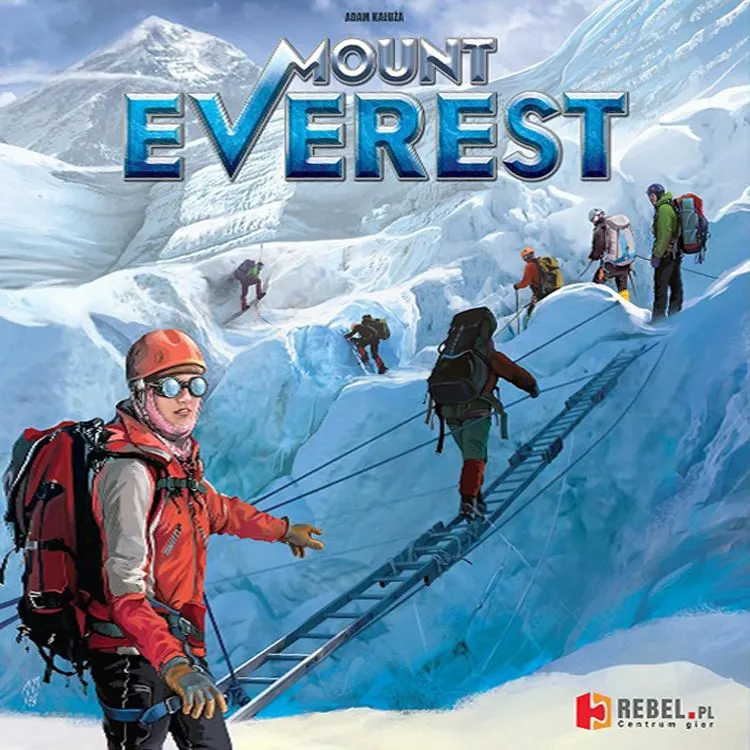
Mount Everest è un gioco da tavolo pubblicato nel 2013 per 2–5 giocatori, con partite da 90 minuti e dai 10 anni in su. È stato ideato da Adam Kałuża e le sue meccaniche principali sono Hand Management, Simultaneous Action Selection e Pick-up and Deliver.



In inglese
Mount Everest, Earth's highest mountain – to this day it's been climbed by almost 4,000 alpinists from around the world, with more and more coming each year. Most of them are tourists without the experience or skills needed to climb an eight-thousander. Without proper help they wouldn't make it to the Himalayas, let alone brave the mighty Chomolungma. Fortunately, that's where you come in, an experienced mountaineer and mountain guide. You've got Broad Peak, K2 and other eight-thousanders under your belt, and you've climbed Mount Everest several times. This time you face a far greater challenge: You must lead a bunch of tourists to the peak and safely get them back to base. You gaze at the mountain and you know this to be true – what is child's play for you might be the last adventure of your clients. You must plan where to set up camp and how to deal with acclimatization, who to take up to the peak and when, and who to lead down the mountain. When you look at your clients' enthusiastic faces, you know that their lives are in your hands. In Mount Everest players take control of a team of two expert mountaineers who must lead as many tourists as they can to the peak and, of course, safely bring them back. Each player gets an identical deck of cards that are used for moving around the board. Players must decide where to set up camps and how much oxygen to bring to the top; only oxygen lets players get acclimatization cards, which allow tourists to survive the climb. Players must also decide what type of customers they want: the athletic, fairly competent climbers, or the wealthier and more prestigious amateurs. Climbing with one tourist in tow is easy, but the key to victory lies in guiding whole groups. Unfortunately, the more people you take with you, the higher the likelihood is of something going wrong. Also, as it is in the mountains, the weather will be a crucial factor. If a player can coordinate an expedition that avoids a crisis at the peak, he should be able to lead the happy tourists back to base. Who will become the best Himalayan guide?
Secondo il catalogo, Mount Everest supporta da 2 a 5 giocatori. L’intervallo corrisponde al numero di giocatori indicato dall’editore, quindi il gioco si può preparare per qualsiasi gruppo entro quei limiti. Preparazione, alcune regole e punteggio possono comunque variare in base al numero di giocatori: controlla la configurazione esatta nel regolamento della tua edizione.
La durata indicata per Mount Everest è di 90 minuti, la stima dell’editore per una partita completa. La durata effettiva dipende dal gruppo, dal numero di giocatori e dalla conoscenza delle regole: le prime partite durano di più, i gruppi esperti finiscono prima. Preparazione e spiegazione delle regole non sono comprese nella stima.
Il catalogo indica Mount Everest dai 10 anni in su. È la raccomandazione dell’editore e tiene conto della lettura richiesta, della complessità delle regole e dei componenti piccoli, non solo del tema. I più giovani spesso possono giocare con l’aiuto di un adulto: controlla l’età consigliata sulla tua edizione e l’esperienza del tuo gruppo con i giochi da tavolo.
Mount Everest ha un punteggio di complessità di 2,7 su 5 secondo i giocatori di BoardGameGeek, il che lo rende un gioco piuttosto leggero. Il punteggio riflette quanta conoscenza delle regole, pianificazione e decisioni richiede una partita tipica. I giochi impegnativi richiedono una prima spiegazione più lunga, quindi conviene usare una guida di preparazione.
Mount Everest appartiene a queste categorie: Exploration, Transportation e Environmental. Le sue meccaniche principali sono Hand Management, Simultaneous Action Selection e Pick-up and Deliver. Le categorie descrivono il tema e l’ambientazione di un gioco, mentre le meccaniche descrivono ciò che i giocatori fanno davvero nel proprio turno. Ogni meccanica porta a una pagina del catalogo con giochi simili.
Gli autori accreditati di Mount Everest sono: Adam Kałuża. Questi crediti provengono dai dati pubblicati del gioco e indicano le persone responsabili della sua progettazione, non gli illustratori o gli editori. Le pagine degli autori su MeepleRules raccolgono altri titoli degli stessi autori, utili quando un gioco ti piace e ne cerchi di simili.
Il catalogo classifica Mount Everest come gioco base. Si gioca da solo con i componenti presenti nella scatola e non richiede altri titoli. Le espansioni, se esistono, aggiungono nuovo contenuto o nuove regole e sono elencate separatamente nel catalogo con un collegamento a questo gioco base.