
- Posizione BGG
- BGG #3170
- Valutazione BGG
- 7,4
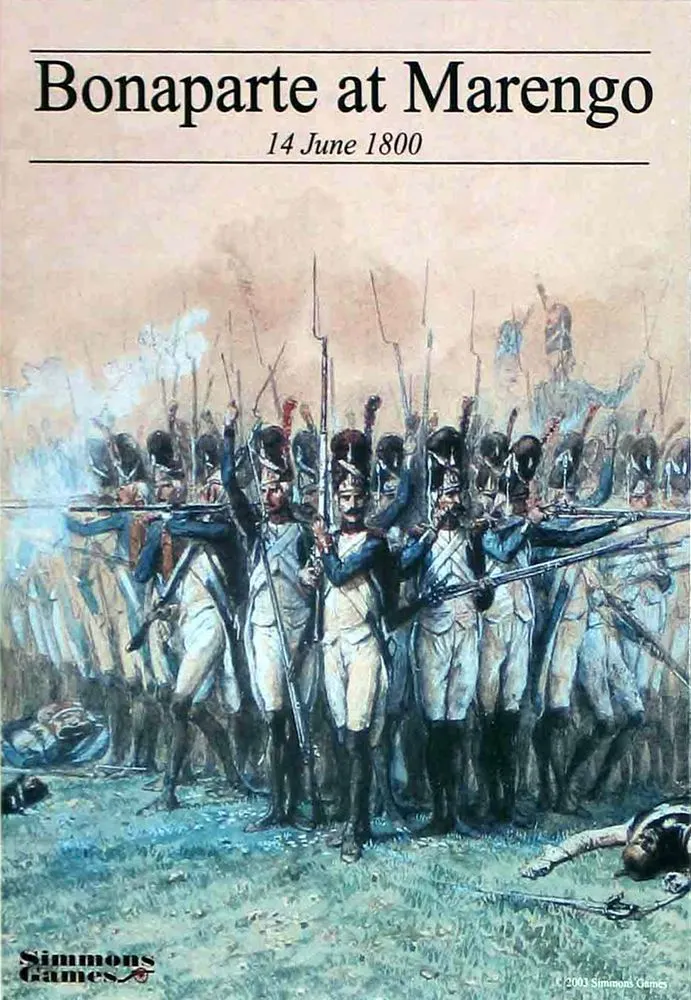
Bonaparte at Marengo
- 2 giocatori
- 120 min
- Complessità 3,2/5
- 2003
2007
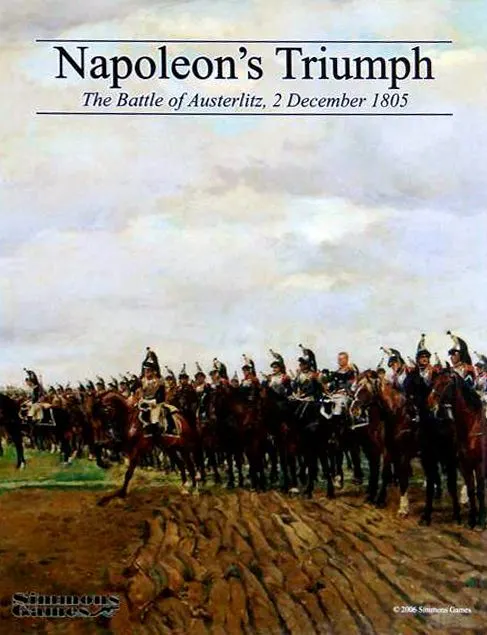
Aiuto con le regole di Napoleon's Triumph: The Battle of Austerlitz, 2 December 1805
Spiegazioni chiare di turni, effetti delle carte e situazioni dubbie, con riferimenti alle fonti ufficiali e cronologia delle domande salvata.
Per 2 giocatori
Cosa vuoi sapere?
Le risposte vengono dal regolamento ufficiale, con la pagina da verificare.
Napoleon's Triumph: The Battle of Austerlitz, 2 December 1805 è un gioco da tavolo pubblicato nel 2007 per 2 giocatori, con partite da 180 minuti e dai 12 anni in su. È stato ideato da Bowen Simmons e le sue meccaniche principali sono Area Movement, Secret Unit Deployment e Simulation.


In inglese
(From the publisher) Napoleon’s Triumph is built on the same foundations as its acclaimed predecessor, Bonaparte at Marengo, but is bigger and grander in scale. It uses two boards to make a double-size 44" x 34" map of the Austerlitz battlefield and has twice as many pieces as the earlier game, but defying the tradition that big wargames must also take a long time to play, Napoleon’s Triumph can be played from start to finish in a single evening. From Back of Box On December 2, 1805, on the battlefield of Austerlitz, an outnumbered French army led by their newly crowned emperor, Napoleon, waited to receive an expected attack by a Russian and Austrian army commanded by the Russian Czar, Alexander. Napoleon lured the Allies into attacking with their left wing, and when the Allies did so, a surprise French counter-attack smashed the Allied right and centre, and then surrounded and destroyed the Allied left in one of the most famous and decisive battles in military history. Napoleon's Triumph re-creates that historic battle. Befitting its epic subject, Napoleon's Triumph is played on a double-sized 44" x34" map of the battlefield. In spite of the game's size, it is easy to learn and fast to play. The rules are only nine pages long, and the playing time is only two hours. Napoleon's Triumph is unique among big wargames in that players can learn the game, set it up, and play it to completion in a single evening. The game system is derived from its award-winning forebear, Bonaparte at Marengo. Like that game, Napoleon's Triumph breaks with almost all of the standard wargame conventions. It has no hex grid and terrain effects chart; terrain effects are designed into the map itself. It has no combat results table; combat is resolved through strength differential. It has no dice; tension comes from limited information and the outcome only depends on the players' decisions. Napoleon's Triumph is a unique wargame experience. It is large, yet fast-playing. It has simple rules, but deep game play that rewards both boldness of conception and attention to detail. It stays close enough to history to engross wargamers and other students of the period, while still being entertaining enough for even non-wargamers to enjoy. Napoleon's Triumph is not only easy to learn and fast and exciting to play, it also is a great looking game due to its exceptional component quality. The map is mounted on a heavy board cut in the German style so that the playing surface is durable, stable, and flat, without the valleys of American-style mounted boards or the buckling of paper boards. To represent opposing armies, the game comes with 140 wooden blocks, blue for the French and red for the Allies. Painted on each block are symbols that identify the type and strengths of the unit. The senior commanders of the opposing armies are represented by 18 metal flags; stickers are applied to mark the nationality and name of each commander. In play, Napoleon's Triumph combines the visual appeal of 19th century battle maps and military minatures, with columns and rows of units lined for movement and attack, accented by flags to indicate corps. The effect is simply stunning.
Secondo il catalogo, Napoleon's Triumph: The Battle of Austerlitz, 2 December 1805 supporta 2 giocatori. È il numero di giocatori indicato dall’editore, quindi il gioco è pensato esattamente per quel numero di partecipanti. Le varianti per gruppi di altre dimensioni, se esistono, sono descritte nel regolamento della tua edizione: consultalo prima di preparare una configurazione diversa.
La durata indicata per Napoleon's Triumph: The Battle of Austerlitz, 2 December 1805 è di 180 minuti, la stima dell’editore per una partita completa. La durata effettiva dipende dal gruppo, dal numero di giocatori e dalla conoscenza delle regole: le prime partite durano di più, i gruppi esperti finiscono prima. Preparazione e spiegazione delle regole non sono comprese nella stima.
Il catalogo indica Napoleon's Triumph: The Battle of Austerlitz, 2 December 1805 dai 12 anni in su. È la raccomandazione dell’editore e tiene conto della lettura richiesta, della complessità delle regole e dei componenti piccoli, non solo del tema. I più giovani spesso possono giocare con l’aiuto di un adulto: controlla l’età consigliata sulla tua edizione e l’esperienza del tuo gruppo con i giochi da tavolo.
Napoleon's Triumph: The Battle of Austerlitz, 2 December 1805 ha un punteggio di complessità di 3,7 su 5 secondo i giocatori di BoardGameGeek, il che lo rende un gioco di media complessità. Il punteggio riflette quanta conoscenza delle regole, pianificazione e decisioni richiede una partita tipica. I giochi impegnativi richiedono una prima spiegazione più lunga, quindi conviene usare una guida di preparazione.
Napoleon's Triumph: The Battle of Austerlitz, 2 December 1805 appartiene a queste categorie: Wargame e Napoleonic. Le sue meccaniche principali sono Area Movement, Secret Unit Deployment e Simulation. Le categorie descrivono il tema e l’ambientazione di un gioco, mentre le meccaniche descrivono ciò che i giocatori fanno davvero nel proprio turno. Ogni meccanica porta a una pagina del catalogo con giochi simili.
Gli autori accreditati di Napoleon's Triumph: The Battle of Austerlitz, 2 December 1805 sono: Bowen Simmons. Questi crediti provengono dai dati pubblicati del gioco e indicano le persone responsabili della sua progettazione, non gli illustratori o gli editori. Le pagine degli autori su MeepleRules raccolgono altri titoli degli stessi autori, utili quando un gioco ti piace e ne cerchi di simili.
Il catalogo classifica Napoleon's Triumph: The Battle of Austerlitz, 2 December 1805 come gioco base. Si gioca da solo con i componenti presenti nella scatola e non richiede altri titoli. Le espansioni, se esistono, aggiungono nuovo contenuto o nuove regole e sono elencate separatamente nel catalogo con un collegamento a questo gioco base.