
- Posizione BGG
- BGG #4750
- Valutazione BGG
- 6,9
British Rails
- 2–6 giocatori
- 180 min
- Complessità 2,6/5
- 1984
1992
Aiuto con le regole di Nippon Rails
Spiegazioni chiare di turni, effetti delle carte e situazioni dubbie, con riferimenti alle fonti ufficiali e cronologia delle domande salvata.
Per 2 giocatori
Cosa vuoi sapere?
Le risposte vengono dal regolamento ufficiale, con la pagina da verificare.
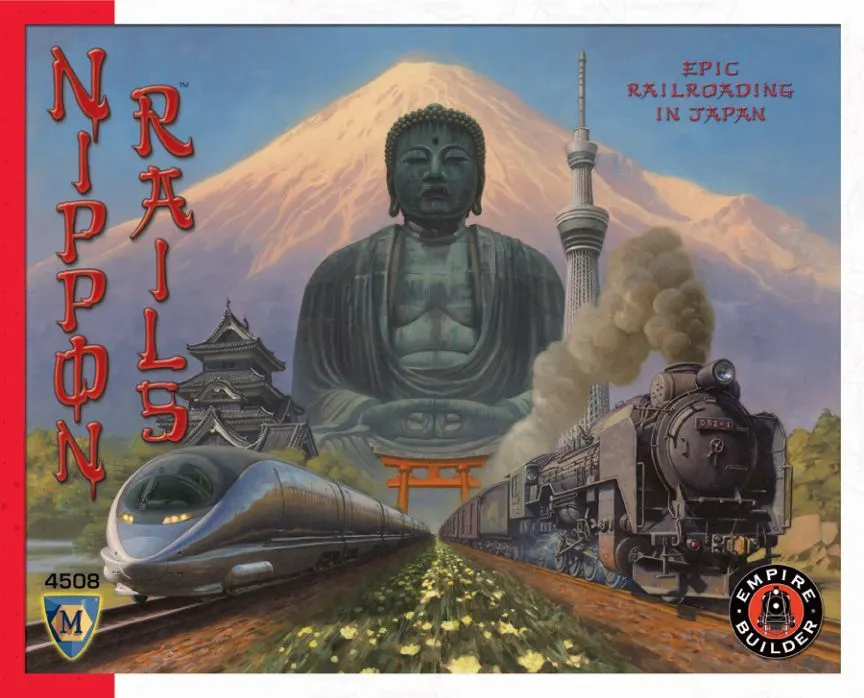
Nippon Rails è un gioco da tavolo pubblicato nel 1992 per 2–4 giocatori, con partite da 120 a 240 minuti e dai 10 anni in su. È stato ideato da Larry Roznai e Joe Roznai e le sue meccaniche principali sono Network and Route Building, Hexagon Grid e Pick-up and Deliver.

In inglese
Explore the ancient land of Nippon! Build a railroad empire in the land of the rising sun. Use your initial investment to build track. Then pick up commodities where they are grown, mined, or manufactured and deliver them to a lucrative place of demand. Complete a delivery and make the money you need to buy larger, faster trains, and expand your railroad empire. Win the game by building the most effective railroad empire! With the countless variations of play provided, Nippon Rails – an Empire Builder game and part of the crayon_rail_games series – provides a challenging region for the creation of your network. Obstacles are rival tracks and Japan's great mountains, channels, and rivers and restrictive coastline. Capture the can-do spirit of Japan and build an empire. Nippon Rails is considered to be among the more challenging maps, given many narrow portions that are susceptible to purposeful blockage by opponents. The design includes a unique tunnel feature that links the main island Honshu to the northern island Hokkaido. The second edition of Nippon Rails is for 2-3 players, with a variant that allows for play with up to six.
Secondo il catalogo, Nippon Rails supporta da 2 a 4 giocatori. L’intervallo corrisponde al numero di giocatori indicato dall’editore, quindi il gioco si può preparare per qualsiasi gruppo entro quei limiti. Preparazione, alcune regole e punteggio possono comunque variare in base al numero di giocatori: controlla la configurazione esatta nel regolamento della tua edizione.
La durata indicata per Nippon Rails è di 120–240 minuti, la stima dell’editore per una partita completa. La durata effettiva dipende dal gruppo, dal numero di giocatori e dalla conoscenza delle regole: le prime partite durano di più, i gruppi esperti finiscono prima. Preparazione e spiegazione delle regole non sono comprese nella stima.
Il catalogo indica Nippon Rails dai 10 anni in su. È la raccomandazione dell’editore e tiene conto della lettura richiesta, della complessità delle regole e dei componenti piccoli, non solo del tema. I più giovani spesso possono giocare con l’aiuto di un adulto: controlla l’età consigliata sulla tua edizione e l’esperienza del tuo gruppo con i giochi da tavolo.
Nippon Rails ha un punteggio di complessità di 2,6 su 5 secondo i giocatori di BoardGameGeek, il che lo rende un gioco piuttosto leggero. Il punteggio riflette quanta conoscenza delle regole, pianificazione e decisioni richiede una partita tipica. I giochi impegnativi richiedono una prima spiegazione più lunga, quindi conviene usare una guida di preparazione.
Nippon Rails appartiene a queste categorie: Economic, Trains e Transportation. Le sue meccaniche principali sono Network and Route Building, Hexagon Grid e Pick-up and Deliver. Le categorie descrivono il tema e l’ambientazione di un gioco, mentre le meccaniche descrivono ciò che i giocatori fanno davvero nel proprio turno. Ogni meccanica porta a una pagina del catalogo con giochi simili.
Gli autori accreditati di Nippon Rails sono: Larry Roznai e Joe Roznai. Questi crediti provengono dai dati pubblicati del gioco e indicano le persone responsabili della sua progettazione, non gli illustratori o gli editori. Le pagine degli autori su MeepleRules raccolgono altri titoli degli stessi autori, utili quando un gioco ti piace e ne cerchi di simili.
Il catalogo classifica Nippon Rails come gioco base. Si gioca da solo con i componenti presenti nella scatola e non richiede altri titoli. Le espansioni, se esistono, aggiungono nuovo contenuto o nuove regole e sono elencate separatamente nel catalogo con un collegamento a questo gioco base.