- Valutazione BGG
- 9,0
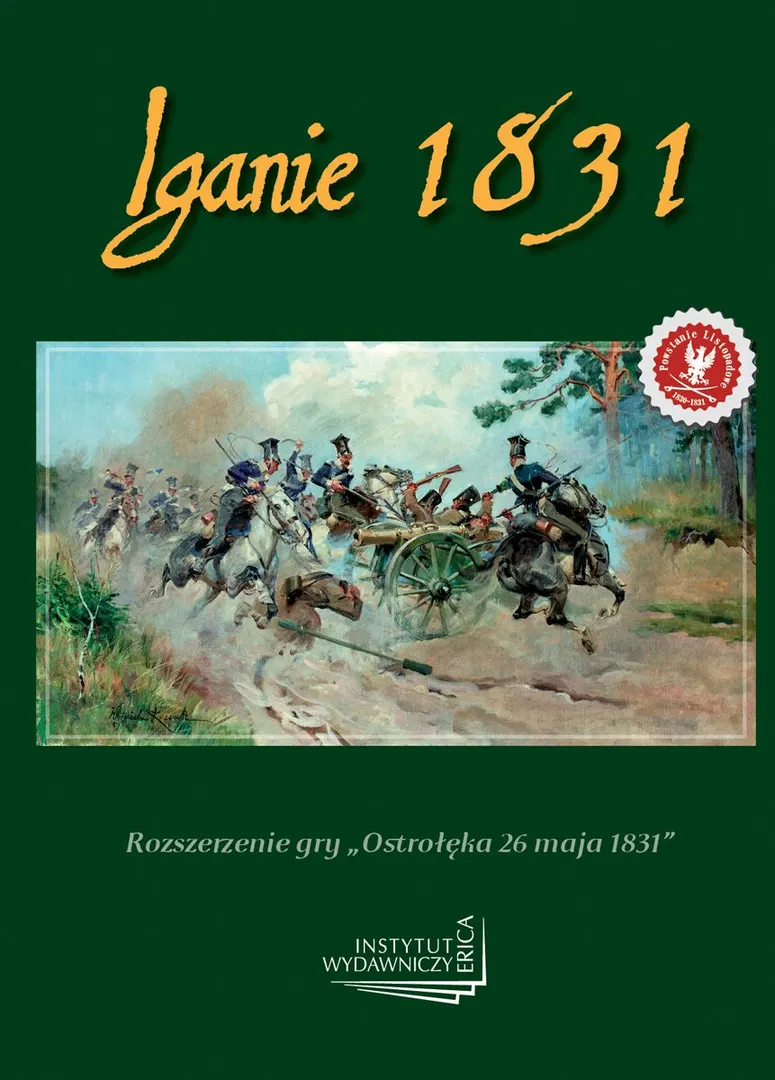
Iganie 1831
- 2 giocatori
- 150–240 min
- Complessità 3,4/5
- 2018
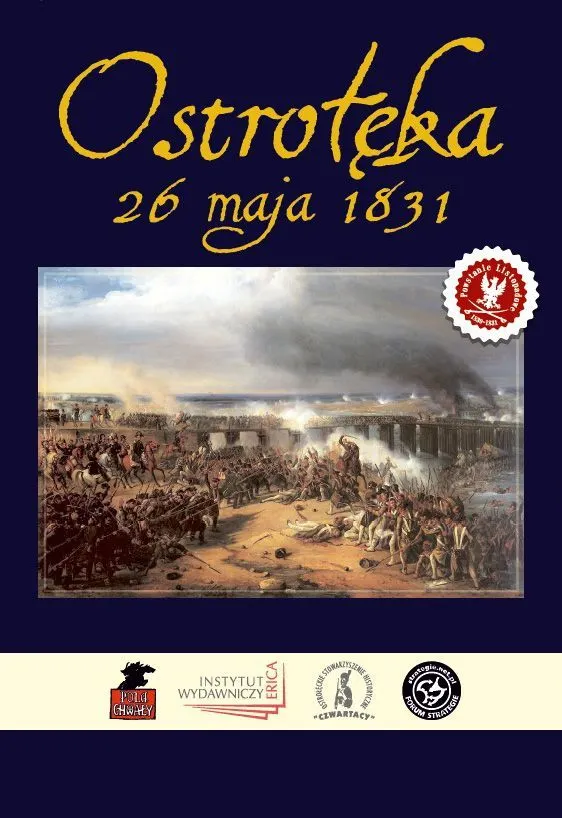
2015
Aiuto con le regole di Ostroleka 26 maja 1831
Spiegazioni chiare di turni, effetti delle carte e situazioni dubbie, con riferimenti alle fonti ufficiali e cronologia delle domande salvata.
Cosa vuoi sapere?
Le risposte vengono dal regolamento ufficiale, con la pagina da verificare.
Ostroleka 26 maja 1831 è un gioco da tavolo pubblicato nel 2015 per 2–4 giocatori, con partite da 180 a 600 minuti e dai 16 anni in su. È stato ideato da Ryszard Kita e le sue meccaniche principali sono Dice Rolling, Hexagon Grid e Variable Phase Order.






In inglese
Ostrołęka 26 maja 1831 covers the battle of Ostrołęka, one of the largest engagements of Poland’s November Uprising. It was fought between Polish army commanded by general Jan Skrzynecki and Russian army commanded by field marshal Ivan Diebitsch. The battle was the final part of the operation of Polish army against Russian Imperial Guard. The meeting near Ostrołęka was a bit suprising for both sides, especially for Poles who didn’t expect such quick appearance of Russian forces near their positions. Polish army was divided into two parts. The first part was situated on the eastern bank of the river Narew. The second, larger part was put on the western bank of the river. In Ostrołęka there were two bridges connecting both banks of the river (one of them was pontoon bridge). The first part of the battle was fought on the eastern bank of Narew. Polish forces tried to slow down an assault of Russians and withdraw to the western bank. Unfortunately, in consequence of earlier orders, one of Polish infantry brigades commanded by general Bogusławski was stayed to defend town Ostrołęka (situated on the eastern bank of the river), and there attacked by overwhelming Russians and partially routed, partially destroyed. Russians took control over Ostrołęka at noon. Then some Russian grenadier battalions decided to cross the river through the bridges to create a bridgehead for further operations. So started the second part of the battle. Polish main army began attacks to destroy Russian bridgehead and both brigdes to prevent main body of Russian army to cross the river. There were few attacks. At first they were not properly coordinated. Russian small forces on the bridgehead was supported by powerful artillery situated on the eastern bank of the river which was higher than western bank and allowed crossing fire (Russians formed two great batteries, one to the north and one to the south of Ostrołęka, and were shooting over own units on the western bank). In the later afternoon Polish attacks became more coordinated. Russians tried to gain more terrain, but it moved them out of the range of their supporting artillery and encouraged Polish army to make last, most powerful attack, which was stopped near to the river. The battle ended a famous charge of Polish horse artillery battery commanded by lt. col. J. Bem, which caused great chaos in the Russian forces and discouraged Russians to make general cavalry attack on Polish army in the end of the battle as they were used to do in the Napoleonic Wars. When battle ended, both sides had similar casualties (about 6 000 killed, wounded etc.). The battle is considered Polish army defeat because it left the battlefield and during the night and the next day started retreat, not chased by Russians who first weren’t sure they had won. The main effect of the battle for Poles was the fall of morale of soldiers and the upper command, which allowed Russians to take initiative in the later part of Polish-Russian War. Ostrołęka 26 maja 1831 contains three scenarios, with one made to introduce players to the system and two historical ones, showing both parts of the battlle. The game is quite complex, tending to show full spectrum of tactic of the Napoleonic and Post-Napoleonic period, but in reasonably easy way. Basic game mechanic is similar to Igo/Ugo movement, but with two phases of movement: for cavalry and infantry, and two combat phases: for cavalry and infantry. Horse artillery is generally attached to cavalry and foot artillery is attached to infantry. Additional rules offer another movement systems but rather designed for further battles based on this rules, not for that one. Rules offer many possible reaction activities for non-active player during opposite player phase. Another rules feature is an unique combat calculation system based on traditional odds ratio but originally modified. The rules focuse on simulating cooperation of three kinds of weapon (infantry, cavalry and artillery) on the battlefield and showing different formations (column, line, square, skirmish, buildings defense). The playing time varies depending on the scenario, from 2-3 hours to whole day. It also depends on the players – the longest scenario can be finished very quickly by autowin. Components: - One mapsheet 96 x 68 cm - Nine sheets of die-cut counters (978 counters totally, most of them are markers) - One sheet of additional counters - One rulebook and scenariobook (both in one book) - Three dices (D6) - Six sheets with tables and player aids - One sheet with units tables (alternative way of marking units loses)
Secondo il catalogo, Ostroleka 26 maja 1831 supporta da 2 a 4 giocatori. L’intervallo corrisponde al numero di giocatori indicato dall’editore, quindi il gioco si può preparare per qualsiasi gruppo entro quei limiti. Preparazione, alcune regole e punteggio possono comunque variare in base al numero di giocatori: controlla la configurazione esatta nel regolamento della tua edizione.
La durata indicata per Ostroleka 26 maja 1831 è di 180–600 minuti, la stima dell’editore per una partita completa. La durata effettiva dipende dal gruppo, dal numero di giocatori e dalla conoscenza delle regole: le prime partite durano di più, i gruppi esperti finiscono prima. Preparazione e spiegazione delle regole non sono comprese nella stima.
Il catalogo indica Ostroleka 26 maja 1831 dai 16 anni in su. È la raccomandazione dell’editore e tiene conto della lettura richiesta, della complessità delle regole e dei componenti piccoli, non solo del tema. I più giovani spesso possono giocare con l’aiuto di un adulto: controlla l’età consigliata sulla tua edizione e l’esperienza del tuo gruppo con i giochi da tavolo.
Ostroleka 26 maja 1831 ha un punteggio di complessità di 3,9 su 5 secondo i giocatori di BoardGameGeek, il che lo rende un gioco impegnativo. Il punteggio riflette quanta conoscenza delle regole, pianificazione e decisioni richiede una partita tipica. I giochi impegnativi richiedono una prima spiegazione più lunga, quindi conviene usare una guida di preparazione.
Ostroleka 26 maja 1831 appartiene a queste categorie: Wargame e Post-Napoleonic. Le sue meccaniche principali sono Dice Rolling, Hexagon Grid e Variable Phase Order. Le categorie descrivono il tema e l’ambientazione di un gioco, mentre le meccaniche descrivono ciò che i giocatori fanno davvero nel proprio turno. Ogni meccanica porta a una pagina del catalogo con giochi simili.
Gli autori accreditati di Ostroleka 26 maja 1831 sono: Ryszard Kita. Questi crediti provengono dai dati pubblicati del gioco e indicano le persone responsabili della sua progettazione, non gli illustratori o gli editori. Le pagine degli autori su MeepleRules raccolgono altri titoli degli stessi autori, utili quando un gioco ti piace e ne cerchi di simili.
Il catalogo classifica Ostroleka 26 maja 1831 come gioco base. Si gioca da solo con i componenti presenti nella scatola e non richiede altri titoli. Le espansioni, se esistono, aggiungono nuovo contenuto o nuove regole e sono elencate separatamente nel catalogo con un collegamento a questo gioco base.