
- Posizione BGG
- BGG #21.190
- Valutazione BGG
- 5,9
Stand at Mortain
- 2 giocatori
- 30 min
- Complessità 1,5/5
- 2006
2010
Aiuto con le regole di Paying the Peiper
Spiegazioni chiare di turni, effetti delle carte e situazioni dubbie, con riferimenti alle fonti ufficiali e cronologia delle domande salvata.
Per 1 giocatore
Cosa vuoi sapere?
Le risposte vengono dal regolamento ufficiale, con la pagina da verificare.
Paying the Peiper è un gioco da tavolo pubblicato nel 2010 per 1–2 giocatori e con partite da 30 minuti. È stato ideato da Paul Rohrbaugh e le sue meccaniche principali sono Variable Set-up, Grid Movement e Hexagon Grid.
In inglese
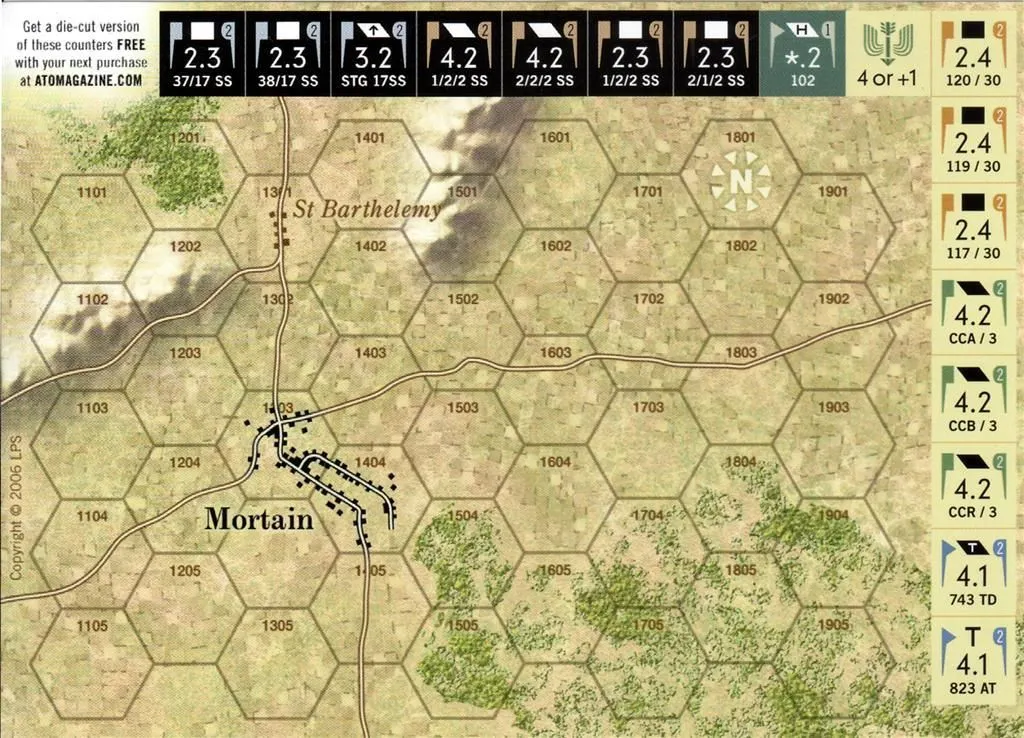
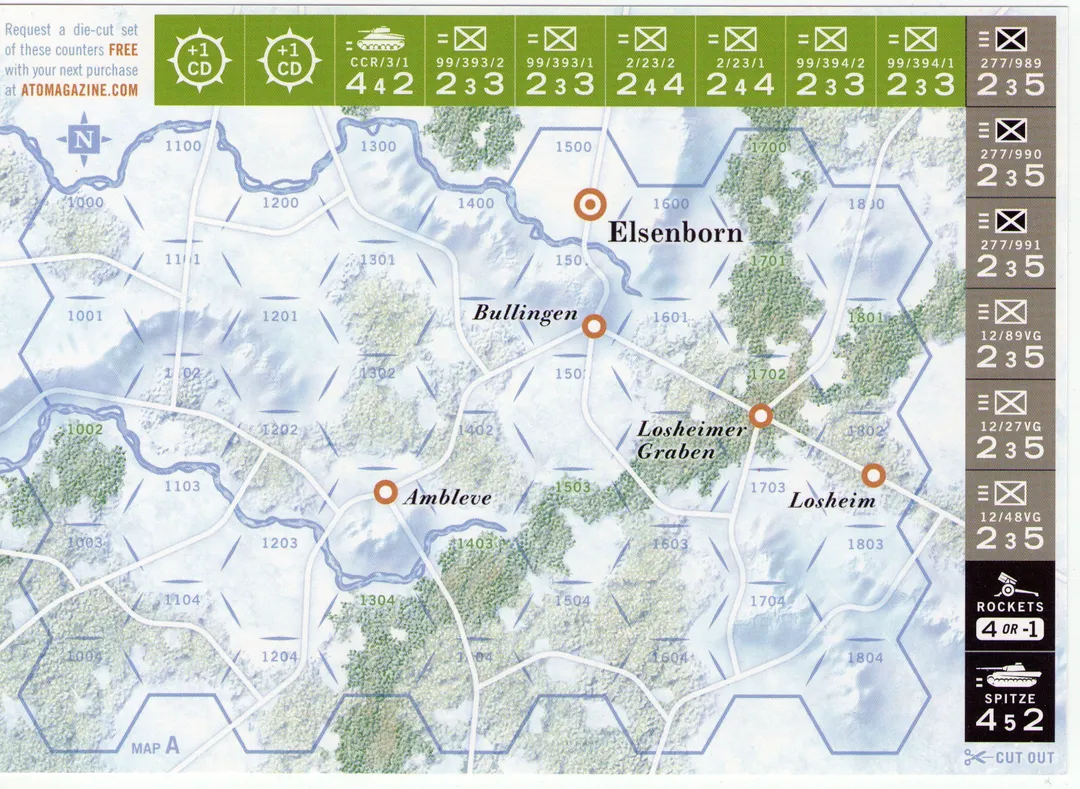
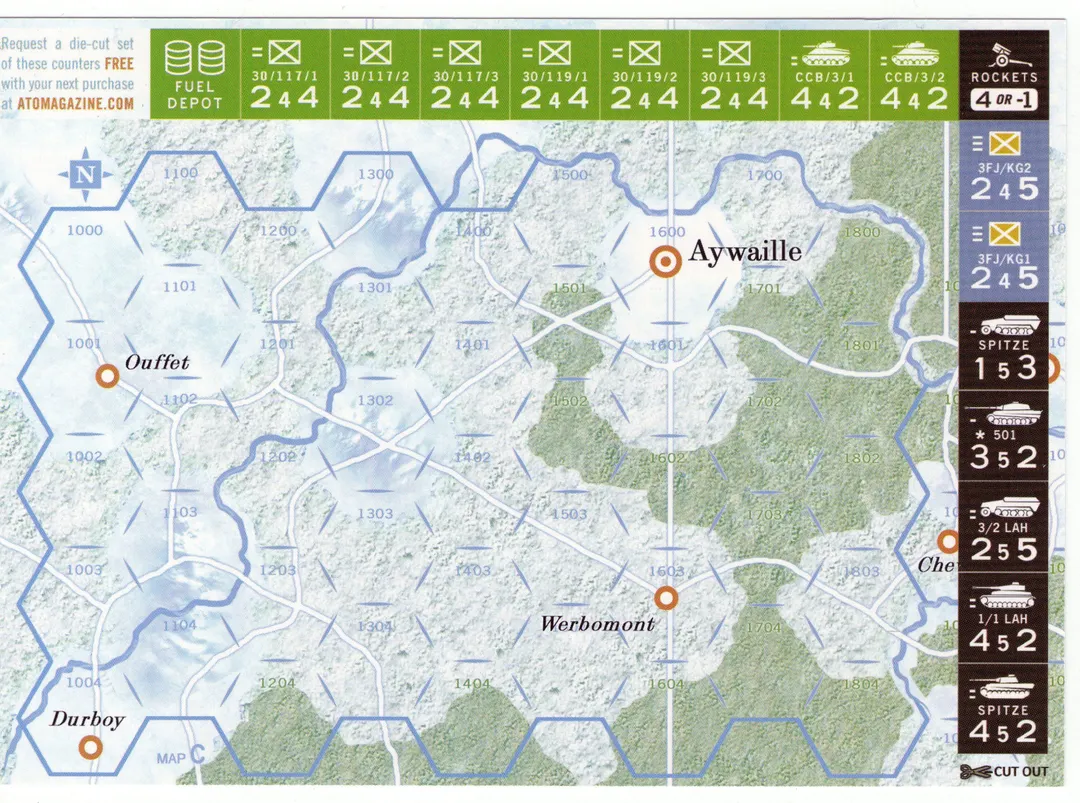
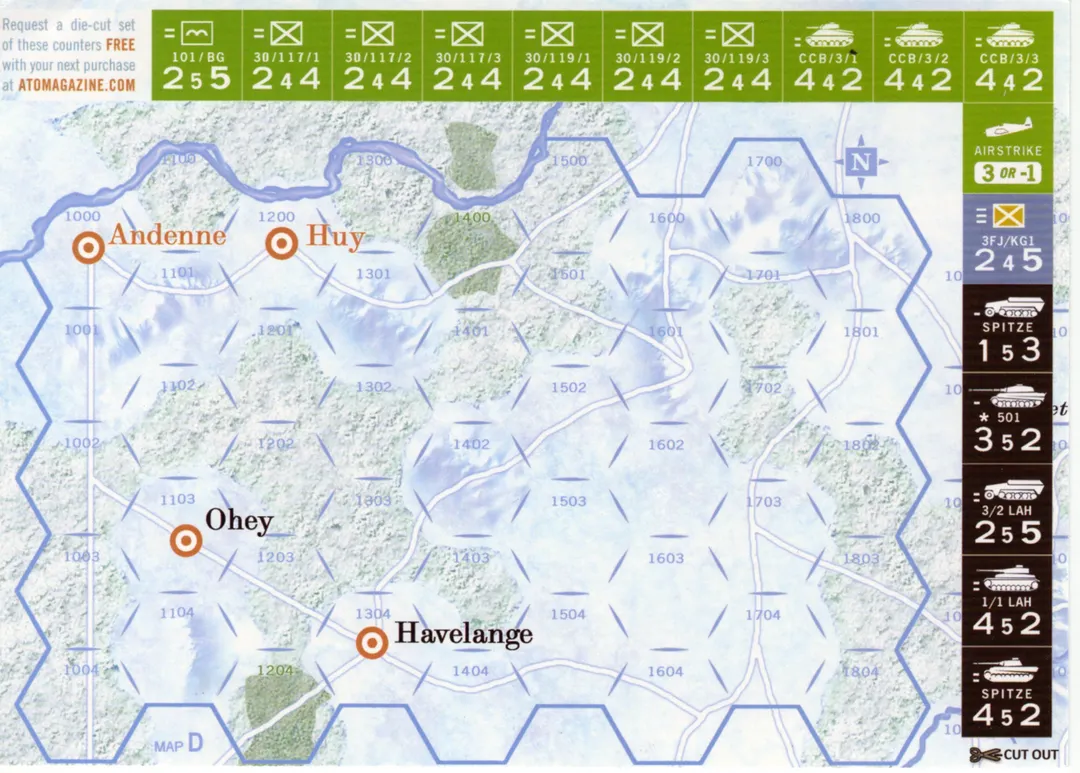
This is the sixth game in the Pocket Battle Games series from LPS, Inc. This promotional Pocket Battle wargame is one of four games that cover the American's fight against KG Peiper and other German forces during the Battle of the Bulge. They can be played separately or linked together for a "grand campaign" It is printed on a single postcard-sized piece of cardstock, with game map on front and rules on the back. Counters need to be cut out. Die-cut counters are available from ATO with any purchase at no additional charge. One set of die-cut counters will provide the counters for ALL FOUR of the "Peiper" Pocket Battle Games. The German player is needs to get his single tank unit ("Spitze") to exit the west edge of the map within 6 turns, or eliminate all US forces. The Germans have off-board artillery and the US can demolish bridges to slow the German forces. A regular deck of playing cards is used to handle unit activations and combat results for both players
Secondo il catalogo, Paying the Peiper supporta da 1 a 2 giocatori. L’intervallo corrisponde al numero di giocatori indicato dall’editore, quindi il gioco si può preparare per qualsiasi gruppo entro quei limiti. Preparazione, alcune regole e punteggio possono comunque variare in base al numero di giocatori: controlla la configurazione esatta nel regolamento della tua edizione.
La durata indicata per Paying the Peiper è di 30 minuti, la stima dell’editore per una partita completa. La durata effettiva dipende dal gruppo, dal numero di giocatori e dalla conoscenza delle regole: le prime partite durano di più, i gruppi esperti finiscono prima. Preparazione e spiegazione delle regole non sono comprese nella stima.
Paying the Peiper ha un punteggio di complessità di 1,5 su 5 secondo i giocatori di BoardGameGeek, il che lo rende un gioco leggero. Il punteggio riflette quanta conoscenza delle regole, pianificazione e decisioni richiede una partita tipica. I giochi impegnativi richiedono una prima spiegazione più lunga, quindi conviene usare una guida di preparazione.
Paying the Peiper appartiene a queste categorie: Wargame e World War II. Le sue meccaniche principali sono Variable Set-up, Grid Movement e Hexagon Grid. Le categorie descrivono il tema e l’ambientazione di un gioco, mentre le meccaniche descrivono ciò che i giocatori fanno davvero nel proprio turno. Ogni meccanica porta a una pagina del catalogo con giochi simili.
Gli autori accreditati di Paying the Peiper sono: Paul Rohrbaugh. Questi crediti provengono dai dati pubblicati del gioco e indicano le persone responsabili della sua progettazione, non gli illustratori o gli editori. Le pagine degli autori su MeepleRules raccolgono altri titoli degli stessi autori, utili quando un gioco ti piace e ne cerchi di simili.
Il catalogo classifica Paying the Peiper come gioco base. Si gioca da solo con i componenti presenti nella scatola e non richiede altri titoli. Le espansioni, se esistono, aggiungono nuovo contenuto o nuove regole e sono elencate separatamente nel catalogo con un collegamento a questo gioco base.