
- Posizione BGG
- BGG #2576
- Valutazione BGG
- 7,9
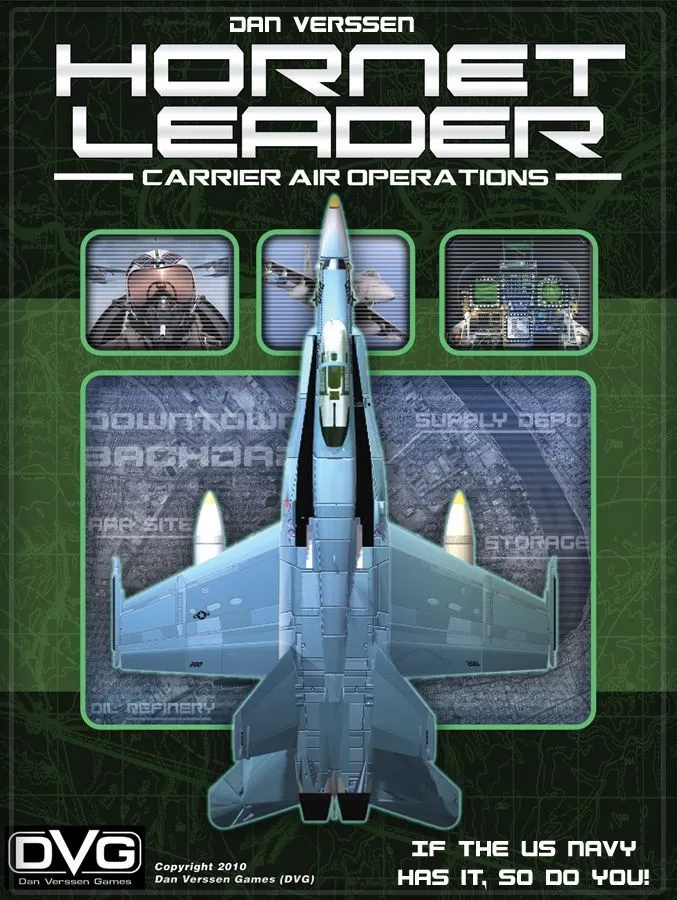
Hornet Leader: Carrier Air Operations
- 1 giocatore
- 60 min
- Complessità 2,8/5
- 2010
2010
Aiuto con le regole di Phantom Leader
Spiegazioni chiare di turni, effetti delle carte e situazioni dubbie, con riferimenti alle fonti ufficiali e cronologia delle domande salvata.
Per 1 giocatore
Cosa vuoi sapere?
Le risposte vengono dal regolamento ufficiale, con la pagina da verificare.
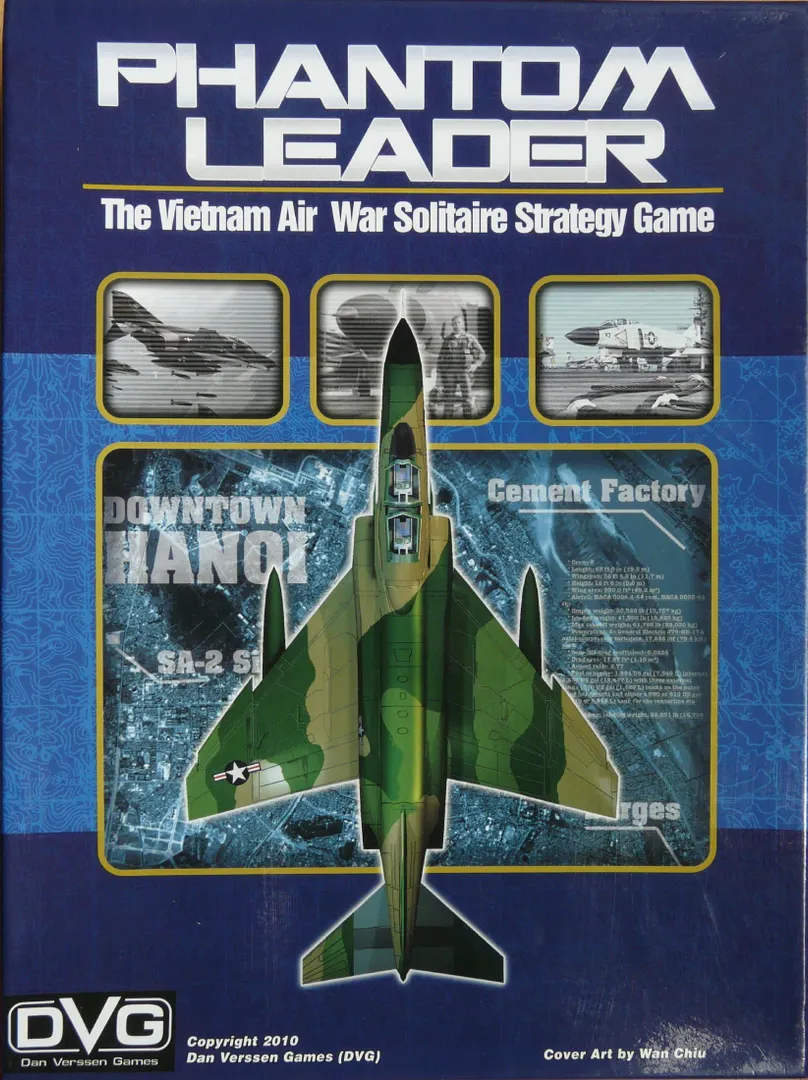
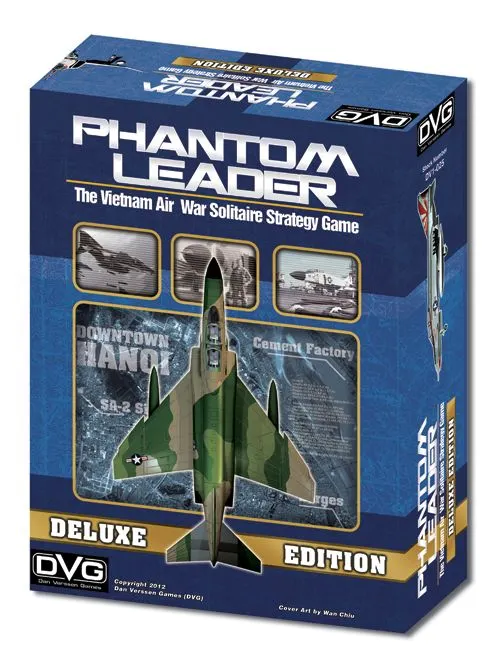
Phantom Leader è un gioco da tavolo pubblicato nel 2010 per 1 giocatore, con partite da 30 minuti e dai 12 anni in su. È stato ideato da Dan Verssen e le sue meccaniche principali sono Dice Rolling, Simulation e Open Drafting.



In inglese
Phantom Leader - Solitaire Description: Phantom Leader places you in command of a US Air Force or US Navy Tactical Fighter squadron in Vietnam between 1964 and 1972. You must not only destroy the targets but you must also balance the delicate political repercussions of your attacks. If you strike too hard, your air offensive might be put on hold, strike too light, and you’ll be blamed for losing the war. Welcome to the Vietnam Air War! Each of the campaigns can be played with either an Air Force or Navy squadron. The targets assigned to each service are different and change the complexion of the campaigns. Each campaign can be played with three different durations of: Skirmish, Conflict, or War. Each mission takes roughly 30 minutes to set-up, plan, and resolve. Each of your pilots has their own skills. Selecting the right pilots and weapons for a mission is vital to its success. As you fly missions, your pilots will gain experience and fatigue. With experience, their skills improve, but as their fatigue increases, their skills decrease and they might not be able to fly for several missions. For those of you familiar with our modern era Hornet Leader series of games, you might be wondering what’s different about Phantom Leader… The freedom of being able to select the best mission based on military objectives is something that is commonplace for today’s military. Back in Vietnam, the military was responsible for carrying out their orders, while at the same time being extremely limited in the weapons and tactics they were allowed to use to complete those orders. In many cases, the specific weapons, approach paths, and bombing altitudes were generated target-by-target at the White House. The mission specifics were then sent down the chain of command to the individual pilots flying the mission. As you can imagine, this was not the best way to run an air campaign. Every target has a Political value. If you destroy it, you move the Political counter to the right a number of spaces equal to its value. As the counter gets moved to the right, your future target choices are reduced to those that are less politically sensitive. Which target you choose not to attack is also important. You get to move the Political counter to the left a number of spaces equal its Political value. [this last sentence is not in fact true for the game, though it appears in the game blurb; confirmed by the author] This means that while you might like to flatten a big enemy target and rack up the victory points, it might be better for you to choose a pointless target and move the Political counter in your favor instead. Another difference is in combat power. For the last couple decades, the US Air Force and Navy have enjoyed air superiority due to training and technology. Such was not the case in the skies over Vietnam. The enemy had different, but just as capable, equipment. They also had the training and will to use it to its utmost. They soon became aware of the limitations placed on the US forces by the politicians, and used those limitations to their advantage. For example, at times, US pilots were not permitted to fire on enemy aircraft until they were visually identified. This negated any range advantage conveyed by the radar-homing AIM-7 Sparrow missiles. It was also a common limitation that enemy aircraft could only be attacked in the air. US pilots were not allowed to attack enemy airbases. US aircraft were also limited to flying predictable flight paths, at set times. This made setting up ambushes much easier for the enemy. So, while you might be a Hornet Leader ace, Vietnam is a whole different ballgame! Components: 110 Full color Cards 12 F-4 Phantom IIs (USAF) 8 F-105 Thunderchiefs (USAF) 2 F-105G Wild Weasels (USAF) 4 F-100 Super Sabers (USAF) 2 F-104A Starfighters (USAF) 1 EB-66 Destroyer (USAF) 8 F-4 Phantom IIs (USN) 6 A-4 Skyhawks (USN) 5 A-7 Corsair II (USN) 5 A-6 Intruders (USN) 4 F-8 Crusaders (USN) 1 EA-6A Electric Intruder (USN) 34 Targets 18 Special Events Full Color, 20-page Rulebook Full Color Double-sided Counter Sheet (176 x 5/8" counters) 6 Full Color Campaign Sheets War in the South (1965) USAF & USN Rolling Thunder (1967) USAF & USN Linebacker (1972) USAF & USN 3 Full Color Player Aid Cards Tactical Display Card Diplay Sheet Help Sheet 1 Ten-sided die 1 Player Log master (to be photocopied prior to play) Other Leader series games by Dan Verssen Re-implemented by: Phantom Leader: Deluxe Edition
Secondo il catalogo, Phantom Leader supporta 1 giocatore. È il numero di giocatori indicato dall’editore, quindi il gioco è pensato esattamente per quel numero di partecipanti. Le varianti per gruppi di altre dimensioni, se esistono, sono descritte nel regolamento della tua edizione: consultalo prima di preparare una configurazione diversa.
La durata indicata per Phantom Leader è di 30 minuti, la stima dell’editore per una partita completa. La durata effettiva dipende dal gruppo, dal numero di giocatori e dalla conoscenza delle regole: le prime partite durano di più, i gruppi esperti finiscono prima. Preparazione e spiegazione delle regole non sono comprese nella stima.
Il catalogo indica Phantom Leader dai 12 anni in su. È la raccomandazione dell’editore e tiene conto della lettura richiesta, della complessità delle regole e dei componenti piccoli, non solo del tema. I più giovani spesso possono giocare con l’aiuto di un adulto: controlla l’età consigliata sulla tua edizione e l’esperienza del tuo gruppo con i giochi da tavolo.
Phantom Leader ha un punteggio di complessità di 2,6 su 5 secondo i giocatori di BoardGameGeek, il che lo rende un gioco piuttosto leggero. Il punteggio riflette quanta conoscenza delle regole, pianificazione e decisioni richiede una partita tipica. I giochi impegnativi richiedono una prima spiegazione più lunga, quindi conviene usare una guida di preparazione.
Phantom Leader appartiene a queste categorie: Wargame, Modern Warfare e Aviation / Flight. Le sue meccaniche principali sono Dice Rolling, Simulation e Open Drafting. Le categorie descrivono il tema e l’ambientazione di un gioco, mentre le meccaniche descrivono ciò che i giocatori fanno davvero nel proprio turno. Ogni meccanica porta a una pagina del catalogo con giochi simili.
Gli autori accreditati di Phantom Leader sono: Dan Verssen. Questi crediti provengono dai dati pubblicati del gioco e indicano le persone responsabili della sua progettazione, non gli illustratori o gli editori. Le pagine degli autori su MeepleRules raccolgono altri titoli degli stessi autori, utili quando un gioco ti piace e ne cerchi di simili.
Il catalogo classifica Phantom Leader come gioco base. Si gioca da solo con i componenti presenti nella scatola e non richiede altri titoli. Le espansioni, se esistono, aggiungono nuovo contenuto o nuove regole e sono elencate separatamente nel catalogo con un collegamento a questo gioco base.