
- Valutazione BGG
- 6,1
Pick-a-Polar Bear: Pig and Dog Expansion
- 1–5 giocatori
- 15 min
- 2013
2013
Aiuto con le regole di Pick-a-Polar Bear
Spiegazioni chiare di turni, effetti delle carte e situazioni dubbie, con riferimenti alle fonti ufficiali e cronologia delle domande salvata.
Per 1 giocatore
Cosa vuoi sapere?
Le risposte vengono dal regolamento ufficiale, con la pagina da verificare.
Pick-a-Polar Bear è un gioco da tavolo pubblicato nel 2013 per 1–5 giocatori, con partite da 10 a 15 minuti e dai 8 anni in su. È stato ideato da Torsten Landsvogt e le sue meccaniche principali sono Pattern Recognition.








In inglese
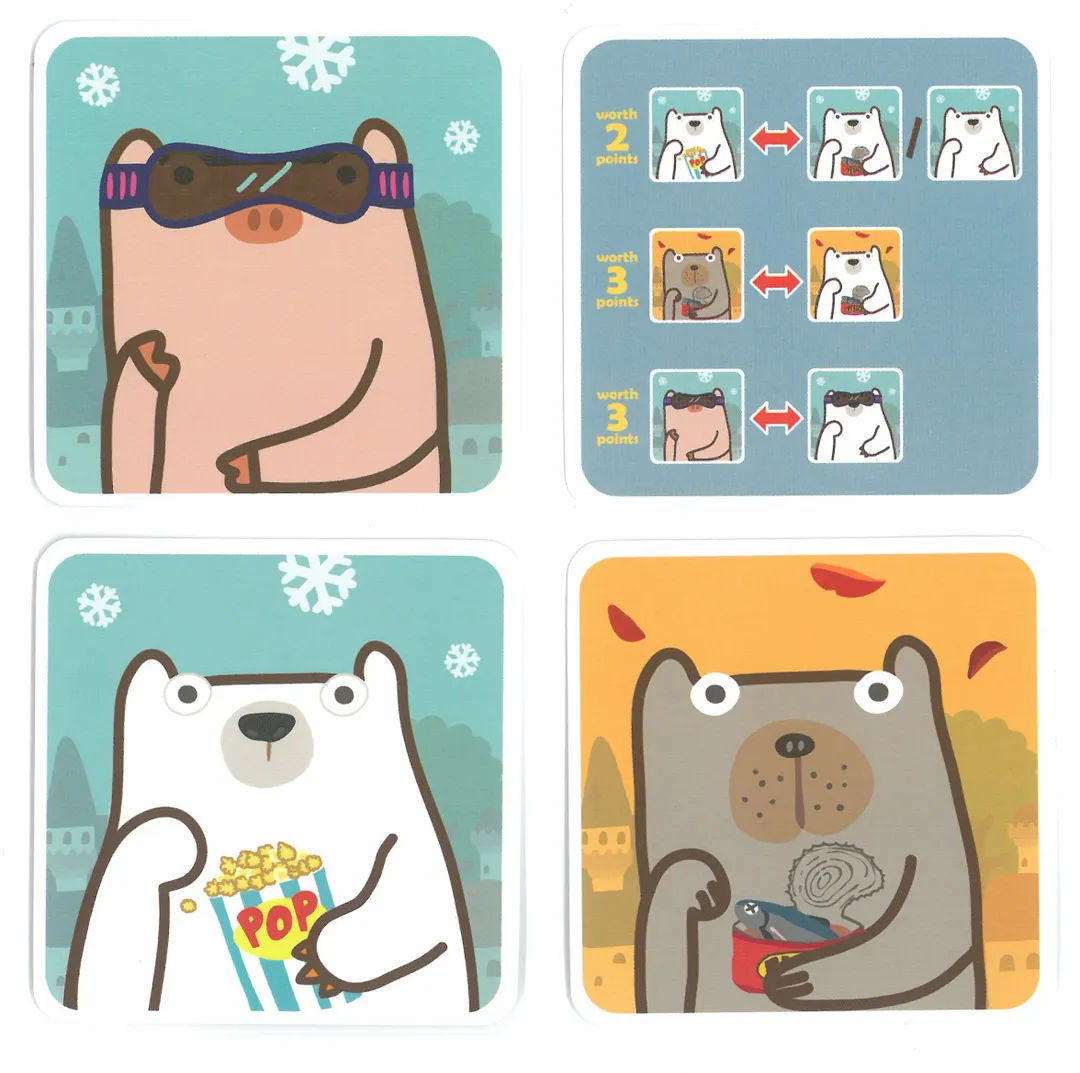
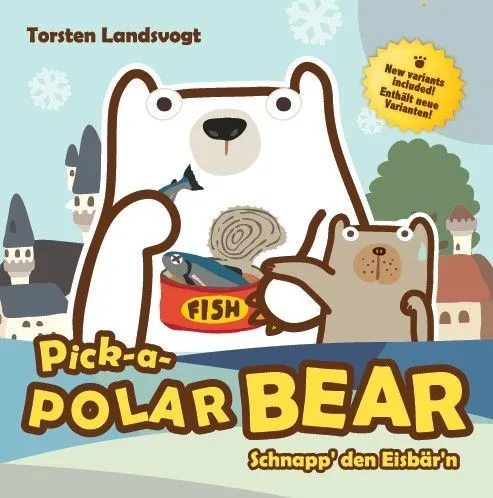
"Pick-a-Seal!" may combine with "Pick-a-Polar Bear!" for up to 8 players. Pick-a-Seal will be launched in Essen 2014. The nanuks are determined not to be sitting "bears" due to global warming. Sourcing a supply of canned fish may be a way to survive the diminishing sea ice — and if nothing else, it gives them a good reason to travel all the way from the North Pole to Germany to party down with their doggie friends there! Pick-a-Polar Bear, first published as Formissimo, features the same gameplay as Pick-a-Dog but with two new variants! To set up the basic game, lay out 30 cards in a grid and give one card face down to each player. Each card has five attributes, with each attribute having two states: large/small, with/without a raised arm, orange autumn/blue winter background, with/without goggles, and with/without canned fish. Someone shouts "Go!", then everyone looks at their card in hand. Players then start grabbing cards from the grid and stacking them in hand. The card grabbed must be identical to the top card in hand or differ from that top card in only one way. Thus, as you grab cards, the attributes of that top card will keep changing, forcing you to look for matches in new ways. Once a player thinks he can't grab any more cards, he yells "Stop!" The round ends, and all players check their card stacks. If someone made a mistake when grabbing cards, that player keeps none of the cards gathered that round. If the player who stopped the round made no mistakes, he earns an extra card. If, however, he stopped the round when he could have collected more cards, then he loses all the cards he's collected during this round. To set up for the next round, give each player a new face-down card and fill in the holes in the grid. When the deck runs out, complete that round, after which the game ends. Whoever has collected the most cards wins! Pick-a-Polar Bear includes two game variants. In the first, the player who has obtained the most cards in the preceding round cannot grab a card that's identical to his top card in the current round. For the second variant, shuffle eight "bonus round" cards into the deck. If when laying out the cards in the grid, the dealer reveals the back of a bonus round card when at least ten cards are on the table, everyone prepares for the bonus round. The dealer reveals this card, which shows two card elements such as upraised arm and goggles, and everyone races to yell out how many cards in the grid feature these two elements. Whoever yells out the correct answer first receives the bonus round card, which is worth 2 points; whoever yells out the wrong answer takes a -2 point penalty card. The dealer then continues filling the grid. (If the grid contains fewer than ten cards when a bonus round card comes up in the deck, discard this card and continue to fill the grid.)
Secondo il catalogo, Pick-a-Polar Bear supporta da 1 a 5 giocatori. L’intervallo corrisponde al numero di giocatori indicato dall’editore, quindi il gioco si può preparare per qualsiasi gruppo entro quei limiti. Preparazione, alcune regole e punteggio possono comunque variare in base al numero di giocatori: controlla la configurazione esatta nel regolamento della tua edizione.
La durata indicata per Pick-a-Polar Bear è di 10–15 minuti, la stima dell’editore per una partita completa. La durata effettiva dipende dal gruppo, dal numero di giocatori e dalla conoscenza delle regole: le prime partite durano di più, i gruppi esperti finiscono prima. Preparazione e spiegazione delle regole non sono comprese nella stima.
Il catalogo indica Pick-a-Polar Bear dai 8 anni in su. È la raccomandazione dell’editore e tiene conto della lettura richiesta, della complessità delle regole e dei componenti piccoli, non solo del tema. I più giovani spesso possono giocare con l’aiuto di un adulto: controlla l’età consigliata sulla tua edizione e l’esperienza del tuo gruppo con i giochi da tavolo.
Pick-a-Polar Bear ha un punteggio di complessità di 1,0 su 5 secondo i giocatori di BoardGameGeek, il che lo rende un gioco leggero. Il punteggio riflette quanta conoscenza delle regole, pianificazione e decisioni richiede una partita tipica. I giochi impegnativi richiedono una prima spiegazione più lunga, quindi conviene usare una guida di preparazione.
Pick-a-Polar Bear appartiene a queste categorie: Card Game, Animals e Party Game. Le sue meccaniche principali sono Pattern Recognition. Le categorie descrivono il tema e l’ambientazione di un gioco, mentre le meccaniche descrivono ciò che i giocatori fanno davvero nel proprio turno. Ogni meccanica porta a una pagina del catalogo con giochi simili.
Gli autori accreditati di Pick-a-Polar Bear sono: Torsten Landsvogt. Questi crediti provengono dai dati pubblicati del gioco e indicano le persone responsabili della sua progettazione, non gli illustratori o gli editori. Le pagine degli autori su MeepleRules raccolgono altri titoli degli stessi autori, utili quando un gioco ti piace e ne cerchi di simili.
Il catalogo classifica Pick-a-Polar Bear come gioco base. Si gioca da solo con i componenti presenti nella scatola e non richiede altri titoli. Le espansioni, se esistono, aggiungono nuovo contenuto o nuove regole e sono elencate separatamente nel catalogo con un collegamento a questo gioco base.