- Valutazione BGG
- 7,4
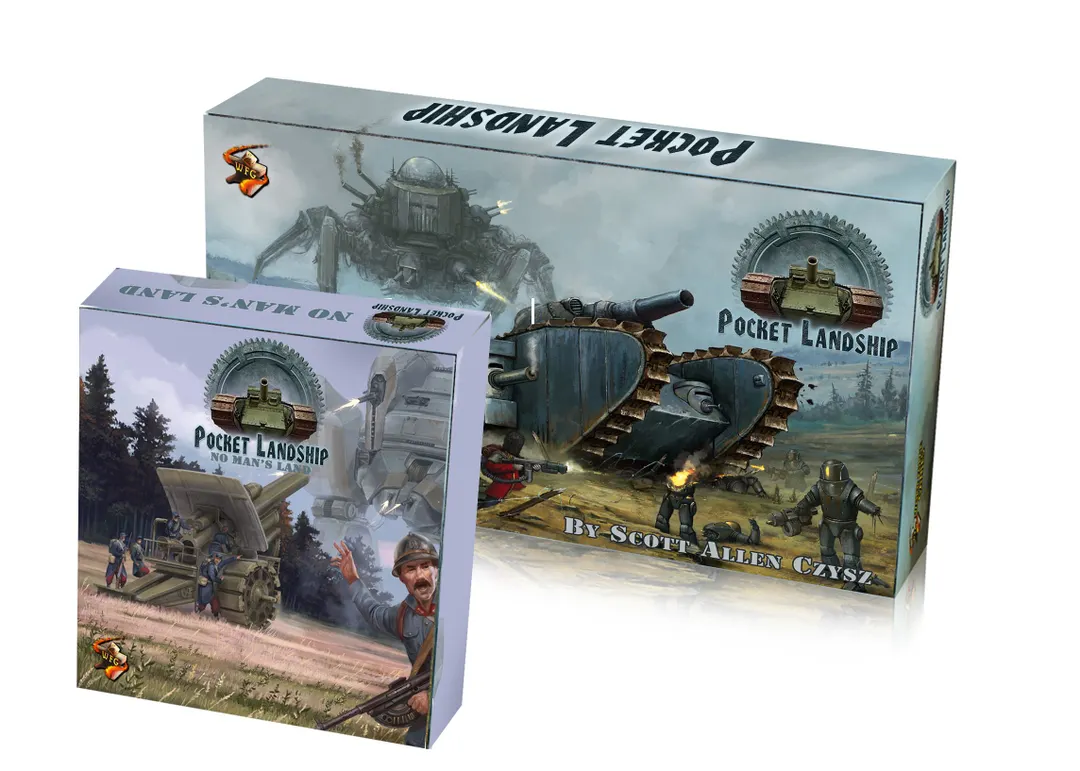
Pocket Landship: No Man's Land
- 1–2 giocatori
- 15–30 min
- Complessità 2,0/5
- 2023
2019
Aiuto con le regole di Pocket Landship
Spiegazioni chiare di turni, effetti delle carte e situazioni dubbie, con riferimenti alle fonti ufficiali e cronologia delle domande salvata.
Per 1 giocatore
Cosa vuoi sapere?
Le risposte vengono dal regolamento ufficiale, con la pagina da verificare.
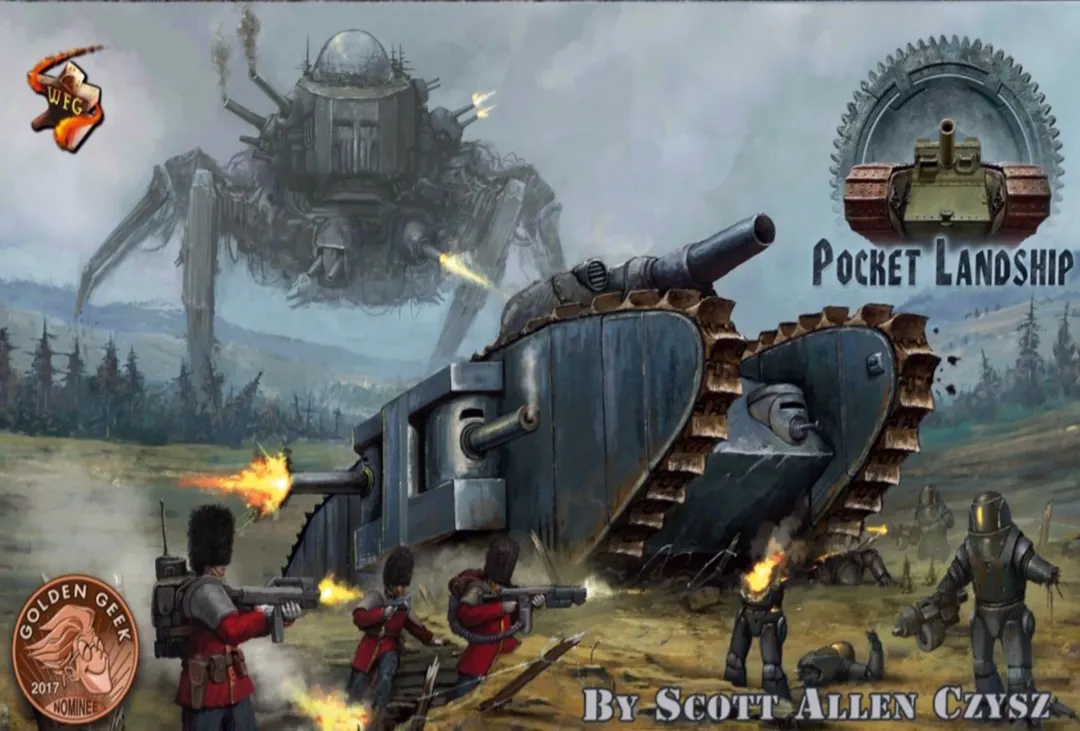
Pocket Landship è un gioco da tavolo pubblicato nel 2019 per 1–2 giocatori, con partite da 15 a 45 minuti e dai 10 anni in su. È stato ideato da Scott Allen Czysz e le sue meccaniche principali sono Dice Rolling, Cooperative Game e Solo / Solitaire Game.

In inglese
Pocket Landship is based on the print and play Board Game Geek Award nominated (2017) soloplay card wargame. In this version we see a steampunk theme and expanded gameplay with additional enemy and friendly options, as well as multiplayer options. Command a Landship (the original British term for tanks) to clear a sector of enemy infantry, artillery, and enemy mech and alike. The player chooses a Landship to control with weapons or support units to create either a single high powered Landship or a more disparate defending force, including a squad of shock troops. The enemy appears as waves of enemy mech, artillery, infantry, and mine fields arranged in 2 rows of 3 cards. Each turn, the player will roll 3 6-sided dice and assign each die to each of their cards to attack the enemies. Then, for the enemy turn, roll the 3 dice and assign them low to high left to right across the front enemy line, then take the assigned actions. Each card has its own damage track. When a card is destroyed, it is removed from the game. Win by destroying all 9 enemy cards. Lose if the enemy destroys your landship. -description from publisher
Secondo il catalogo, Pocket Landship supporta da 1 a 2 giocatori. L’intervallo corrisponde al numero di giocatori indicato dall’editore, quindi il gioco si può preparare per qualsiasi gruppo entro quei limiti. Preparazione, alcune regole e punteggio possono comunque variare in base al numero di giocatori: controlla la configurazione esatta nel regolamento della tua edizione.
La durata indicata per Pocket Landship è di 15–45 minuti, la stima dell’editore per una partita completa. La durata effettiva dipende dal gruppo, dal numero di giocatori e dalla conoscenza delle regole: le prime partite durano di più, i gruppi esperti finiscono prima. Preparazione e spiegazione delle regole non sono comprese nella stima.
Il catalogo indica Pocket Landship dai 10 anni in su. È la raccomandazione dell’editore e tiene conto della lettura richiesta, della complessità delle regole e dei componenti piccoli, non solo del tema. I più giovani spesso possono giocare con l’aiuto di un adulto: controlla l’età consigliata sulla tua edizione e l’esperienza del tuo gruppo con i giochi da tavolo.
Pocket Landship ha un punteggio di complessità di 1,9 su 5 secondo i giocatori di BoardGameGeek, il che lo rende un gioco leggero. Il punteggio riflette quanta conoscenza delle regole, pianificazione e decisioni richiede una partita tipica. I giochi impegnativi richiedono una prima spiegazione più lunga, quindi conviene usare una guida di preparazione.
Pocket Landship appartiene a queste categorie: Card Game, Wargame e Dice. Le sue meccaniche principali sono Dice Rolling, Cooperative Game e Solo / Solitaire Game. Le categorie descrivono il tema e l’ambientazione di un gioco, mentre le meccaniche descrivono ciò che i giocatori fanno davvero nel proprio turno. Ogni meccanica porta a una pagina del catalogo con giochi simili.
Gli autori accreditati di Pocket Landship sono: Scott Allen Czysz. Questi crediti provengono dai dati pubblicati del gioco e indicano le persone responsabili della sua progettazione, non gli illustratori o gli editori. Le pagine degli autori su MeepleRules raccolgono altri titoli degli stessi autori, utili quando un gioco ti piace e ne cerchi di simili.
Il catalogo classifica Pocket Landship come gioco base. Si gioca da solo con i componenti presenti nella scatola e non richiede altri titoli. Le espansioni, se esistono, aggiungono nuovo contenuto o nuove regole e sono elencate separatamente nel catalogo con un collegamento a questo gioco base.