
- Posizione BGG
- BGG #11.849
- Valutazione BGG
- 5,8
Senet
- 2 giocatori
- 30 min
- Complessità 1,4/5
1915
Aiuto con le regole di Pollyanna
Spiegazioni chiare di turni, effetti delle carte e situazioni dubbie, con riferimenti alle fonti ufficiali e cronologia delle domande salvata.
Per 2 giocatori
Cosa vuoi sapere?
Le risposte vengono dal regolamento ufficiale, con la pagina da verificare.
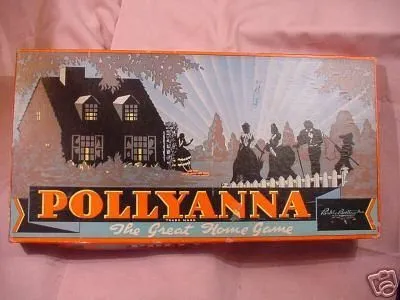
Pollyanna è un gioco da tavolo pubblicato nel 1915 per 2–4 giocatori e con partite da 30 minuti. Le sue meccaniche principali sono Race, Roll / Spin and Move e Dice Rolling.



In inglese
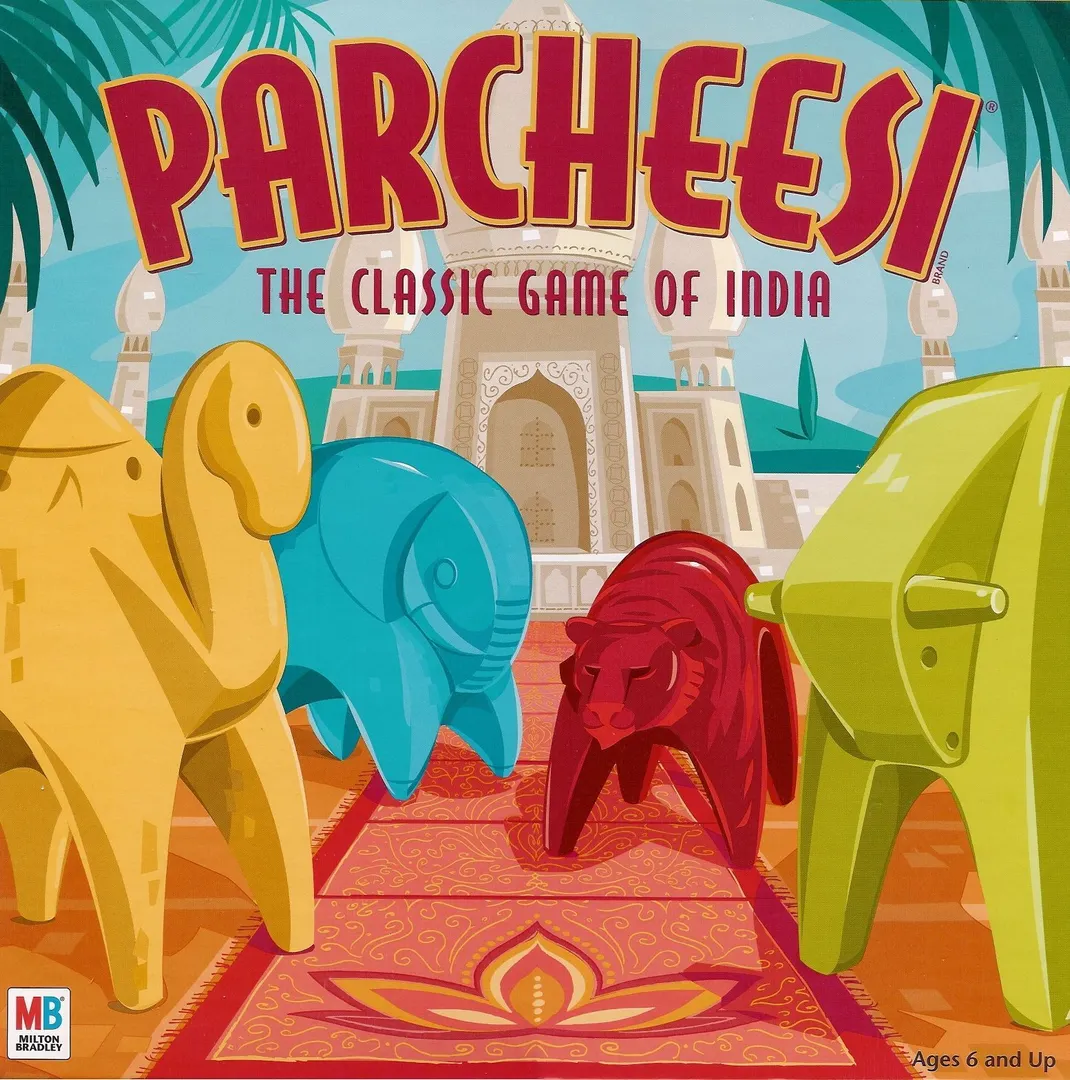
Pollyanna is a race/pursuit game published by Parker Brothers between 1915 and 1967. During those years, several editions appeared with differing artwork and game pieces. Some of these editions are entitled Dixie or Dixie-Pollyanna and some are subtitled "The Great Home Game," "The Glad Game," or "Parker Brothers Track Pursuit Game." In 1917 it was completely rethemed as The Popular Game of Broadway, with artwork of New York scenes featuring famous buildings of the time. Pollyanna itself gets its name from the title of the 1913 children's novel by Eleanor H. Porter. Each piece color in the game is associated with one of the characters in the novel. In the original 1915 edition blue was Aunt Polly; green was Nancy; red was Jimmy; and yellow was John Pendleton. These color associations changed in future editions. The game is widely recognized as a variant of Parcheesi, which is itself derived from Pachisi, a classic game of India. The object of Pollyanna, as in all games of the Pachisi family, is to be the first player to move his or her four men from the start space around the board to the home space. During the course of the game, players may also land on single opposing pieces and send them back to start. Two or three opposing pieces on the same space can neither be captured nor passed. Pollyanna differs from Parcheesi in several important ways. The track is laid out as a square and is 62 spaces long between start and home (in Parcheesi it is laid out as a cross and is 72 spaces long); furthermore Pollyanna employs four turnouts—short semi-circular paths off the main path (known as the broadway). Only single pieces may occupy a turnout space, but pieces there may not be passed and are invulnerable to capture. Turnouts are the most important difference between Pollyanna and Parcheesi. They make the two games play quite differently. The bonus move for capturing an opponent's piece is only 10 spaces, and there is no bonus for a piece reaching home (in Parcheesi these pay a 20-space and 10-space bonus respectively). Doubles are handled differently. In Pollyanna each double earns the right to another roll, provided that the player was able to use both dice. (In Parcheesi, on the third consecutive roll of doubles a player loses his/her turn and must return one of his pieces to start.) In addition, only the obverse faces of dice are counted in doubles. (In Parcheesi, both the obverse faces and reverse faces of the dice are counted.) Up to three pieces of the same color may occupy a space on the broadway. This effectively means that a player can pass his or her own blockade, by first landing exactly on the blockade and joining it, and then moving on. This is not possible in Parcheesi. Pieces are started on a roll of six (on either of the two dice or as the sum of the two dice). In Parcheesi, the roll required is a five. This means that starting a piece in Pollyanna is somewhat easier than in Parcheesi. There are safe spaces for each color; there are no general safe spaces. If a pawn is on a safe space of its own color no other player's pawn may land there, but it may pass through.
Secondo il catalogo, Pollyanna supporta da 2 a 4 giocatori. L’intervallo corrisponde al numero di giocatori indicato dall’editore, quindi il gioco si può preparare per qualsiasi gruppo entro quei limiti. Preparazione, alcune regole e punteggio possono comunque variare in base al numero di giocatori: controlla la configurazione esatta nel regolamento della tua edizione.
La durata indicata per Pollyanna è di 30 minuti, la stima dell’editore per una partita completa. La durata effettiva dipende dal gruppo, dal numero di giocatori e dalla conoscenza delle regole: le prime partite durano di più, i gruppi esperti finiscono prima. Preparazione e spiegazione delle regole non sono comprese nella stima.
Pollyanna ha un punteggio di complessità di 1,0 su 5 secondo i giocatori di BoardGameGeek, il che lo rende un gioco leggero. Il punteggio riflette quanta conoscenza delle regole, pianificazione e decisioni richiede una partita tipica. I giochi impegnativi richiedono una prima spiegazione più lunga, quindi conviene usare una guida di preparazione.
Pollyanna appartiene a queste categorie: Abstract Strategy, Racing e Novel-based. Le sue meccaniche principali sono Race, Roll / Spin and Move e Dice Rolling. Le categorie descrivono il tema e l’ambientazione di un gioco, mentre le meccaniche descrivono ciò che i giocatori fanno davvero nel proprio turno. Ogni meccanica porta a una pagina del catalogo con giochi simili.
Il catalogo classifica Pollyanna come gioco base. Si gioca da solo con i componenti presenti nella scatola e non richiede altri titoli. Le espansioni, se esistono, aggiungono nuovo contenuto o nuove regole e sono elencate separatamente nel catalogo con un collegamento a questo gioco base.