
- Posizione BGG
- BGG #20.895
- Valutazione BGG
- 6,3
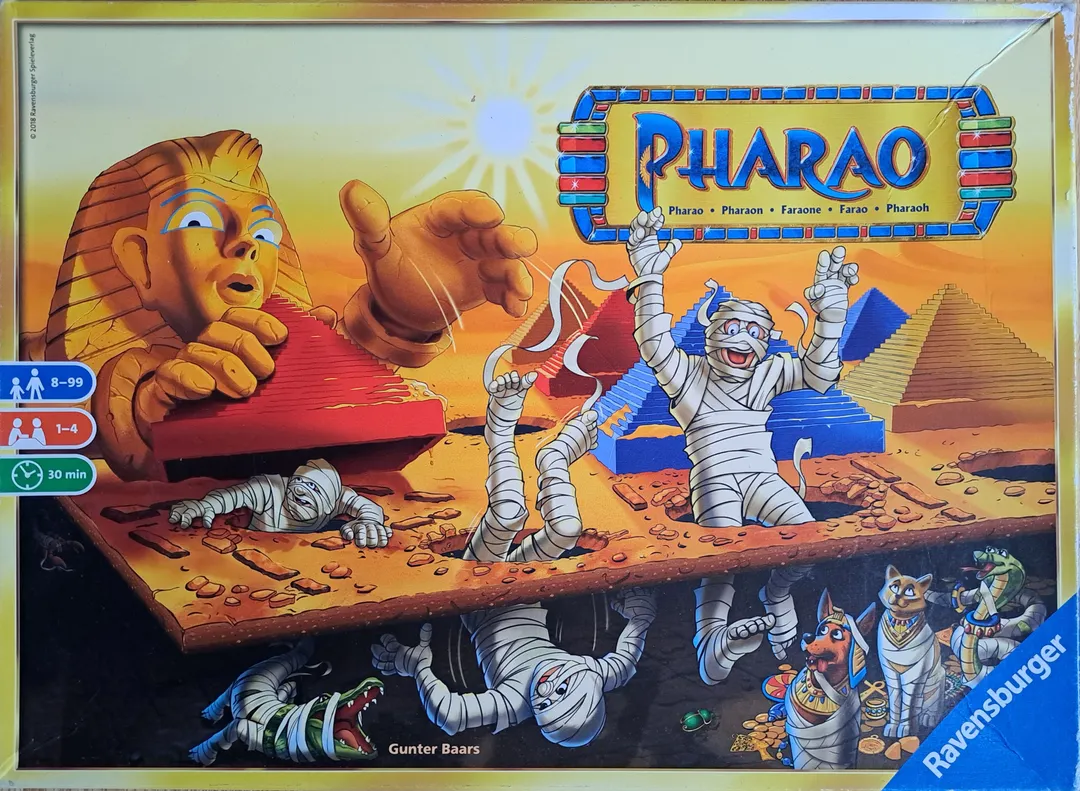
Pharao
- 1–4 giocatori
- 30 min
- Complessità 1,5/5
- 2017
1997
Aiuto con le regole di Ramses II
Spiegazioni chiare di turni, effetti delle carte e situazioni dubbie, con riferimenti alle fonti ufficiali e cronologia delle domande salvata.
Per 1 giocatore
Cosa vuoi sapere?
Le risposte vengono dal regolamento ufficiale, con la pagina da verificare.
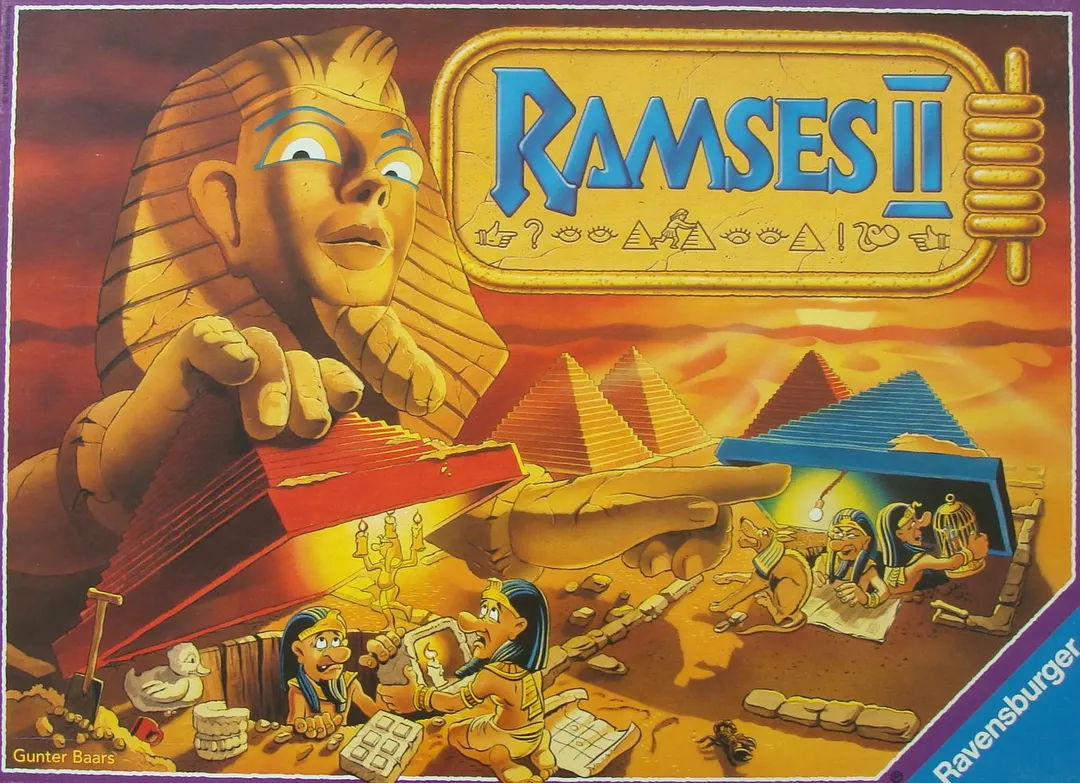
Ramses II è un gioco da tavolo pubblicato nel 1997 per 1–5 giocatori, con partite da 30 minuti e dai 7 anni in su. È stato ideato da Gunter Baars e le sue meccaniche principali sono Variable Set-up, Memory e Grid Movement.


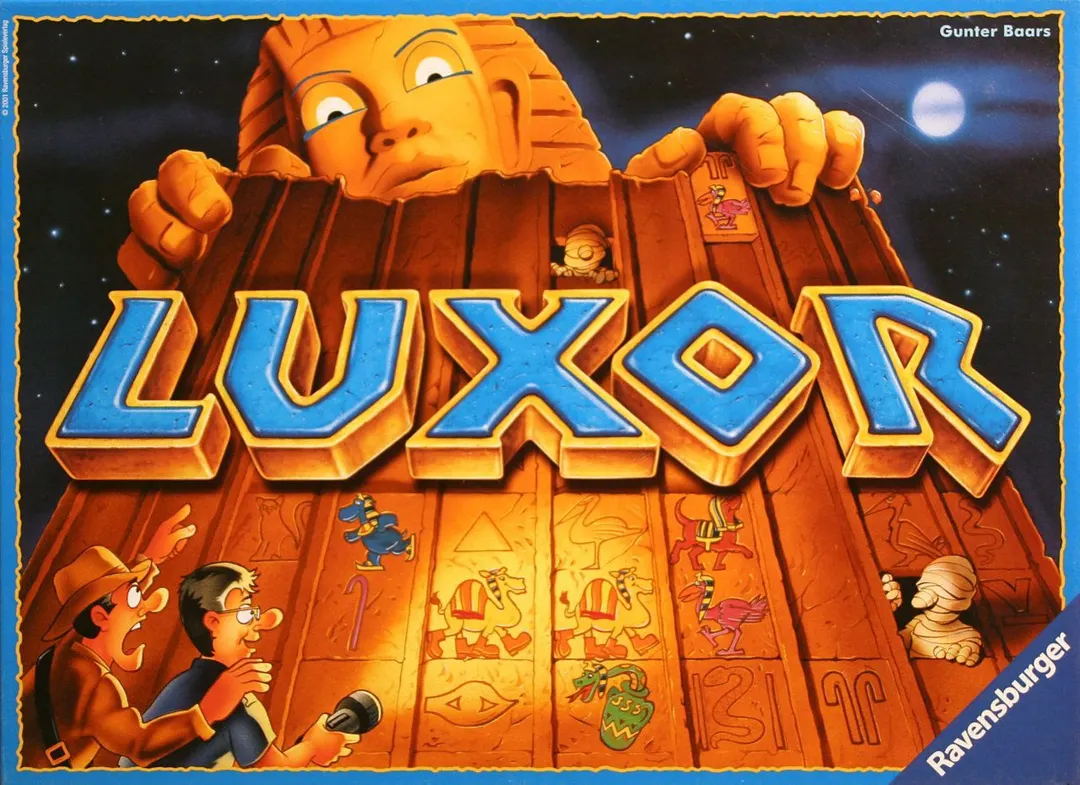

In inglese
The immensely rich but unfortunately somewhat scatter-brained Pharaoh had, during his life, collected treasures from throughout his kingdom. He decided to hide them in his pyramid to prevent then from being stolen. Unfortunately he is no longer sure where he has buried what. With luck you will be able to help him find his treasure again. The player that finds the most of the Pharaoh's treasures and thereby collects the greatest number of search cards is the winner. After chips have placed in the game board, pyramids placed on top and the board spun around a few times in the hopes the players won’t know where treasure chips are located, the first player chooses a treasure card which assigns the number or points that the treasure will be worth would the player find it. The treasure cards have been separated into three piles marked 1, 2 and 3. Once pile 1 is exhausted, game continues with pile 2, etc. Then the player slides a pyramid into an empty space on the board. If no treasure chip is found, the player moves another pyramid. If the chip does not match his card, their turn is over. If the treasure is found, the player keeps the treasure card but the token stays where it is. Mixed in with the treasure cards are event cards as follows: Sandstorm: Turn the board through 180 degrees and take the next pile from the card. Gift: Move to one of the twelve treasures. Each player that has one or more search cards depicting this treasure must give you one of them. Risk: Nominate two treasures that are not currently displayed on the board. Move first to one and then to the other. If you succeed - well done! If you don't then you must give one of your opponents' one of your search cards. Mirage: You draw a search card from your right hand neighbor's collection. If you are able to move to this treasure without making a mistake then you may keep the card. If you do not manage it then you must give your right hand neighbor one of your cards. Desert Poker: A player of you choice must try to find a treasure that you nominate. If he succeeds then he can take one of your search cards. If he fails then you can take one of his. End Game: The Pharaoh is happy because all the treasure has been found. As soon as this (Pile 3 only) card is turned over the game ends and the players total up the points that are shown on their search cards. After each player has found a treasure the board is rotated through 90 degrees in a chosen direction. Once all the search cards from the second pile are used up then pile "3" is used. In this final round all the treasures on the search cards are worth 4 points and anyone who has not yet been particularly successful can, with brains and luck, overtake all the others. When a player finds a treasure chip that is not the one that he was looking for he is out of the game. The remaining players continue. Play continues until all the players are eliminated or the End Game Card is turned over. All the players total up the points that they have showing on the search cards they have collected. The player with the greatest number of points is the winner.
Secondo il catalogo, Ramses II supporta da 1 a 5 giocatori. L’intervallo corrisponde al numero di giocatori indicato dall’editore, quindi il gioco si può preparare per qualsiasi gruppo entro quei limiti. Preparazione, alcune regole e punteggio possono comunque variare in base al numero di giocatori: controlla la configurazione esatta nel regolamento della tua edizione.
La durata indicata per Ramses II è di 30 minuti, la stima dell’editore per una partita completa. La durata effettiva dipende dal gruppo, dal numero di giocatori e dalla conoscenza delle regole: le prime partite durano di più, i gruppi esperti finiscono prima. Preparazione e spiegazione delle regole non sono comprese nella stima.
Il catalogo indica Ramses II dai 7 anni in su. È la raccomandazione dell’editore e tiene conto della lettura richiesta, della complessità delle regole e dei componenti piccoli, non solo del tema. I più giovani spesso possono giocare con l’aiuto di un adulto: controlla l’età consigliata sulla tua edizione e l’esperienza del tuo gruppo con i giochi da tavolo.
Ramses II ha un punteggio di complessità di 1,3 su 5 secondo i giocatori di BoardGameGeek, il che lo rende un gioco leggero. Il punteggio riflette quanta conoscenza delle regole, pianificazione e decisioni richiede una partita tipica. I giochi impegnativi richiedono una prima spiegazione più lunga, quindi conviene usare una guida di preparazione.
Ramses II appartiene a queste categorie: Children's Game, Memory e Exploration. Le sue meccaniche principali sono Variable Set-up, Memory e Grid Movement. Le categorie descrivono il tema e l’ambientazione di un gioco, mentre le meccaniche descrivono ciò che i giocatori fanno davvero nel proprio turno. Ogni meccanica porta a una pagina del catalogo con giochi simili.
Gli autori accreditati di Ramses II sono: Gunter Baars. Questi crediti provengono dai dati pubblicati del gioco e indicano le persone responsabili della sua progettazione, non gli illustratori o gli editori. Le pagine degli autori su MeepleRules raccolgono altri titoli degli stessi autori, utili quando un gioco ti piace e ne cerchi di simili.
Il catalogo classifica Ramses II come gioco base. Si gioca da solo con i componenti presenti nella scatola e non richiede altri titoli. Le espansioni, se esistono, aggiungono nuovo contenuto o nuove regole e sono elencate separatamente nel catalogo con un collegamento a questo gioco base.