
- Posizione BGG
- BGG #5795
- Valutazione BGG
- 6,0
Panic Station
- 4–6 giocatori
- 40 min
- Complessità 2,3/5
- 2011
2013
Aiuto con le regole di Rogue Agent
Spiegazioni chiare di turni, effetti delle carte e situazioni dubbie, con riferimenti alle fonti ufficiali e cronologia delle domande salvata.
Per 1 giocatore
Cosa vuoi sapere?
Le risposte vengono dal regolamento ufficiale, con la pagina da verificare.
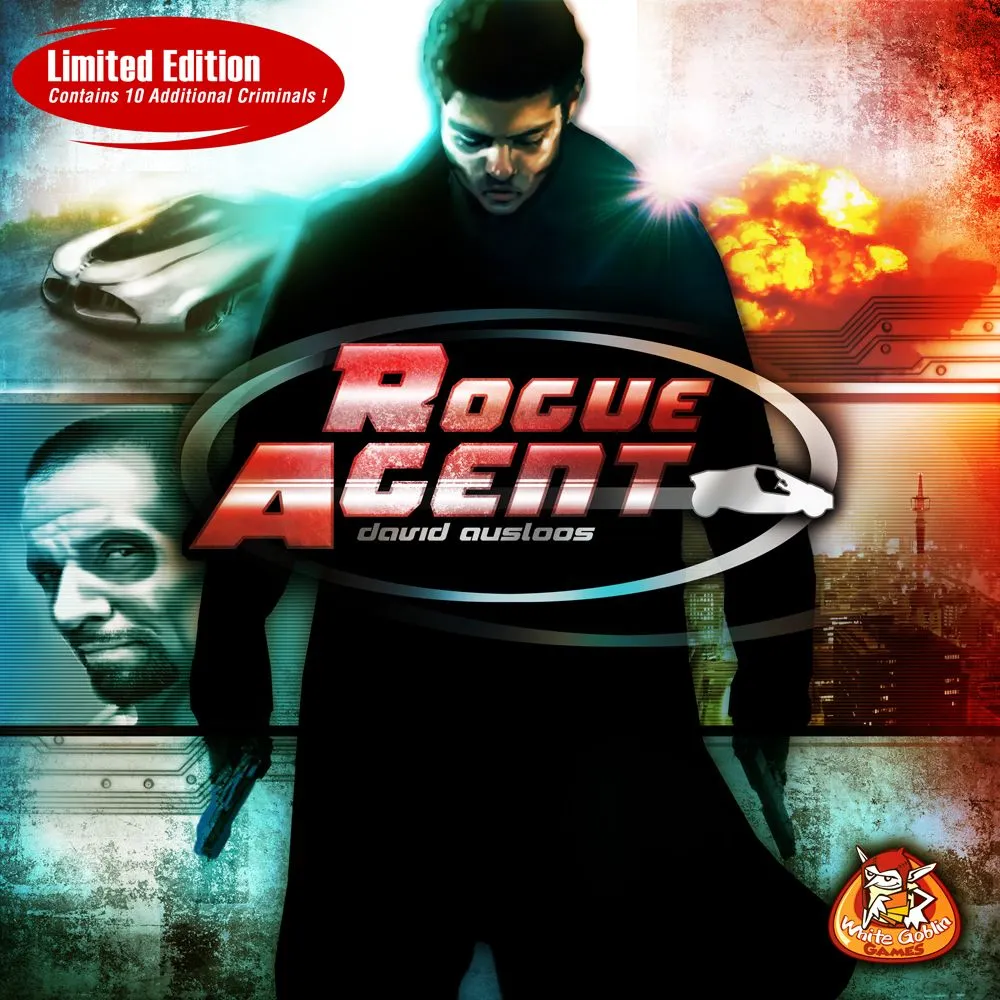
Rogue Agent è un gioco da tavolo pubblicato nel 2013 per 1–4 giocatori, con partite da 90 minuti e dai 12 anni in su. È stato ideato da David Ausloos e le sue meccaniche principali sono Area Movement, Dice Rolling e Modular Board.


In inglese
2048, Earth: The corrupt government has lost grip on Rain City, a brooding metropolis where crime runs amok despite the patrolling police squads. This desperate battle has recently seen a new player, a secret Agency of Bounty Hunters, attempting to control the endless assaults on inner city life. Your task: Defeat and arrest criminals, defuse high-tech bombs that threaten to destroy city districts, and prevent assassins from completing their destructive path. You are one of the members of this secretive brotherhood of justice. So...are you ready to survive the crime waves in the big city and uncover the infiltrating androids amongst your team that plan a revolt? Rogue Agent is a tense cyberpunk adventure game that pitches players against underground networks. The game features detailed plastic miniatures, a large variety of unique criminals to defeat, special icon-driven custom dice, and two different game play modes. In Rogue Agent, players control an agent working for the shady corporation known as "The Agency", created to control Rain City's crime rate, which has rapidly outpaced the capabilities of the regular police force. Players win the game by obtaining the most power over the city in a race against the game system that creates a living city in which crime and other challenges await at every corner. Each round consists of an action phase, which is preceded by an upkeep phase. During this action phase, players score power by successfully eliminating assassins, turning in crime bosses, and defusing high-tech bombs that threaten to destroy whole districts. Through investigation of city areas, players gather resources that will be vital for survival. Positioning collaborators in the different locations of the city aids agents in overcoming confrontations with local thugs. Meanwhile, the city police squad is hot on your trail, hoping to contain the illegal side jobs that agents are known for. The Agency, however, has its own air defenses it can call in for support. Players can scout locations in search for valuable resources that will help them upgrade their abilities, to get more control over the challenges in the game. As the game develops, agents can upgrade their vehicle, weapon and scout abilities as well as gather information about the true identities of other agents. There might be traitors within the Agency. Some of you might be android agents, secretly planning a revolt. Through careful investigation, players can gather intelligence about the true identity of other players. As the game progresses, traitors amongst the agents could be revealed in the form of androids. These agents have access to new victory conditions – destroying key locations holding information about android production and eliminating human agents – in a deadly race for control of the city. The first player to reach eight power wins. Rogue Agent is a fast-playing, easy-to-learn adventure, resource management, and risk management game using fun, streamlined icon-driven custom dice mechanisms. The Living City System creates a dynamic board with characters and challenges in constant motion, creating unique situations with each play and making Rain City come alive on your gaming table. No trip to Rain City will be the same!
Secondo il catalogo, Rogue Agent supporta da 1 a 4 giocatori. L’intervallo corrisponde al numero di giocatori indicato dall’editore, quindi il gioco si può preparare per qualsiasi gruppo entro quei limiti. Preparazione, alcune regole e punteggio possono comunque variare in base al numero di giocatori: controlla la configurazione esatta nel regolamento della tua edizione.
La durata indicata per Rogue Agent è di 90 minuti, la stima dell’editore per una partita completa. La durata effettiva dipende dal gruppo, dal numero di giocatori e dalla conoscenza delle regole: le prime partite durano di più, i gruppi esperti finiscono prima. Preparazione e spiegazione delle regole non sono comprese nella stima.
Il catalogo indica Rogue Agent dai 12 anni in su. È la raccomandazione dell’editore e tiene conto della lettura richiesta, della complessità delle regole e dei componenti piccoli, non solo del tema. I più giovani spesso possono giocare con l’aiuto di un adulto: controlla l’età consigliata sulla tua edizione e l’esperienza del tuo gruppo con i giochi da tavolo.
Rogue Agent ha un punteggio di complessità di 2,3 su 5 secondo i giocatori di BoardGameGeek, il che lo rende un gioco piuttosto leggero. Il punteggio riflette quanta conoscenza delle regole, pianificazione e decisioni richiede una partita tipica. I giochi impegnativi richiedono una prima spiegazione più lunga, quindi conviene usare una guida di preparazione.
Rogue Agent appartiene a queste categorie: Dice, Adventure e Science Fiction. Le sue meccaniche principali sono Area Movement, Dice Rolling e Modular Board. Le categorie descrivono il tema e l’ambientazione di un gioco, mentre le meccaniche descrivono ciò che i giocatori fanno davvero nel proprio turno. Ogni meccanica porta a una pagina del catalogo con giochi simili.
Gli autori accreditati di Rogue Agent sono: David Ausloos. Questi crediti provengono dai dati pubblicati del gioco e indicano le persone responsabili della sua progettazione, non gli illustratori o gli editori. Le pagine degli autori su MeepleRules raccolgono altri titoli degli stessi autori, utili quando un gioco ti piace e ne cerchi di simili.
Il catalogo classifica Rogue Agent come gioco base. Si gioca da solo con i componenti presenti nella scatola e non richiede altri titoli. Le espansioni, se esistono, aggiungono nuovo contenuto o nuove regole e sono elencate separatamente nel catalogo con un collegamento a questo gioco base.