
- Posizione BGG
- BGG #1328
- Valutazione BGG
- 6,8
NMBR 9
- 1–4 giocatori
- 20 min
- Complessità 1,2/5
- 2017
1999
Aiuto con le regole di Schrille Stille
Spiegazioni chiare di turni, effetti delle carte e situazioni dubbie, con riferimenti alle fonti ufficiali e cronologia delle domande salvata.
Per 3 giocatori
Cosa vuoi sapere?
Le risposte vengono dal regolamento ufficiale, con la pagina da verificare.
Schrille Stille è un gioco da tavolo pubblicato nel 1999 per 3–6 giocatori, con partite da 90 minuti e dai 10 anni in su. È stato ideato da Peter Wichmann e le sue meccaniche principali sono Secret Unit Deployment, Commodity Speculation e Voting.


In inglese
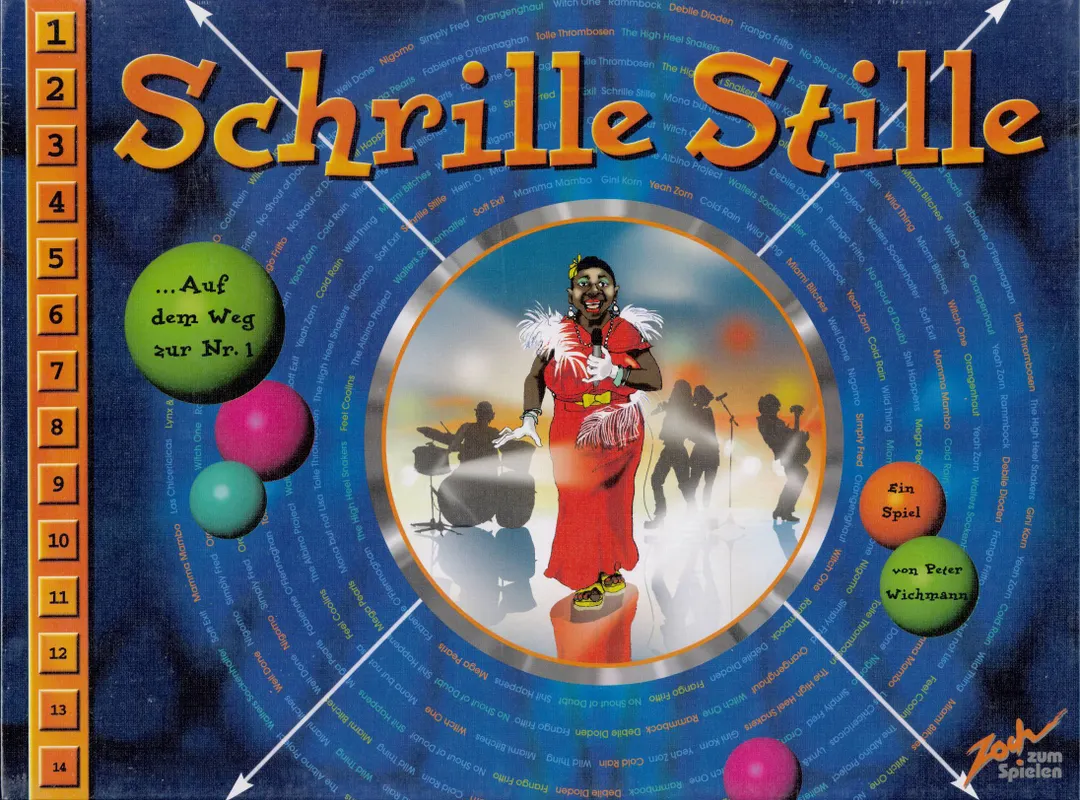
Players are the heads of 1 of 6 fictitious music companies, trying to predict/influence the popularity of 14 different musical acts. Each turn, players get 7 chits with +/- values on them, 5 of which they may use to secretly vote for the bands they want to support. Players are awarded points at the end of a round if one of their bands is in the top 6 slots. Players also have 2 special chits that either award extra points if played on a band that jumps to #1, or add/deduct points based on how far up (or down) a band moves from its original position. Some bands in the last 4 slots are removed at the end of a round depending on their original board position, and the top 3 are removed (one-hit wonders) once a player's score reaches the 30 and 50 point mark. The game ends once a player reaches 70 points total. Very nice artwork and goofy band names (as only the Germans can do it) are complemented by one of the cooler game components ever; a wooden "CD Player" that the DJ (dealer) uses to tally up the votes. Please be aware that, although this was formerly listed as a family game, a few of the band names contain adult language. Online Play BrettspielWelt (real-time)
Secondo il catalogo, Schrille Stille supporta da 3 a 6 giocatori. L’intervallo corrisponde al numero di giocatori indicato dall’editore, quindi il gioco si può preparare per qualsiasi gruppo entro quei limiti. Preparazione, alcune regole e punteggio possono comunque variare in base al numero di giocatori: controlla la configurazione esatta nel regolamento della tua edizione.
La durata indicata per Schrille Stille è di 90 minuti, la stima dell’editore per una partita completa. La durata effettiva dipende dal gruppo, dal numero di giocatori e dalla conoscenza delle regole: le prime partite durano di più, i gruppi esperti finiscono prima. Preparazione e spiegazione delle regole non sono comprese nella stima.
Il catalogo indica Schrille Stille dai 10 anni in su. È la raccomandazione dell’editore e tiene conto della lettura richiesta, della complessità delle regole e dei componenti piccoli, non solo del tema. I più giovani spesso possono giocare con l’aiuto di un adulto: controlla l’età consigliata sulla tua edizione e l’esperienza del tuo gruppo con i giochi da tavolo.
Schrille Stille ha un punteggio di complessità di 1,8 su 5 secondo i giocatori di BoardGameGeek, il che lo rende un gioco leggero. Il punteggio riflette quanta conoscenza delle regole, pianificazione e decisioni richiede una partita tipica. I giochi impegnativi richiedono una prima spiegazione più lunga, quindi conviene usare una guida di preparazione.
Schrille Stille appartiene a queste categorie: Economic e Music. Le sue meccaniche principali sono Secret Unit Deployment, Commodity Speculation e Voting. Le categorie descrivono il tema e l’ambientazione di un gioco, mentre le meccaniche descrivono ciò che i giocatori fanno davvero nel proprio turno. Ogni meccanica porta a una pagina del catalogo con giochi simili.
Gli autori accreditati di Schrille Stille sono: Peter Wichmann. Questi crediti provengono dai dati pubblicati del gioco e indicano le persone responsabili della sua progettazione, non gli illustratori o gli editori. Le pagine degli autori su MeepleRules raccolgono altri titoli degli stessi autori, utili quando un gioco ti piace e ne cerchi di simili.
Il catalogo classifica Schrille Stille come gioco base. Si gioca da solo con i componenti presenti nella scatola e non richiede altri titoli. Le espansioni, se esistono, aggiungono nuovo contenuto o nuove regole e sono elencate separatamente nel catalogo con un collegamento a questo gioco base.