
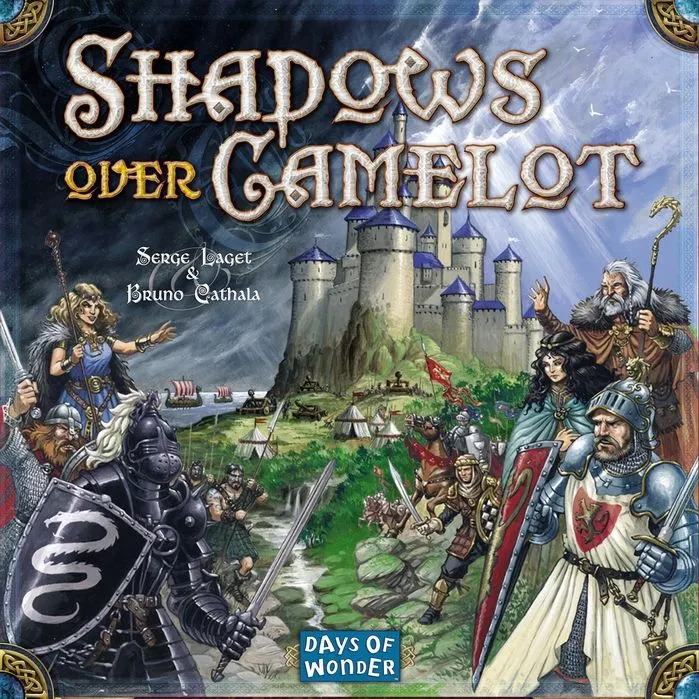
- Posizione BGG
- BGG #603
- Valutazione BGG
- 7,1
Shadows over Camelot
- 3–7 giocatori
- 60–90 min
- Complessità 2,6/5
- 2005
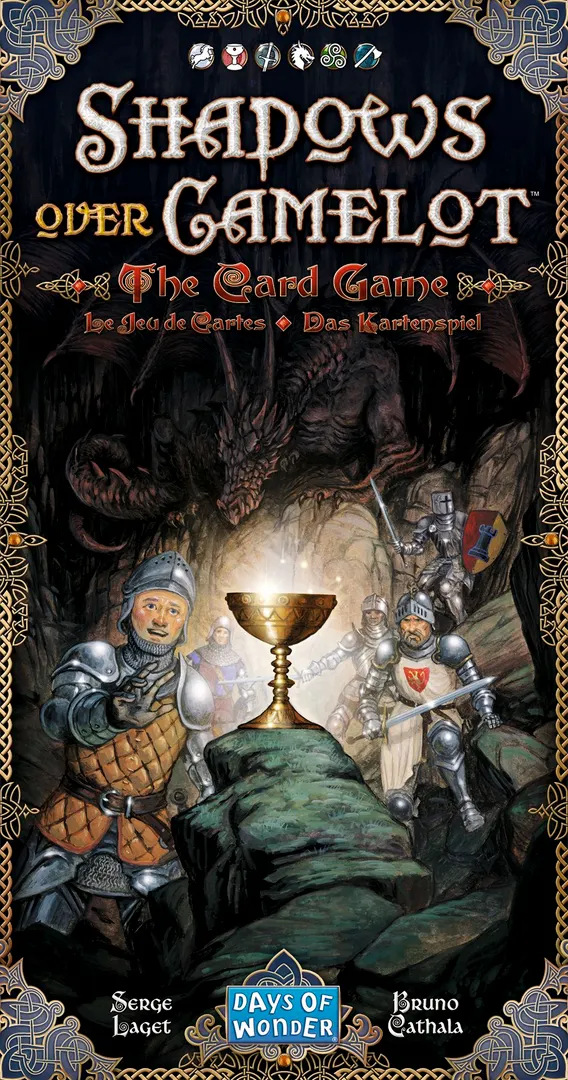
2012
Aiuto con le regole di Shadows over Camelot: The Card Game
Spiegazioni chiare di turni, effetti delle carte e situazioni dubbie, con riferimenti alle fonti ufficiali e cronologia delle domande salvata.
Cosa vuoi sapere?
Le risposte vengono dal regolamento ufficiale, con la pagina da verificare.
Shadows over Camelot: The Card Game è un gioco da tavolo pubblicato nel 2012 per 1–7 giocatori, con partite da 20 minuti e dai 8 anni in su. È stato ideato da Bruno Cathala e Serge Laget e le sue meccaniche principali sono Memory, Cooperative Game e Team-Based Game.




In inglese
The Knights of the Round Table must assemble once again to protect King Arthur's kingdom from numerous threats. But wait – these aren't the knights of old, but rather their children. Can these newcomer knights prove up to the task of tracking the dangers out there and putting a stop to them before it's too late? In Shadows over Camelot: The Card Game, the players (mostly) work together to complete quests before the danger level of a quest gets too high. In game terms, the quests are represented by five types of cards, with each card showing 1-3 swords, as well as a number from 2 to 5 or a question mark. These cards are shuffled together with Morgan le Fay cards (which curse the players when they appear) and Merlin cards (which remove some aspects of the curse) to form the rumor deck. Each player receives a secret loyalty card at the start of the game, with at most one person being a traitor to the cause. On a turn a player either: Reveals a rumor card. Attempts a quest. Accuses a knight. To reveal a rumor card, the player flips it onto the top of the revealed stack of cards. If it's a quest card, players try to keep track of the total value of cards from that quest, with ?s each worth as many points as the number of ?s revealed of that quest. If a Morgan le Fay is revealed, players can no longer speak to one another; in addition, Morgan twists the values of some cards or removes some from play. Merlin allows players to speak once again. Players are trying to stop quests when the total value is 11, 12 or 13. Any lower, and they arrived too soon, wasting time; any higher, and they arrived too late. To attempt a quest, the player points to the top quest card and says, "It's time." The player then reveals all cards in the deck. If the sum of that quest is 11-13, then the players receive 1-3 white swords, as shown on the quest cards. If lower, they receive one black sword; if higher, 1-3 black swords. All other quests are checked to see whether the players were too late, then the stack resets. A failed quest rewards the attempter with a special bonus card for later use. Once three swords have been claimed, whatever the color, a player can choose to accuse another player of being traitorous to the cause, winning a reward if correct and a penalty otherwise. If the players collect seven white swords, they have stopped Morgan's forces and win. If, however, they collect seven black swords first, then Arthur's kingdom falls. Reimplements Shadows over Camelot
Secondo il catalogo, Shadows over Camelot: The Card Game supporta da 1 a 7 giocatori. L’intervallo corrisponde al numero di giocatori indicato dall’editore, quindi il gioco si può preparare per qualsiasi gruppo entro quei limiti. Preparazione, alcune regole e punteggio possono comunque variare in base al numero di giocatori: controlla la configurazione esatta nel regolamento della tua edizione.
La durata indicata per Shadows over Camelot: The Card Game è di 20 minuti, la stima dell’editore per una partita completa. La durata effettiva dipende dal gruppo, dal numero di giocatori e dalla conoscenza delle regole: le prime partite durano di più, i gruppi esperti finiscono prima. Preparazione e spiegazione delle regole non sono comprese nella stima.
Il catalogo indica Shadows over Camelot: The Card Game dai 8 anni in su. È la raccomandazione dell’editore e tiene conto della lettura richiesta, della complessità delle regole e dei componenti piccoli, non solo del tema. I più giovani spesso possono giocare con l’aiuto di un adulto: controlla l’età consigliata sulla tua edizione e l’esperienza del tuo gruppo con i giochi da tavolo.
Shadows over Camelot: The Card Game ha un punteggio di complessità di 1,9 su 5 secondo i giocatori di BoardGameGeek, il che lo rende un gioco leggero. Il punteggio riflette quanta conoscenza delle regole, pianificazione e decisioni richiede una partita tipica. I giochi impegnativi richiedono una prima spiegazione più lunga, quindi conviene usare una guida di preparazione.
Shadows over Camelot: The Card Game appartiene a queste categorie: Card Game, Fantasy e Deduction. Le sue meccaniche principali sono Memory, Cooperative Game e Team-Based Game. Le categorie descrivono il tema e l’ambientazione di un gioco, mentre le meccaniche descrivono ciò che i giocatori fanno davvero nel proprio turno. Ogni meccanica porta a una pagina del catalogo con giochi simili.
Gli autori accreditati di Shadows over Camelot: The Card Game sono: Bruno Cathala e Serge Laget. Questi crediti provengono dai dati pubblicati del gioco e indicano le persone responsabili della sua progettazione, non gli illustratori o gli editori. Le pagine degli autori su MeepleRules raccolgono altri titoli degli stessi autori, utili quando un gioco ti piace e ne cerchi di simili.
Il catalogo classifica Shadows over Camelot: The Card Game come gioco base. Si gioca da solo con i componenti presenti nella scatola e non richiede altri titoli. Le espansioni, se esistono, aggiungono nuovo contenuto o nuove regole e sono elencate separatamente nel catalogo con un collegamento a questo gioco base.