
- Valutazione BGG
- 6,0
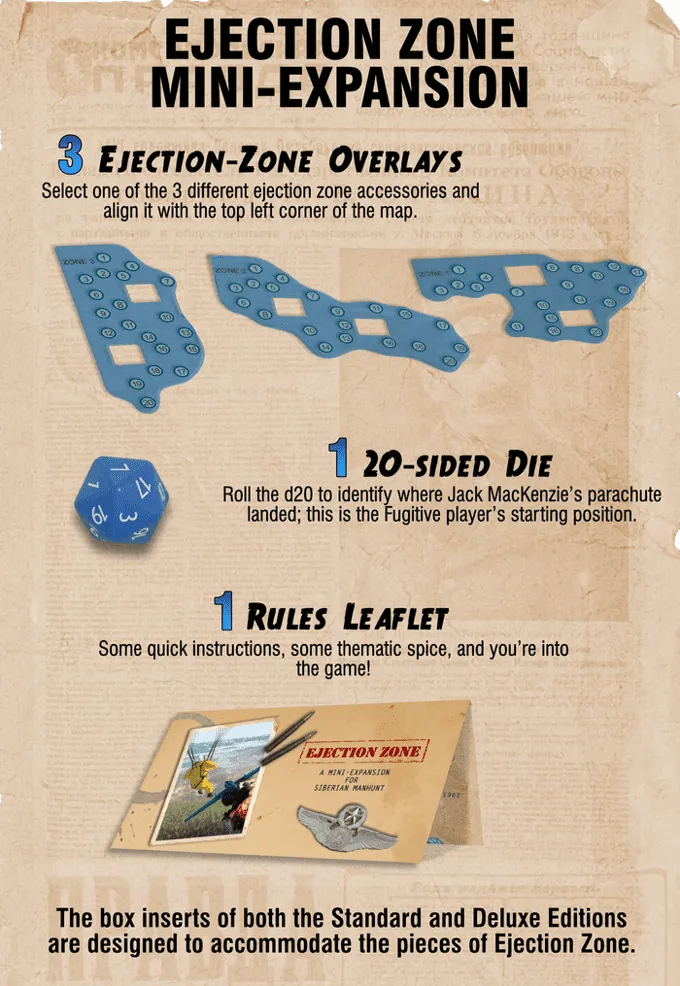
Siberian Manhunt: Ejection Zone Mini Expansion
- 2 giocatori
- 2025
2025
Aiuto con le regole di Siberian Manhunt
Spiegazioni chiare di turni, effetti delle carte e situazioni dubbie, con riferimenti alle fonti ufficiali e cronologia delle domande salvata.
Per 2 giocatori
Cosa vuoi sapere?
Le risposte vengono dal regolamento ufficiale, con la pagina da verificare.
Siberian Manhunt è un gioco da tavolo pubblicato nel 2025 per 2 giocatori, con partite da 60 a 120 minuti e dai 14 anni in su. È stato ideato da Jesse Eyer e le sue meccaniche principali sono Dice Rolling, Deck, Bag, and Pool Building e Action Points.

In inglese
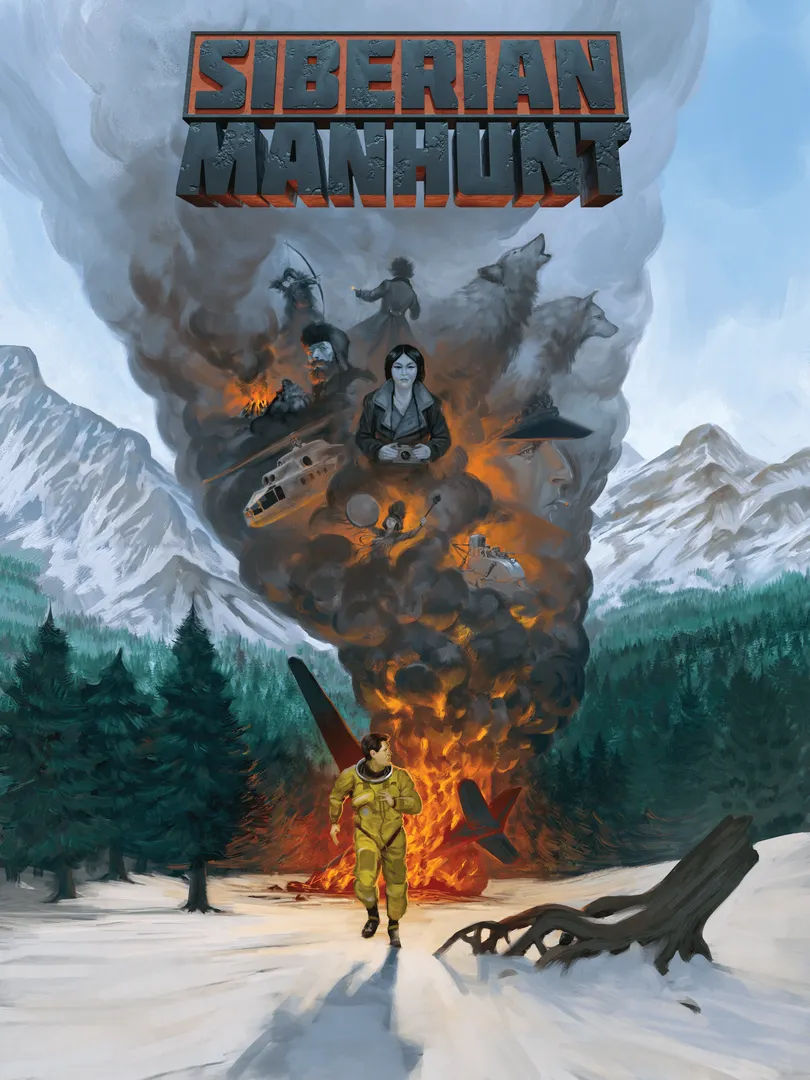
During the height of the Cold War, the U.S. mounted a surveillance program over the Soviet Union, flying U-2 spy planes at high altitude to avoid radar and fighter interceptors. Not every pilot returned... Siberian Manhunt is an asymmetrical hidden movement game for two players. One player takes the role of a U-2 spy plane pilot who has crashed behind enemy lines and must escape across the border into China. The fugitive must use their wits to navigate the dangerous landscape, survive encounters with predatory animals, and avoid starvation and hypothermia, all while being pursued by the KGB. Do they dare enter towns, risking detection by the local authorities, or will they strike out into the wilds and rely on their wilderness survival skills to stay alive? The other player is a Soviet general assigned to capture or kill the fugitive. At their disposal is the full might of the USSR: KGB agents and Yakut trackers, the Red Army, aerial searches, road blocks, and propaganda campaigns. But the Soviet government is fickle and not all Russians are loyal communists — and sometimes the hunted is deadlier than the hunter. —description from the designer
Secondo il catalogo, Siberian Manhunt supporta 2 giocatori. È il numero di giocatori indicato dall’editore, quindi il gioco è pensato esattamente per quel numero di partecipanti. Le varianti per gruppi di altre dimensioni, se esistono, sono descritte nel regolamento della tua edizione: consultalo prima di preparare una configurazione diversa.
La durata indicata per Siberian Manhunt è di 60–120 minuti, la stima dell’editore per una partita completa. La durata effettiva dipende dal gruppo, dal numero di giocatori e dalla conoscenza delle regole: le prime partite durano di più, i gruppi esperti finiscono prima. Preparazione e spiegazione delle regole non sono comprese nella stima.
Il catalogo indica Siberian Manhunt dai 14 anni in su. È la raccomandazione dell’editore e tiene conto della lettura richiesta, della complessità delle regole e dei componenti piccoli, non solo del tema. I più giovani spesso possono giocare con l’aiuto di un adulto: controlla l’età consigliata sulla tua edizione e l’esperienza del tuo gruppo con i giochi da tavolo.
Siberian Manhunt ha un punteggio di complessità di 3,1 su 5 secondo i giocatori di BoardGameGeek, il che lo rende un gioco di media complessità. Il punteggio riflette quanta conoscenza delle regole, pianificazione e decisioni richiede una partita tipica. I giochi impegnativi richiedono una prima spiegazione più lunga, quindi conviene usare una guida di preparazione.
Siberian Manhunt appartiene a queste categorie: Fighting, Wargame e Deduction. Le sue meccaniche principali sono Dice Rolling, Deck, Bag, and Pool Building e Action Points. Le categorie descrivono il tema e l’ambientazione di un gioco, mentre le meccaniche descrivono ciò che i giocatori fanno davvero nel proprio turno. Ogni meccanica porta a una pagina del catalogo con giochi simili.
Gli autori accreditati di Siberian Manhunt sono: Jesse Eyer. Questi crediti provengono dai dati pubblicati del gioco e indicano le persone responsabili della sua progettazione, non gli illustratori o gli editori. Le pagine degli autori su MeepleRules raccolgono altri titoli degli stessi autori, utili quando un gioco ti piace e ne cerchi di simili.
Il catalogo classifica Siberian Manhunt come gioco base. Si gioca da solo con i componenti presenti nella scatola e non richiede altri titoli. Le espansioni, se esistono, aggiungono nuovo contenuto o nuove regole e sono elencate separatamente nel catalogo con un collegamento a questo gioco base.