
- Posizione BGG
- BGG #17.123
- Valutazione BGG
- 7,3
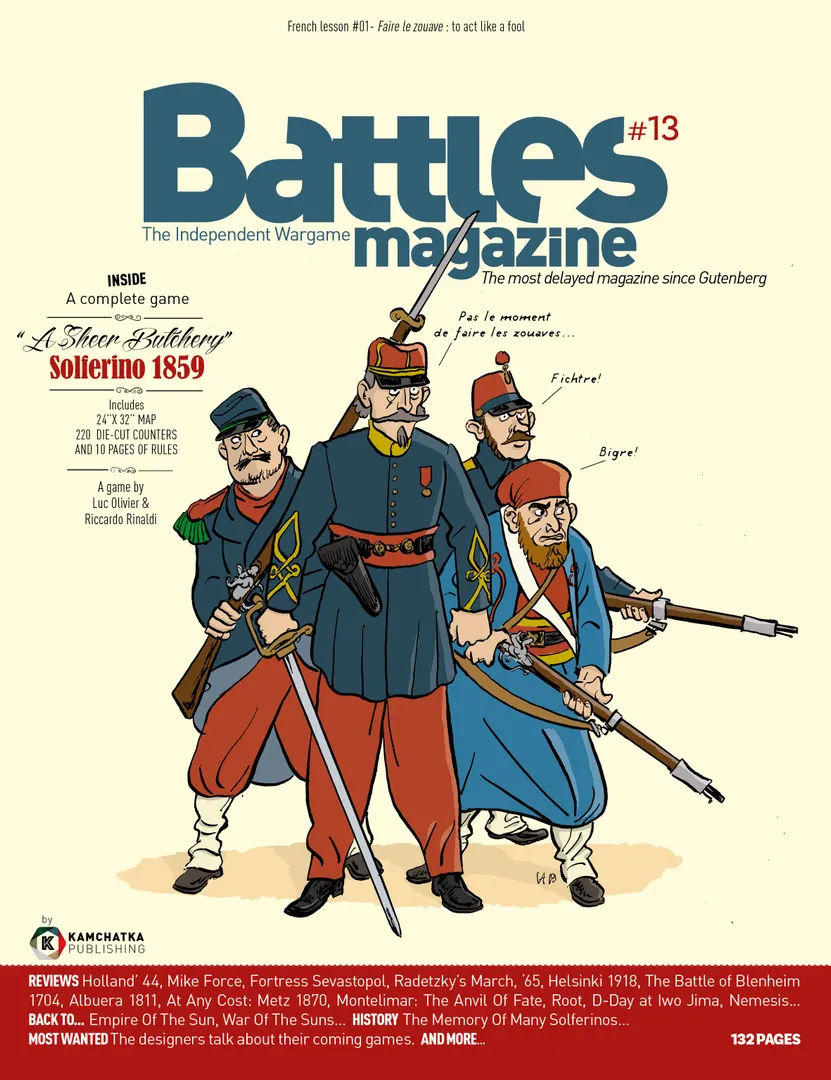
A Sheer Butchery: Solferino 1859
- 2 giocatori
- 180–300 min
- Complessità 2,9/5
- 2019
2004
Aiuto con le regole di Solferino 1859
Spiegazioni chiare di turni, effetti delle carte e situazioni dubbie, con riferimenti alle fonti ufficiali e cronologia delle domande salvata.
Per 2 giocatori
Cosa vuoi sapere?
Le risposte vengono dal regolamento ufficiale, con la pagina da verificare.
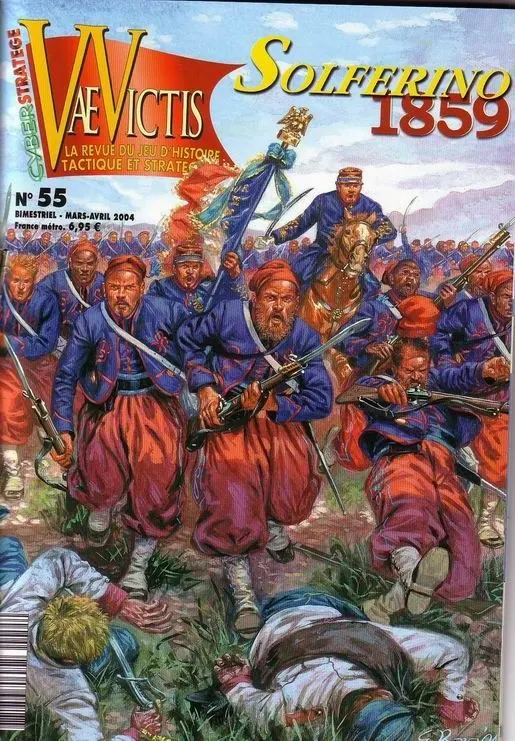
Solferino 1859 è un gioco da tavolo pubblicato nel 2004 per 2 giocatori, con partite da 120 minuti e dai 12 anni in su. È stato ideato da Luc Olivier e Riccardo Rinaldi e le sue meccaniche principali sono Dice Rolling e Hexagon Grid.

In inglese
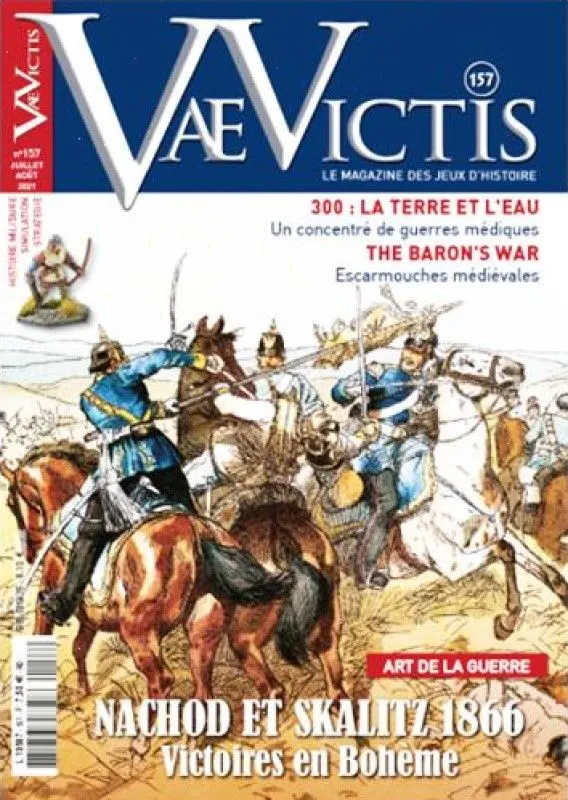
Solferino portrays the final battle of the Second Italian War of Independence, a nominal French victory that persuaded Napoleon III to make peace without much attention to the aims of his Italian allies. It was the last battle in Europe (maybe in the world) in which three monarchs commanded armies: the little Napoleon for the French, Victor Emmanuel for the Sardinians and Franz Joseph I for the Austrians. The scale is 600 meters per hex, 1 hour per turn. Units are infantry and cavalry brigades and corps-level artillery batteries. Units are rated for attack strength, movement factor and cohesion, which represents both morale and the number of losses that the unit can take before dissolving (2 for most infantry and cavalry, 3 for a few, 1 for artillery). Stacking is limited to one unit of any type plus one additional artillery unit per hex. Facing is of no importance for movement but does affect combat: Units may attack only through their 3 front hexes and are penalized if attacked from the flank or rear. Command and control are of great importance. Most units are attached to higher level formations (corps for the French and Austrians, divisions for the Italians). A unit is in command only if it is within range of its corps/division headquarters and the HQ either is within range of its monarch or passes an initiative test. Out-of-command units aren't helpless but are barred from entering hexes adjacent to enemy units' fronts. The royal and imperial personages, particularly Victor Emmanuel and Franz Joseph, are not very mobile, thus limiting forward movement in what is essentially a huge meeting engagement. The movement sequence uses the "chit pull" mechanism. Activation chits for each formation (plus a chit for each side representing all of its unattached units) are placed into a cup and drawn to determine which corps's or division's units may move next. The player who wins the initiative (usually the French) has the slight advantage of being able to select the first formation that will move each turn, without having to draw. Combat is somewhat unusual, employing a system that makes attacks hard and bloody. The attacker's strength is compared to the defense value of the terrain occupied by the defender (1 for clear hexes, 2 for woods, villages and upper slopes, 3 for towns); the defender's strength doesn't matter. At first glance, the combat results table looks very favorable. There are two catches: First, unless an HQ stacks with one of the attackers and passes an initiative test, attacks cannot be combined. The brigades go in one by one. Second, the defender gets to use its own strength for defensive fire against each successive attack before the attacker may fire. A not untypical result of an uncoordinated attack is that each attacker in turn suffers disorder and is forced to fall back without doing any damage. Coordinated attacks work much better - the defender must divide its strength among the attacking units, while they get to add theirs - but, as noted, require the presence of an HQ, which risks the loss of its commander in the process. (He will be replaced, but by a less effective subordinate.) Artillery can help by softening up the target, but there aren't a lot of batteries. (Most of the guns present are abstractly incorporated in the infantry brigade strengths.). Worse yet, they move slowly, have trouble obtaining good lines of sight and are easily eliminated if they get too near the enemy. As the battle goes on, formations will become demoralized through the loss of more than half of their initial steps. Once demoralized, they can do little except retreat off the field. Players gain a Victory Point for occupying each of 7 towns and one for every two enemy corps or divisions demoralized. A side can also win instantly by eliminating the enemy Emperor (Napoleon or Franz Joseph), though only a rather careless player will expose his monarch to attack. The battle starts at dawn (5:00 am) and will usually end abruptly in the late afternoon when a thunderstorm sweeps the field. If the storm holds off, the last turn is 6:00 pm. Whether or not it arrives, oppressive heat almost certainly will, slowing units and lowering their morale. This game was announced as the first of the series, and a later issue of Vae Victis had a pair of sequels, covering the battles of Magenta (1859, the other big battle of the same war) and Reichshoffen (1870, Franco-Prussian War). There were, however, no more, either because the difficulties of attack frustrated aggressive players or simply owing to a lack of widespread interest in mid-19th Century European wars. Solferino gives us a glimpse of what the American Civil War might have been like if every general had been a McClellan.
Secondo il catalogo, Solferino 1859 supporta 2 giocatori. È il numero di giocatori indicato dall’editore, quindi il gioco è pensato esattamente per quel numero di partecipanti. Le varianti per gruppi di altre dimensioni, se esistono, sono descritte nel regolamento della tua edizione: consultalo prima di preparare una configurazione diversa.
La durata indicata per Solferino 1859 è di 120 minuti, la stima dell’editore per una partita completa. La durata effettiva dipende dal gruppo, dal numero di giocatori e dalla conoscenza delle regole: le prime partite durano di più, i gruppi esperti finiscono prima. Preparazione e spiegazione delle regole non sono comprese nella stima.
Il catalogo indica Solferino 1859 dai 12 anni in su. È la raccomandazione dell’editore e tiene conto della lettura richiesta, della complessità delle regole e dei componenti piccoli, non solo del tema. I più giovani spesso possono giocare con l’aiuto di un adulto: controlla l’età consigliata sulla tua edizione e l’esperienza del tuo gruppo con i giochi da tavolo.
Solferino 1859 ha un punteggio di complessità di 2,8 su 5 secondo i giocatori di BoardGameGeek, il che lo rende un gioco piuttosto leggero. Il punteggio riflette quanta conoscenza delle regole, pianificazione e decisioni richiede una partita tipica. I giochi impegnativi richiedono una prima spiegazione più lunga, quindi conviene usare una guida di preparazione.
Solferino 1859 appartiene a queste categorie: Wargame e Post-Napoleonic. Le sue meccaniche principali sono Dice Rolling e Hexagon Grid. Le categorie descrivono il tema e l’ambientazione di un gioco, mentre le meccaniche descrivono ciò che i giocatori fanno davvero nel proprio turno. Ogni meccanica porta a una pagina del catalogo con giochi simili.
Gli autori accreditati di Solferino 1859 sono: Luc Olivier e Riccardo Rinaldi. Questi crediti provengono dai dati pubblicati del gioco e indicano le persone responsabili della sua progettazione, non gli illustratori o gli editori. Le pagine degli autori su MeepleRules raccolgono altri titoli degli stessi autori, utili quando un gioco ti piace e ne cerchi di simili.
Il catalogo classifica Solferino 1859 come gioco base. Si gioca da solo con i componenti presenti nella scatola e non richiede altri titoli. Le espansioni, se esistono, aggiungono nuovo contenuto o nuove regole e sono elencate separatamente nel catalogo con un collegamento a questo gioco base.