
- Posizione BGG
- BGG #8885
- Valutazione BGG
- 8,0
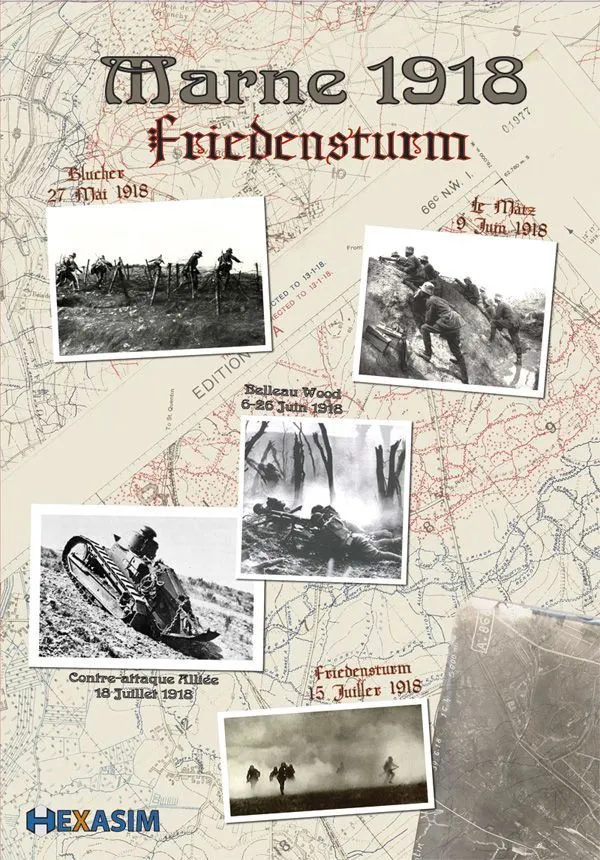
Marne 1918: Friedensturm
- 2 giocatori
- 210–1200 min
- Complessità 3,2/5
- 2006
2012
Aiuto con le regole di Somme 1918: Bloody Spring
Spiegazioni chiare di turni, effetti delle carte e situazioni dubbie, con riferimenti alle fonti ufficiali e cronologia delle domande salvata.
Per 2 giocatori
Cosa vuoi sapere?
Le risposte vengono dal regolamento ufficiale, con la pagina da verificare.
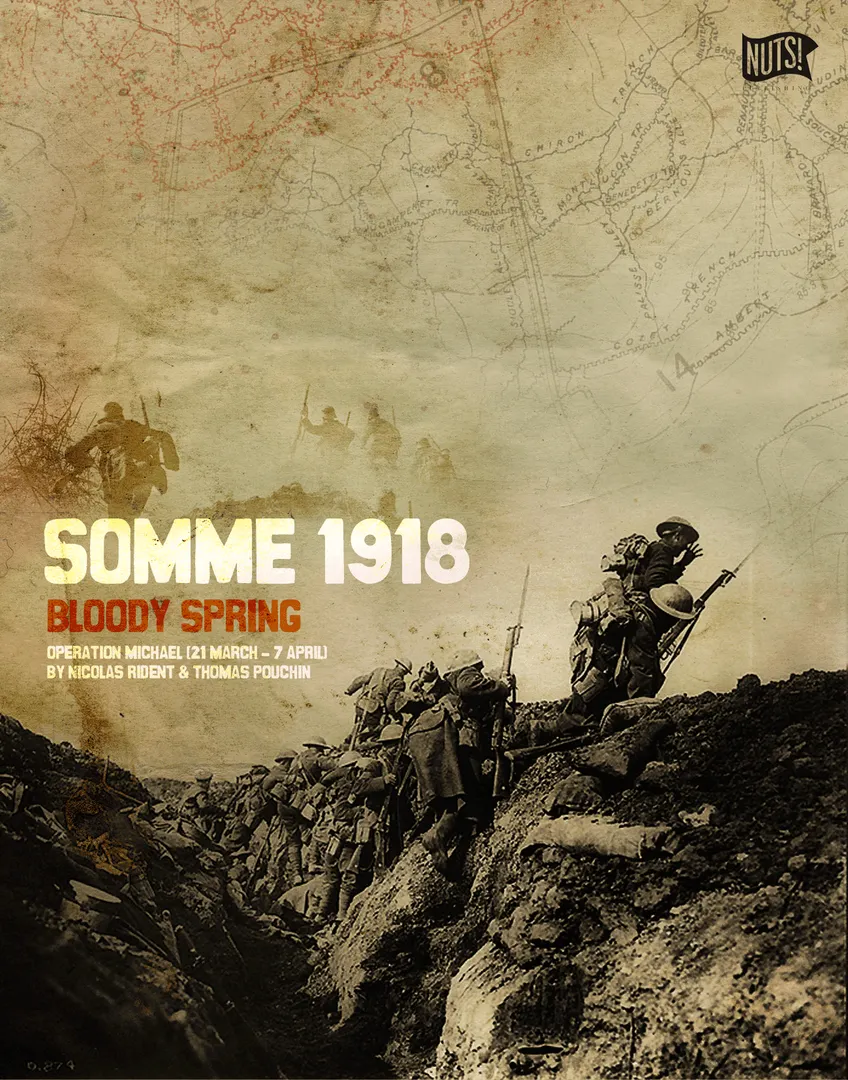
Somme 1918: Bloody Spring è un gioco da tavolo pubblicato nel 2012 per 2 giocatori, con partite da 240 minuti e dai 14 anni in su. È stato ideato da Nicolas Rident e Thomas Pouchin e le sue meccaniche principali sono Dice Rolling, Hexagon Grid e Simulation.






In inglese
Somme 1918 is the second game in a series that covers all of the offensives on the Western Front in 1918 and the Sequel to Marne 1918: Friedensturm. Somme 18 is different from Marne 1918 because it covers only one battle, Operation Michael, while Marne 1918 simulated a series of offensives, from Blucher to Friedensturm. The result is a more intense and nerve-wracking game that takes place over eight turns (from the end of March to mid-April), at least half of which are composed of three operational phases. Both players will face difficult challenges. The German player needs to re-create the historic breakthrough and has to put in every effort to reach Amiens. The Allied player has to resist succumbing to panic in the first turns in order to organize an effective defense, and then a counter-attack near the end of the game. While the basic rules in Somme 18 are identical to those in Marne 1918 (with the exception of the air rules, which have been completely revised), the advanced rules will be very different. The principal reason is the length of Operation Michael, about fifteen days, which does not give an opportunity for the campaign management rules of Marne 1918 to be used. So, all of the unit management tracks have disappeared and have been replaced by one table that manages the replacement and re-construction of units. Strategic movement has also been greatly simplified and adapted to the tempo of the game. Somme 1918 will of course be enriched by numerous specific rules, simulating the particularities of this battle. Petain’s Reticence: Simulates the French command’s lack of urgency in supporting their British allies. The arrival of French reinforcements without their artillery support, allowing a quicker deployment of troops coupled with a reduction in their value. Inter-Allied Cooperation: This will be extremely reduced at the beginning of the campaign. Evolution of the use of Stoss: The doctrine of using assault troops had been principally introduced by General von Hutier, in Russia and Italy. At the beginning of Operation Michael, the generals commanding the Second and Seventeenth armies used their Stosstruppen in frontal assaults, wasting these elite forces and provoking fury from Ludendorff. A rule thus simulates the evolution of this doctrine. The Doullens Conference: At the height of the German offensive, while the French Army under Petain prepared to cut its ties with the British, Haig accepted that he be placed under the command of Foch, finally creating an inter-Allied command. This rule simulates this conference, tied to German conquests. It also plays a part in obtaining victory points. In fact, this rule is really the heart of the game and we think that players will be pleased with the proposed system that will bring together the different parameters of this game. • Boxed game • 1 A1 single-sided maps • About 560 counters • 24 pages rules booklet in english • 2 player aids in english • Introductory historical booklet with design notes • 4 dice (from Nuts Publishing website)
Secondo il catalogo, Somme 1918: Bloody Spring supporta 2 giocatori. È il numero di giocatori indicato dall’editore, quindi il gioco è pensato esattamente per quel numero di partecipanti. Le varianti per gruppi di altre dimensioni, se esistono, sono descritte nel regolamento della tua edizione: consultalo prima di preparare una configurazione diversa.
La durata indicata per Somme 1918: Bloody Spring è di 240 minuti, la stima dell’editore per una partita completa. La durata effettiva dipende dal gruppo, dal numero di giocatori e dalla conoscenza delle regole: le prime partite durano di più, i gruppi esperti finiscono prima. Preparazione e spiegazione delle regole non sono comprese nella stima.
Il catalogo indica Somme 1918: Bloody Spring dai 14 anni in su. È la raccomandazione dell’editore e tiene conto della lettura richiesta, della complessità delle regole e dei componenti piccoli, non solo del tema. I più giovani spesso possono giocare con l’aiuto di un adulto: controlla l’età consigliata sulla tua edizione e l’esperienza del tuo gruppo con i giochi da tavolo.
Somme 1918: Bloody Spring ha un punteggio di complessità di 3,6 su 5 secondo i giocatori di BoardGameGeek, il che lo rende un gioco di media complessità. Il punteggio riflette quanta conoscenza delle regole, pianificazione e decisioni richiede una partita tipica. I giochi impegnativi richiedono una prima spiegazione più lunga, quindi conviene usare una guida di preparazione.
Somme 1918: Bloody Spring appartiene a queste categorie: Wargame e World War I. Le sue meccaniche principali sono Dice Rolling, Hexagon Grid e Simulation. Le categorie descrivono il tema e l’ambientazione di un gioco, mentre le meccaniche descrivono ciò che i giocatori fanno davvero nel proprio turno. Ogni meccanica porta a una pagina del catalogo con giochi simili.
Gli autori accreditati di Somme 1918: Bloody Spring sono: Nicolas Rident e Thomas Pouchin. Questi crediti provengono dai dati pubblicati del gioco e indicano le persone responsabili della sua progettazione, non gli illustratori o gli editori. Le pagine degli autori su MeepleRules raccolgono altri titoli degli stessi autori, utili quando un gioco ti piace e ne cerchi di simili.
Il catalogo classifica Somme 1918: Bloody Spring come gioco base. Si gioca da solo con i componenti presenti nella scatola e non richiede altri titoli. Le espansioni, se esistono, aggiungono nuovo contenuto o nuove regole e sono elencate separatamente nel catalogo con un collegamento a questo gioco base.