

- Posizione BGG
- BGG #16
- Valutazione BGG
- 8,2
Twilight Struggle
- 2 giocatori
- 120–180 min
- Complessità 3,6/5
- 2005
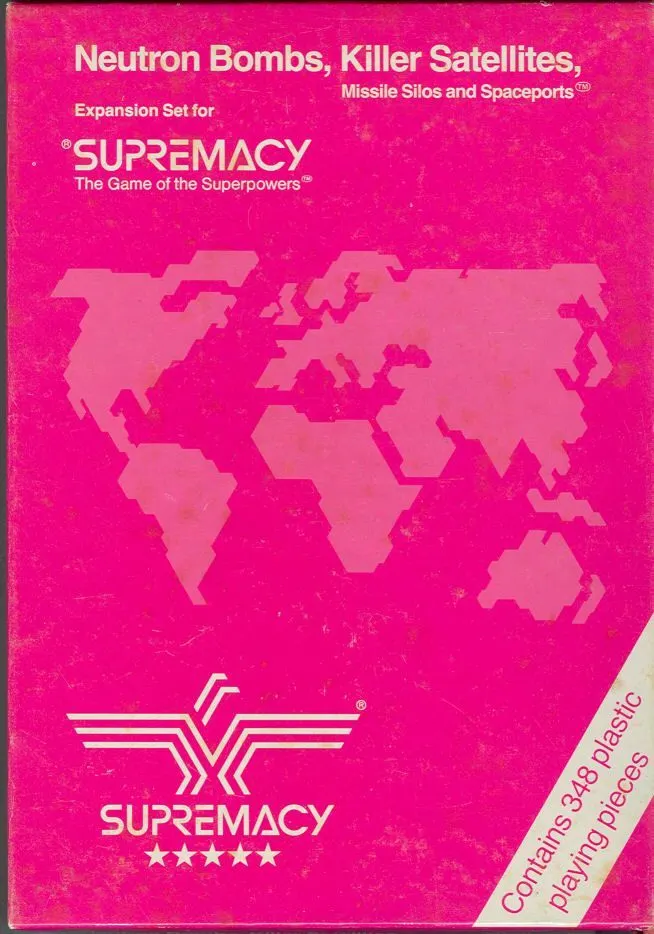
Espansione di Supremacy: The Game of the Superpowers
1988
Aiuto con le regole di Supremacy: Neutron Bombs and Killer Satellites
Spiegazioni chiare di turni, effetti delle carte e situazioni dubbie, con riferimenti alle fonti ufficiali e cronologia delle domande salvata.
Cosa vuoi sapere?
Le risposte vengono dal regolamento ufficiale, con la pagina da verificare.
Supremacy: Neutron Bombs and Killer Satellites è un’espansione di Supremacy: The Game of the Superpowers pubblicata nel 1988 per 2–8 giocatori, con partite da 120 minuti e dai 12 anni in su. È stato ideato da Robert J. Simpson.






In inglese
Neutron bombs and killer satellites are new weapons, which will give you more tactical and strategical options during a battle. Fire neutron bombs at a territory, destroy your opponent's armies, then occupy that territory with your own armies and take the resources. Killer satellites are able to attack L-stars and other killer satellites. They may also shoot down nukes. Missile silos are used to fire nukes and neutron bombs. Spaceports are used to launch L-stars and killer satellites. Playing Equipment Colored disks (6 x 39) are color-matched to each superpower. Use them to record the number of neutron bombs and killer satellites in your supply center. They are also used to represent the missile silos and spaceports when placed on the game board. Each colored disk represents one missile silo. Two disks, placed on top of each other, represent spaceports. Colored mushroom clouds (6 x 18) are color-matched to each superpower. Use them to mark where a neutron bomb has exploded. Expands: Supremacy: The Game of the Superpowers
Secondo il catalogo, Supremacy: Neutron Bombs and Killer Satellites supporta da 2 a 8 giocatori. L’intervallo corrisponde al numero di giocatori indicato dall’editore, quindi il gioco si può preparare per qualsiasi gruppo entro quei limiti. Preparazione, alcune regole e punteggio possono comunque variare in base al numero di giocatori: controlla la configurazione esatta nel regolamento della tua edizione.
La durata indicata per Supremacy: Neutron Bombs and Killer Satellites è di 120 minuti, la stima dell’editore per una partita completa. La durata effettiva dipende dal gruppo, dal numero di giocatori e dalla conoscenza delle regole: le prime partite durano di più, i gruppi esperti finiscono prima. Preparazione e spiegazione delle regole non sono comprese nella stima.
Il catalogo indica Supremacy: Neutron Bombs and Killer Satellites dai 12 anni in su. È la raccomandazione dell’editore e tiene conto della lettura richiesta, della complessità delle regole e dei componenti piccoli, non solo del tema. I più giovani spesso possono giocare con l’aiuto di un adulto: controlla l’età consigliata sulla tua edizione e l’esperienza del tuo gruppo con i giochi da tavolo.
Supremacy: Neutron Bombs and Killer Satellites ha un punteggio di complessità di 2,7 su 5 secondo i giocatori di BoardGameGeek, il che lo rende un gioco piuttosto leggero. Il punteggio riflette quanta conoscenza delle regole, pianificazione e decisioni richiede una partita tipica. I giochi impegnativi richiedono una prima spiegazione più lunga, quindi conviene usare una guida di preparazione.
Supremacy: Neutron Bombs and Killer Satellites appartiene a queste categorie: Wargame, Modern Warfare e Expansion for Base-game. Le categorie descrivono il tema, l’ambientazione e lo stile di un gioco, non le sue regole. Filtra il catalogo per la stessa categoria per trovare giochi simili se ti è piaciuto Supremacy: Neutron Bombs and Killer Satellites e cerchi qualcosa di paragonabile per la prossima serata.
Gli autori accreditati di Supremacy: Neutron Bombs and Killer Satellites sono: Robert J. Simpson. Questi crediti provengono dai dati pubblicati del gioco e indicano le persone responsabili della sua progettazione, non gli illustratori o gli editori. Le pagine degli autori su MeepleRules raccolgono altri titoli degli stessi autori, utili quando un gioco ti piace e ne cerchi di simili.
Il catalogo classifica Supremacy: Neutron Bombs and Killer Satellites come espansione di Supremacy: The Game of the Superpowers. Le espansioni aggiungono contenuti, regole o scenari al gioco base e di solito non si possono giocare da sole, quindi per usarla ti serve Supremacy: The Game of the Superpowers. Controlla che la tua edizione di Supremacy: The Game of the Superpowers sia compatibile, perché alcune espansioni sono state riviste tra un’edizione e l’altra.