
- Posizione BGG
- BGG #3965
- Valutazione BGG
- 6,9
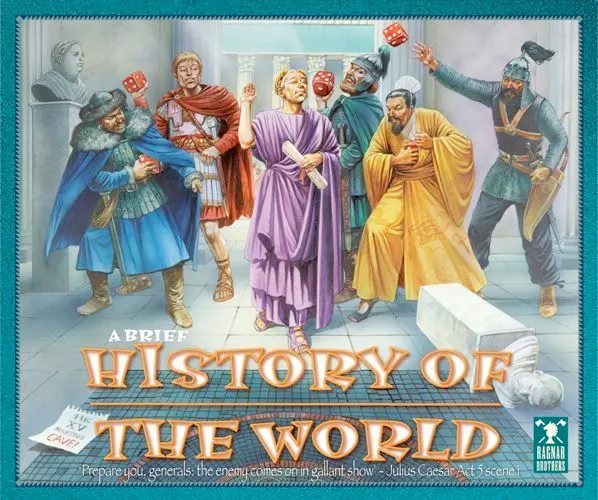
A Brief History of the World
- 3–6 giocatori
- 90–180 min
- Complessità 2,9/5
- 2009
1982
Aiuto con le regole di T.E.G. II
Spiegazioni chiare di turni, effetti delle carte e situazioni dubbie, con riferimenti alle fonti ufficiali e cronologia delle domande salvata.
Per 2 giocatori
Cosa vuoi sapere?
Le risposte vengono dal regolamento ufficiale, con la pagina da verificare.
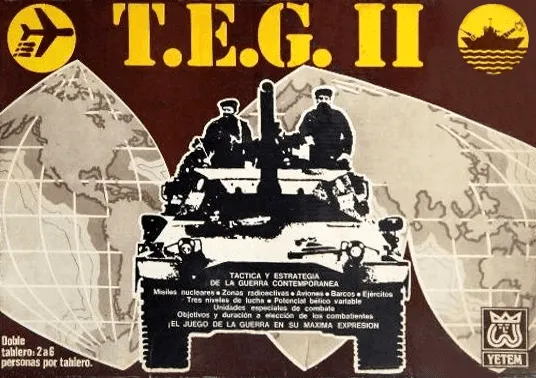
T.E.G. II è un gioco da tavolo pubblicato nel 1982 per 2–6 giocatori e con partite da 120 minuti. Le sue meccaniche principali sono Area Movement, Area Majority / Influence e Simulation.




In inglese
T.E.G. II is a new game from Plan Táctico y Estratégico de la Guerra (T.E.G.), involving armies, ships, aircraft, and nuclear rockets. For those who never played the T.E.G. I, as for experts strategists, the new T.E.G. proposes a different way of playing, lots of action and rapid development. Each player represents one of the great powers of the world: U.S.A., U.S.S.R., China, Japan, Eastern Europe and Western Europe. At the beginning each player chooses, according to their strategic thinking, several military targets: Control, Intervention and Non-Intervention in the various regions of the world. Each target has a value in points. All targets are placed in the Objectives Table. After the incorporations are done comes the fighting. The fighting is between ships that occupie the same region, to which reinforcements can be added, brought in from neighboring regions. The battles are resolved without dice, using a Command of Battle. Apart from the armies, ships and planes, there are other elements of exceptional strength: the nuclear missile and the special unit. They are obtained when the player gets certain levels of war potential. At the end of the game, each player sums the points of the objectives achieved. The winner is the one who got the highest score.
Secondo il catalogo, T.E.G. II supporta da 2 a 6 giocatori. L’intervallo corrisponde al numero di giocatori indicato dall’editore, quindi il gioco si può preparare per qualsiasi gruppo entro quei limiti. Preparazione, alcune regole e punteggio possono comunque variare in base al numero di giocatori: controlla la configurazione esatta nel regolamento della tua edizione.
La durata indicata per T.E.G. II è di 120 minuti, la stima dell’editore per una partita completa. La durata effettiva dipende dal gruppo, dal numero di giocatori e dalla conoscenza delle regole: le prime partite durano di più, i gruppi esperti finiscono prima. Preparazione e spiegazione delle regole non sono comprese nella stima.
T.E.G. II ha un punteggio di complessità di 2,7 su 5 secondo i giocatori di BoardGameGeek, il che lo rende un gioco piuttosto leggero. Il punteggio riflette quanta conoscenza delle regole, pianificazione e decisioni richiede una partita tipica. I giochi impegnativi richiedono una prima spiegazione più lunga, quindi conviene usare una guida di preparazione.
T.E.G. II appartiene a queste categorie: Wargame e Modern Warfare. Le sue meccaniche principali sono Area Movement, Area Majority / Influence e Simulation. Le categorie descrivono il tema e l’ambientazione di un gioco, mentre le meccaniche descrivono ciò che i giocatori fanno davvero nel proprio turno. Ogni meccanica porta a una pagina del catalogo con giochi simili.
Il catalogo classifica T.E.G. II come gioco base. Si gioca da solo con i componenti presenti nella scatola e non richiede altri titoli. Le espansioni, se esistono, aggiungono nuovo contenuto o nuove regole e sono elencate separatamente nel catalogo con un collegamento a questo gioco base.