
- Posizione BGG
- BGG #8645
- Valutazione BGG
- 8,0
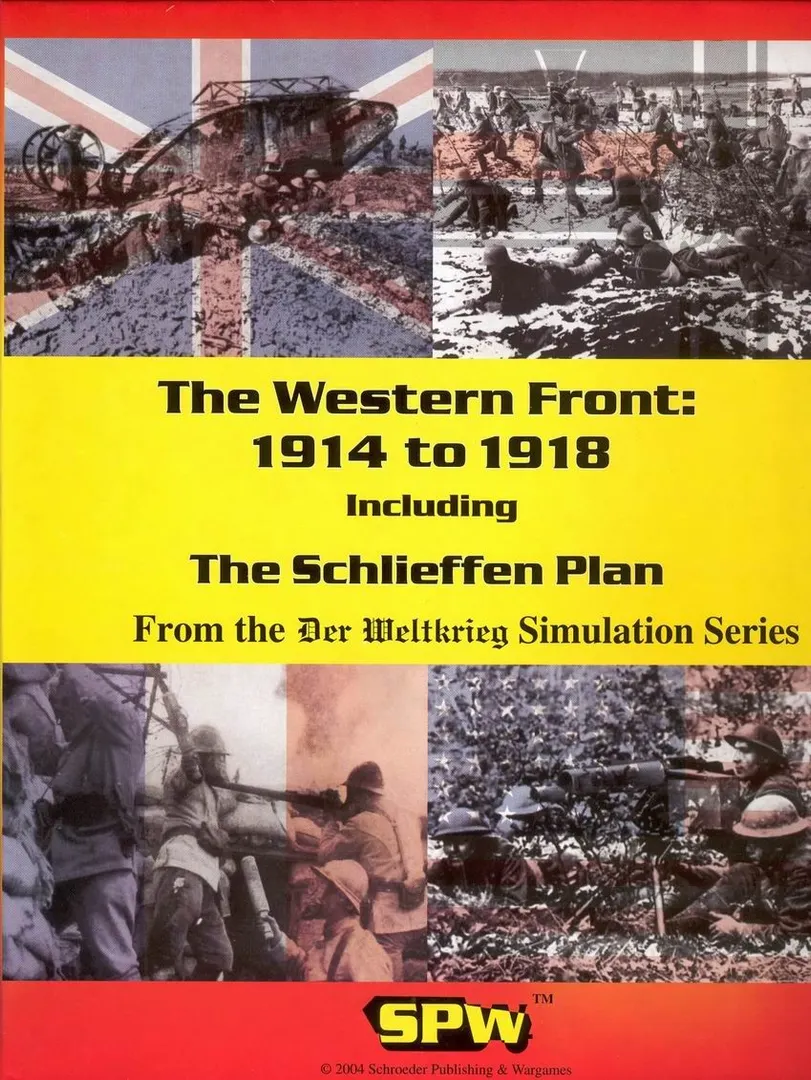
The Western Front: 1914 to 1918
- 2 giocatori
- 360 min
- Complessità 3,4/5
- 2004
Espansione di Serbia the Defiant / Romania: Transylvanian Gambit
2001
Aiuto con le regole di The 1916 Brusilov Offensive / Gorlice-Tarnow Breakthrough
Spiegazioni chiare di turni, effetti delle carte e situazioni dubbie, con riferimenti alle fonti ufficiali e cronologia delle domande salvata.
Cosa vuoi sapere?
Le risposte vengono dal regolamento ufficiale, con la pagina da verificare.
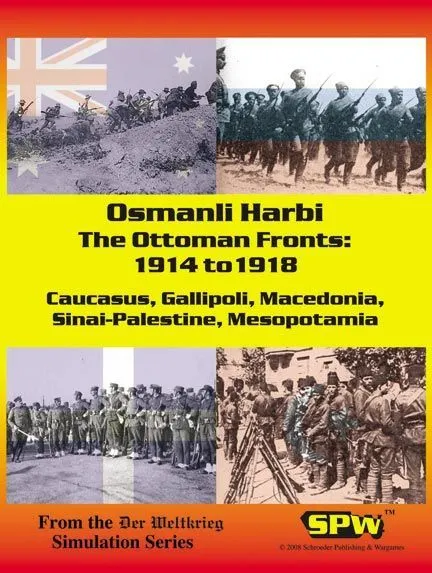
The 1916 Brusilov Offensive / Gorlice-Tarnow Breakthrough è un’espansione di Serbia the Defiant / Romania: Transylvanian Gambit pubblicata nel 2001 per 2 giocatori, con partite da 360 minuti e dai 12 anni in su. È stato ideato da David Schroeder e le sue meccaniche principali sono Dice Rolling, Hexagon Grid e Simulation.


In inglese
Part of David Schroeder's "Der Weltkrieg" wargame series. Gorlice-Tarnow Breakthrough: May 1915 The head of the German armies, von Falkenhayn, wants the focus of the German operations in the war to be on the western front. Yet to make this a reality, he feels that relief must first be provided to the endangered Austro-Hungarians. Recent Russian pressure had almost cracked the final Austro-Hungarian defensive lines in the Carpathians, and new pressure was being brought to bear on Germany's weak ally by the Italians, who had just entered the war. To help the Austro-Hungarians, a new German army is formed under the capable von Mackensen, and placed in the line east of Crackow. After a furious hurricane barrage, von Mackensen attacks and completely pierces the Russian lines. A Russian retreat ensues that enables the Central Powers' forces to recapture most of Galicia. Von Falkenhayn wanted to stop operations at this point and shift to the west, but pressure from the Kaiser, at the insistance of Hindenburg and Ludendorff, resulted in a widening of the offensive. Attacks were then launched in the northern sector of the eastern front as well. Enveloped on two sides, the Russians reacted with their classic response, a retreat back into Russia, leaving Russian Poland to the Germans. The Central Powers offensive wound down as they struggled to supply troops hundreds of miles past the supply heads. The offensive has saved Austria-Hungary from immediate peril, but it does not knock Russia out of the war. And instead of enabling von Falkenhayn to focus on the west, most of the newly created German forces are fed into the increasing vastness of the eastern front. The Brusilov Offensive: June 1916 In response to French pleas for help to relieve the pressure at Verdun, the Russian STAVKA authorizes a major offensive. General Brusilov plans attacks all along the front of his Southwest Army Group aiming primarily at Austro-Hungarian positions. His belief is that attacks across the width of his front will prevent the enemy from being able to quickly reinforce areas under local attack. The Austro-Hungarians are caught off-guard as their focus is a new offensive of their own in Italy. The Russian attacks achieves numerous breakthroughs in numerous sectors and many Austro-Hungarian units are completely routed. The Russians take hundreds of thousands of prisoners and advance tens of miles, recapturing significant cities. German reinforcements are rushed from the north and from Verdun. The Germans also take over command of almost the entire eastern front, and Austria-Hungary is placed in a subserviant position. The Russian offensive peters out as Brusilov's forces start to experience supply shortages, and Central Powers' resistance stiffens. Brusilov had planned on support from Russian armies to the north to pin down German forces with attacks of their own, but they failed to support him. The losses mount and, after months of fighting, the Russians finally call a halt to further attacks. The Brusilov Offensive did relieve the pressure on the French and it came very close to knocking Austria-Hungary out of the war. Had Brusilov been supported by his peers to the north, and by the Russian Allies (including the hesitant Romanians) the war might well have been won by the Entente in 1916. This game contains 2 scenarios covering the 1915 Gorlice-Tarnow offensive and the 1916 Brusilov Offensive. NOTE: This is not a stand-alone game. It requires the ownership of Tannenberg: Eagles in the East / Galicia: The Forgotten Cauldron and Serbia the Defiant / Romania: Transylvanian Gambit to play. 20km/hex 4 days/turn 560 counters (2 countersheets) 3 small maps (4-5N, 4-5E, 5-5S) Complexity = medium
Secondo il catalogo, The 1916 Brusilov Offensive / Gorlice-Tarnow Breakthrough supporta 2 giocatori. È il numero di giocatori indicato dall’editore, quindi il gioco è pensato esattamente per quel numero di partecipanti. Le varianti per gruppi di altre dimensioni, se esistono, sono descritte nel regolamento della tua edizione: consultalo prima di preparare una configurazione diversa.
La durata indicata per The 1916 Brusilov Offensive / Gorlice-Tarnow Breakthrough è di 360 minuti, la stima dell’editore per una partita completa. La durata effettiva dipende dal gruppo, dal numero di giocatori e dalla conoscenza delle regole: le prime partite durano di più, i gruppi esperti finiscono prima. Preparazione e spiegazione delle regole non sono comprese nella stima.
Il catalogo indica The 1916 Brusilov Offensive / Gorlice-Tarnow Breakthrough dai 12 anni in su. È la raccomandazione dell’editore e tiene conto della lettura richiesta, della complessità delle regole e dei componenti piccoli, non solo del tema. I più giovani spesso possono giocare con l’aiuto di un adulto: controlla l’età consigliata sulla tua edizione e l’esperienza del tuo gruppo con i giochi da tavolo.
The 1916 Brusilov Offensive / Gorlice-Tarnow Breakthrough ha un punteggio di complessità di 3,0 su 5 secondo i giocatori di BoardGameGeek, il che lo rende un gioco di media complessità. Il punteggio riflette quanta conoscenza delle regole, pianificazione e decisioni richiede una partita tipica. I giochi impegnativi richiedono una prima spiegazione più lunga, quindi conviene usare una guida di preparazione.
The 1916 Brusilov Offensive / Gorlice-Tarnow Breakthrough appartiene a queste categorie: Wargame, Expansion for Base-game e World War I. Le sue meccaniche principali sono Dice Rolling, Hexagon Grid e Simulation. Le categorie descrivono il tema e l’ambientazione di un gioco, mentre le meccaniche descrivono ciò che i giocatori fanno davvero nel proprio turno. Ogni meccanica porta a una pagina del catalogo con giochi simili.
Gli autori accreditati di The 1916 Brusilov Offensive / Gorlice-Tarnow Breakthrough sono: David Schroeder. Questi crediti provengono dai dati pubblicati del gioco e indicano le persone responsabili della sua progettazione, non gli illustratori o gli editori. Le pagine degli autori su MeepleRules raccolgono altri titoli degli stessi autori, utili quando un gioco ti piace e ne cerchi di simili.
Il catalogo classifica The 1916 Brusilov Offensive / Gorlice-Tarnow Breakthrough come espansione di Serbia the Defiant / Romania: Transylvanian Gambit. Le espansioni aggiungono contenuti, regole o scenari al gioco base e di solito non si possono giocare da sole, quindi per usarla ti serve Serbia the Defiant / Romania: Transylvanian Gambit. Controlla che la tua edizione di Serbia the Defiant / Romania: Transylvanian Gambit sia compatibile, perché alcune espansioni sono state riviste tra un’edizione e l’altra.