
- Posizione BGG
- BGG #12.794
- Valutazione BGG
- 7,4
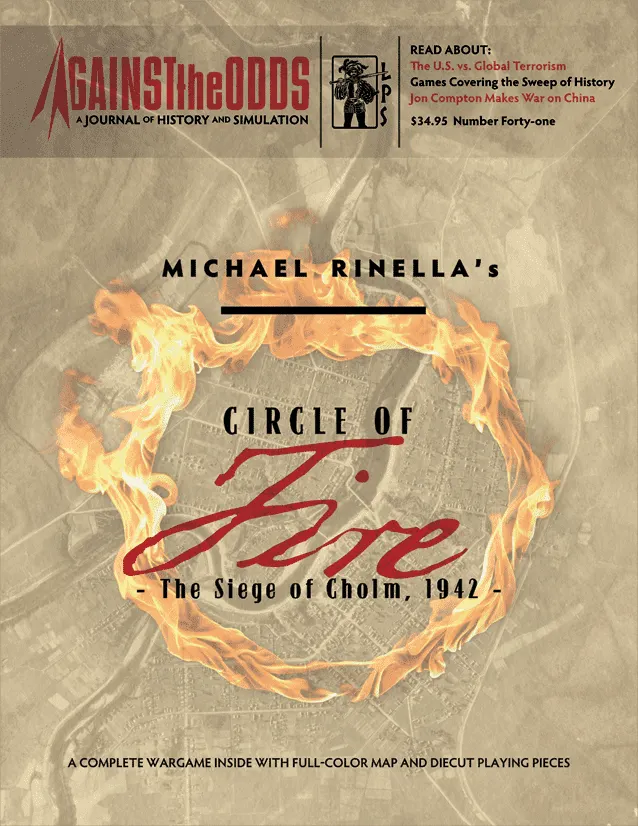
Circle of Fire: The Siege of Cholm, 1942
- 1–2 giocatori
- 180–240 min
- Complessità 2,3/5
- 2014
2009
Aiuto con le regole di The Pocket at Falaise
Spiegazioni chiare di turni, effetti delle carte e situazioni dubbie, con riferimenti alle fonti ufficiali e cronologia delle domande salvata.
Per 1 giocatore
Cosa vuoi sapere?
Le risposte vengono dal regolamento ufficiale, con la pagina da verificare.
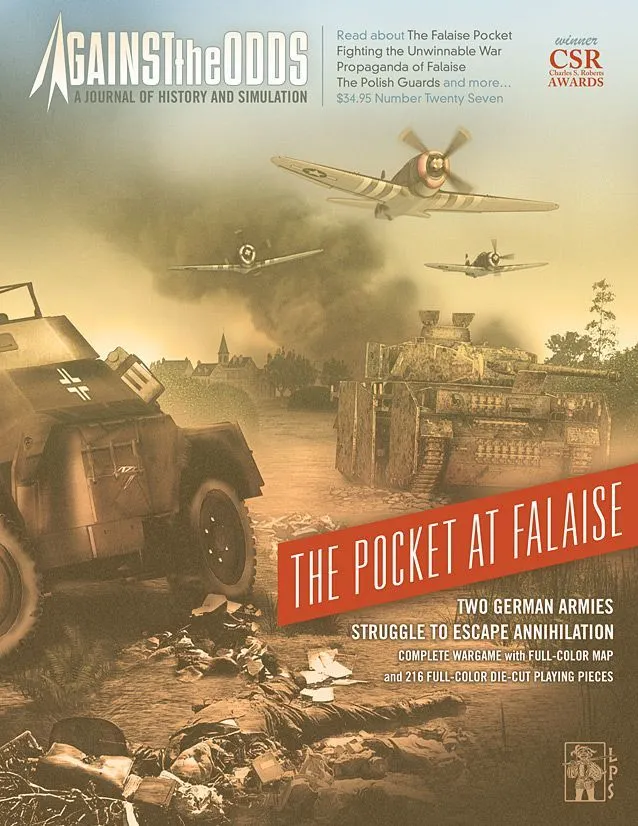
The Pocket at Falaise è un gioco da tavolo pubblicato nel 2009 per 1–2 giocatori, con partite da 240 minuti e dai 12 anni in su. È stato ideato da Ted Raicer, Paul Rohrbaugh e Lembit Tohver e le sue meccaniche principali sono Hexagon Grid e Chit-Pull System.



In inglese
The Pocket at Falaise is a game on the final phase of the Allied campaign in Normandy. After the failure of Hitler’s counterattack in early August to halt the Allied breakout from Normandy, the German 7th and 5th Panzer Armies found themselves on the verge of being pocketed by converging American and British pincers. On the evening of August 16th the Germans began to pull back behind the Orne and Dives rivers, hoping to regroup for a defense of the Seine, even as the Allies attempted to close the trap on some twentyfive German divisions. Ultimately, about half the German forces in the pocket escaped, leaving almost all their heavy equipment behind. It was a major Allied victory, but not a war-winning one. At the end of the Gulf War in '91, cable TV news was full of horrific photos from the "Highway of Death," the route back to Iraq from Kuwait that seemed, almost literally, to be "paved" with burnt-out vehicles. Those who study WWII remember similar destruction... on the road out of the Falaise Pocket... where 25 German divisions raced for survival, while the Allied armies aimed to turn Hitler's delayed counterattack on Normandy from failure to war-ending disaster. In one sense, neither side succeeded. But the devastation was something unprecedented. Now, you have a chance to do better. The Pocket at Falaise puts each player in the difficult position of trying to overcome the obstacles, both human and mechanical, tactical and operational, that interfered with success in 1944. Award-winning designer Ted Racier explains: The story of the Falaise battle is that of two German armies trying to escape a trap set for them by their own high command, and of the Allied armies trying to close the trap, despite the hesitations and divisions of their own higher commanders. While we may think of the Allies as having overwhelming forces, at the actual point of contact, there were relatively weak units trying to "plug the leak" against overwhelming numbers of intensely motivated Germans. The situation means that the "retreating" Germans are actually forced to do a lot of attacking, while the "advancing" allies found themselves in a desperate defense. The Pocket at Falaise uses a chit-pull activation system to capture some of the chaotic and uncoordinated efforts. Players are forced to juggle to make the best out of an increasingly difficult situation, and a combat scale that straddles "tactical" and "operational," aiming to capture the best of both without adding a lot of fiddly rules. A complete set of solitaire rules for the game completes the package. Eisenhower called it, "The Great Killing Ground." What the Germans called it cannot be printed. What you will call it depends on how well you do... Against the Odds. Published in Against the Odds Magazine #27, October 2009. Game Scale: Game Turn: 12 hours Hex: 0.75 miles / 1.2 kilometers Units: Battalion to Brigade Game Inventory: One 22 x 34" full color map Two dual-side printed countersheets (198 9/16" counters) One 12-page Pocket at Falaise rulebook Two dual-side printed Player Aid cards One 6-sided die Solitaire Playability: Medium Complexity Level: Medium Players: 2 or more Playing Time: 4-15 hours
Secondo il catalogo, The Pocket at Falaise supporta da 1 a 2 giocatori. L’intervallo corrisponde al numero di giocatori indicato dall’editore, quindi il gioco si può preparare per qualsiasi gruppo entro quei limiti. Preparazione, alcune regole e punteggio possono comunque variare in base al numero di giocatori: controlla la configurazione esatta nel regolamento della tua edizione.
La durata indicata per The Pocket at Falaise è di 240 minuti, la stima dell’editore per una partita completa. La durata effettiva dipende dal gruppo, dal numero di giocatori e dalla conoscenza delle regole: le prime partite durano di più, i gruppi esperti finiscono prima. Preparazione e spiegazione delle regole non sono comprese nella stima.
Il catalogo indica The Pocket at Falaise dai 12 anni in su. È la raccomandazione dell’editore e tiene conto della lettura richiesta, della complessità delle regole e dei componenti piccoli, non solo del tema. I più giovani spesso possono giocare con l’aiuto di un adulto: controlla l’età consigliata sulla tua edizione e l’esperienza del tuo gruppo con i giochi da tavolo.
The Pocket at Falaise ha un punteggio di complessità di 2,8 su 5 secondo i giocatori di BoardGameGeek, il che lo rende un gioco piuttosto leggero. Il punteggio riflette quanta conoscenza delle regole, pianificazione e decisioni richiede una partita tipica. I giochi impegnativi richiedono una prima spiegazione più lunga, quindi conviene usare una guida di preparazione.
The Pocket at Falaise appartiene a queste categorie: Wargame e World War II. Le sue meccaniche principali sono Hexagon Grid e Chit-Pull System. Le categorie descrivono il tema e l’ambientazione di un gioco, mentre le meccaniche descrivono ciò che i giocatori fanno davvero nel proprio turno. Ogni meccanica porta a una pagina del catalogo con giochi simili.
Gli autori accreditati di The Pocket at Falaise sono: Ted Raicer, Paul Rohrbaugh e Lembit Tohver. Questi crediti provengono dai dati pubblicati del gioco e indicano le persone responsabili della sua progettazione, non gli illustratori o gli editori. Le pagine degli autori su MeepleRules raccolgono altri titoli degli stessi autori, utili quando un gioco ti piace e ne cerchi di simili.
Il catalogo classifica The Pocket at Falaise come gioco base. Si gioca da solo con i componenti presenti nella scatola e non richiede altri titoli. Le espansioni, se esistono, aggiungono nuovo contenuto o nuove regole e sono elencate separatamente nel catalogo con un collegamento a questo gioco base.