
- Posizione BGG
- BGG #13.995
- Valutazione BGG
- 8,3
Burnside Takes Command
- 2 giocatori
- 120 min
- Complessità 3,2/5
- 2003
2012
Aiuto con le regole di The Wolfenbüttel War
Spiegazioni chiare di turni, effetti delle carte e situazioni dubbie, con cronologia delle domande salvata.
Cosa vuoi sapere?
Le risposte vengono dal regolamento ufficiale, con la pagina da verificare.
The Wolfenbüttel War è un’espansione per gioco da tavolo pubblicata nel 2012 per 2 giocatori e dai 12 anni in su. È stato ideato da Charles S. Grant (II) e le sue meccaniche principali sono Simulation e Scenario / Mission / Campaign Game.




In inglese
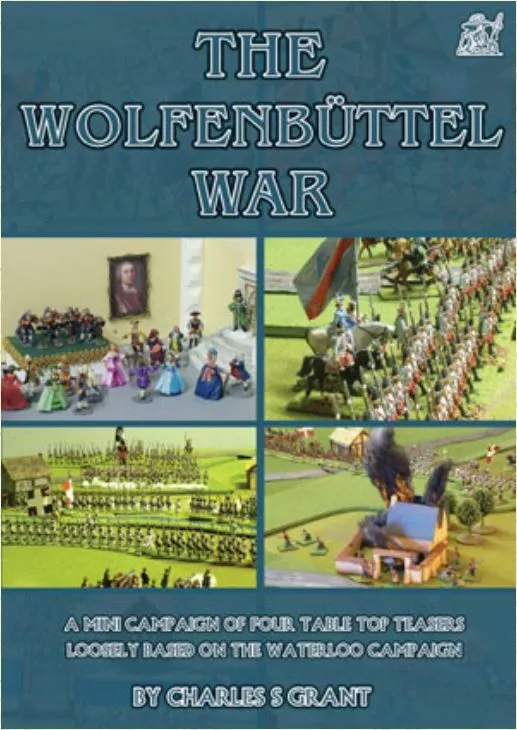
The Wolfenbüttel War concerns the hostilities of Charles’ two fictitious mid-eighteenth century combatants, the Grand Duchy of Lorraine and the Vereinigte Freie Städte (VFS). The scenarios are applicable to any horse and musket period with little modification. Where this mini-campaign differs from its predecessors (Raid on St.Michel, The Annexation of Chiraz) is that it is loosely based on a real campaign – that of the Hundred Days, culminating at Waterloo. The four scenarios and the movements between them are drawn from the battles of Quatre Bras, Ligny, Wavre and Waterloo. However, while the campaign sequence is followed the outcome is far from certain. The book provides the fictitious background to the war, planning details including the selection of forces, the instructions for each army, table top maps and orders for each side. There are instructions for the game organiser and options for forces in each battle if fought as a stand alone wargame. The book is illustrated with photographs of each battle as it was fought with Charles’ armies. Newspapers and a Who’s Who, not to mention the Ballroom scene, add colour to the story of the Wolfenbüttel War. —description from the publisher's website
Secondo il catalogo, The Wolfenbüttel War supporta 2 giocatori. È il numero di giocatori indicato dall’editore, quindi il gioco è pensato esattamente per quel numero di partecipanti. Le varianti per gruppi di altre dimensioni, se esistono, sono descritte nel regolamento della tua edizione: consultalo prima di preparare una configurazione diversa.
Il catalogo indica The Wolfenbüttel War dai 12 anni in su. È la raccomandazione dell’editore e tiene conto della lettura richiesta, della complessità delle regole e dei componenti piccoli, non solo del tema. I più giovani spesso possono giocare con l’aiuto di un adulto: controlla l’età consigliata sulla tua edizione e l’esperienza del tuo gruppo con i giochi da tavolo.
The Wolfenbüttel War appartiene a queste categorie: Wargame e Expansion for Base-game. Le sue meccaniche principali sono Simulation e Scenario / Mission / Campaign Game. Le categorie descrivono il tema e l’ambientazione di un gioco, mentre le meccaniche descrivono ciò che i giocatori fanno davvero nel proprio turno. Ogni meccanica porta a una pagina del catalogo con giochi simili.
Gli autori accreditati di The Wolfenbüttel War sono: Charles S. Grant (II). Questi crediti provengono dai dati pubblicati del gioco e indicano le persone responsabili della sua progettazione, non gli illustratori o gli editori. Le pagine degli autori su MeepleRules raccolgono altri titoli degli stessi autori, utili quando un gioco ti piace e ne cerchi di simili.
Il catalogo classifica The Wolfenbüttel War come espansione. Le espansioni aggiungono contenuti, regole o scenari a un gioco base esistente e di solito non si possono giocare da sole. Controlla sulla scatola o nella descrizione dell’editore quale gioco base serve e assicurati che la tua edizione di quel gioco sia compatibile con questa espansione.
