
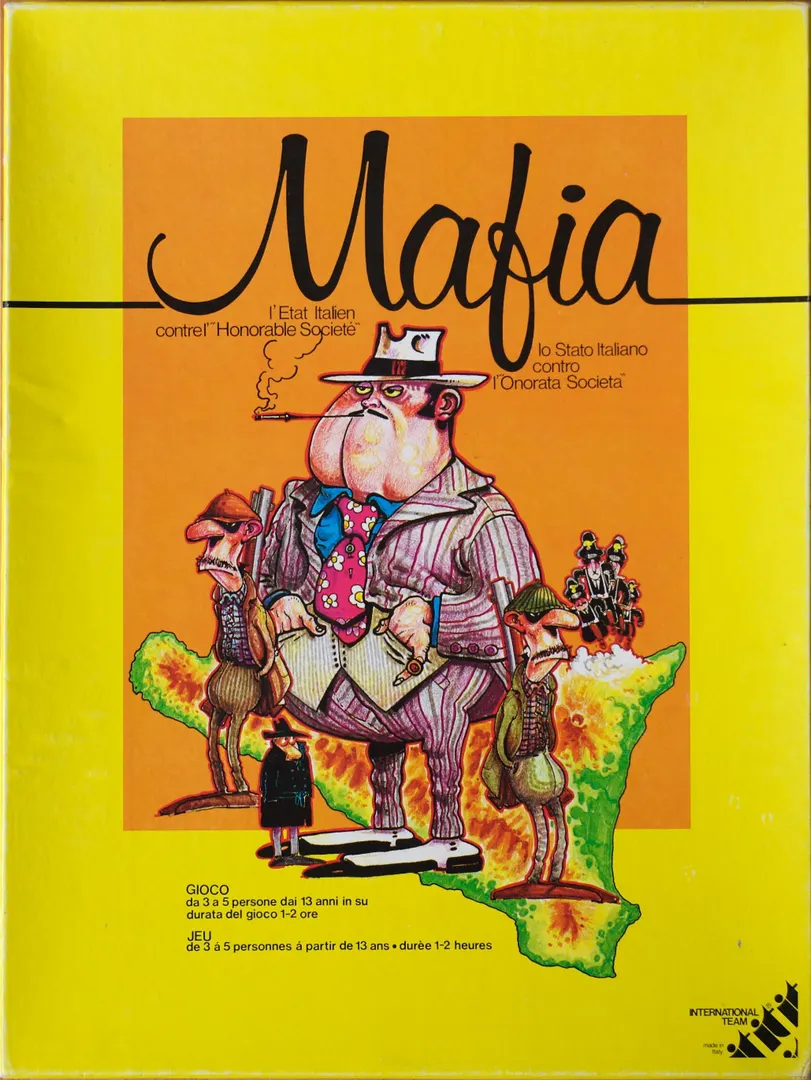
- Posizione BGG
- BGG #25.332
- Valutazione BGG
- 5,9
Mafia
- 3–5 giocatori
- 60–120 min
- Complessità 1,8/5
- 1981
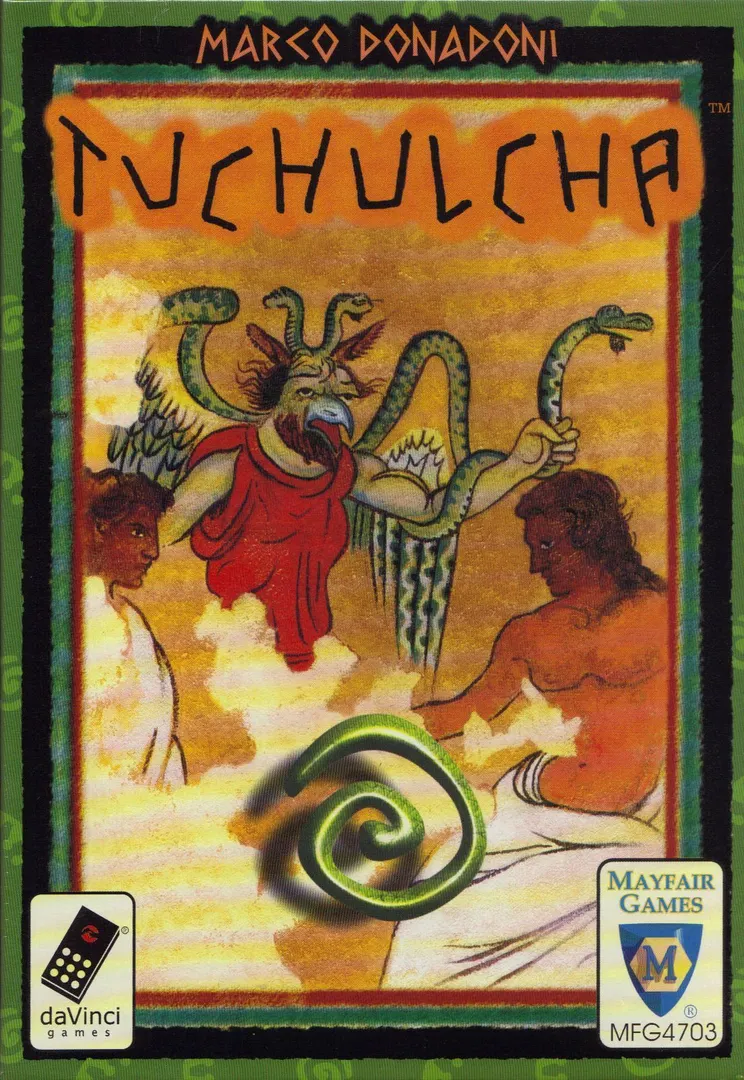
2004
Aiuto con le regole di Tuchulcha
Spiegazioni chiare di turni, effetti delle carte e situazioni dubbie, con riferimenti alle fonti ufficiali e cronologia delle domande salvata.
Cosa vuoi sapere?
Le risposte vengono dal regolamento ufficiale, con la pagina da verificare.
Tuchulcha è un gioco da tavolo pubblicato nel 2004 per 2–4 giocatori, con partite da 30 minuti e dai 8 anni in su. È stato ideato da Marco Donadoni e le sue meccaniche principali sono Variable Player Powers, Roll / Spin and Move e Dice Rolling.



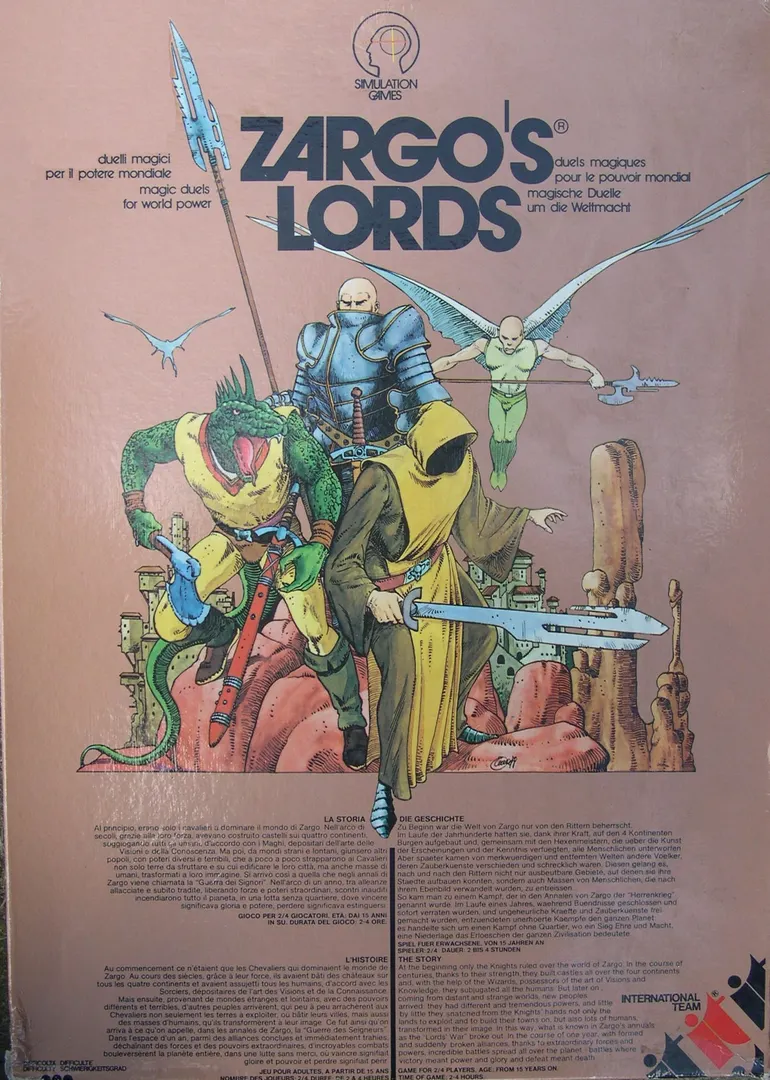




In inglese
Theme: Game is themed around a purification ritual of the ancient Etruscan people, who predated the Roman Empire around 6th century B.C. Each player represents a different temple, faithful to the divinities Achvizr, Alpan, Leinth, and Thalna. On "Tagete's" day, the Etruscan Haruspexes [priests] proceed down the path of purification to the Velthumena Altar. Goal: Each player has 8 pawns representing "Haruspexes" [priests] in their color. Each player is trying to move their priests along the path of purifiction from their home temple to the altar at the center of the board. One player may also choose the path of darkness and consecrate themselves to the divinity "Tuchulcha" with the goal of elminating all rival priests. This role is only available in 3 and 4 player games. If a player chooses this path, then another single player may consecrate themselves to "Lasa Vecuvia" with a different set of powers. This player's goal is to now move their priests to set "passages" on the path and place 4 seals to win the game. This role is only available in 4 player games. Players win by having the most priests in the center altar at game end. If a player chooses Tuchulcha's power, they win by eliminating all other priests, and lose if any priest enters the altar. A player that chooses the Lasa Vecuvia power wins only by placing all 4 seals. Gameplay: Game plays with 2, 3, or 4 players. Each player begins the game with 8 pawns on their home temple. On their turn players roll 2 dice. If doubles are rolled, the player may throw a third die. Then player chooses to move one or more of their pawns the number of pips shown on each die. For example, if a 5 and a 2 are rolled, a player may move one pawn 5 and another 2, or one pawn 5, and then 2 [not seven at once]. This is important as where you land can be significant on each move. Players move their pawns around a spiral path approaching the altar at the center. Along the way players will encounter other players' pawns, and special spaces on the path. These spaces can increase the "spiritual strength" of players' pieces by two times of three times [Mystical Stones], or "passage" spaces can banish them to the Tuchulcha forest. While Mystical Stone spaces are powerful in defense, pawns must move off these spaces as soon as they can. Pawns can normally pass through each other regardless of owner. Any number of a single player's pawns may occupy a single space. However, when a pawn would land on another player's by exact count, it must equal the "spiritual strength" of the player's pieces in the space. Normally, spiritual strenght is one per pawn, but in the 2x or 3x spaces these are multiplied respectively. If a moving player can eqaul the spiritual strength of pawns in the space, then the occupying pawns are banished to the Tuchulcha forest. These pawns are essentially out of the game, but can be used to activate the alternate "Tuchulcha" player role. Once a pawn banishes an opponent's pawn, it may not move again this turn. 2 player game uses 2 "neutral" colors which any player can move during their turn. 3 player game adds the optional Tuchulcha player role, and 4 player adds both Tuchulcha and Lasa Vecuvia roles to play. At any time one and only one player [in 3 and 4 player games], may choose to take on the role of Tuchulcha [a god of destruction]. To activate this power, the player must "sacrifice" 3 pawns. These pawns may come from the home temple, altar, path, or Tuchulcha forest. Once activated, the Tuchulcha player's new objective is to eliminate all other players' pawns. As soon as one other player's pawn enters the altar, Tuchulcha loses and is eliminated from the game. This can make this role selection a risky move. However, this player gains powerful new abilities. Tuchulcha's pawns can never be banished to the forest, he rolls 4 dice and selects the 3 best, and no longer has to stop after banishing an opponent's pawn. If a player chooses to be Tuchulcha in a 4 player game, then another [and only one] player may take the role of Lasa Vecuvia. This player must still have 4 active pawns in play to activate. This player's objectives are now to "seal" the 4 passages along the path. These passages normally banish pawns to the forest, but when the Lasa player lands a pawn on the passage, she places a seal token on the passage and removes the pawn from play. Once she places all four seals in this manner she wins the game. Components: 32 high quality wooden pawns in 4 colors 4 green wooden dice with gold pips and rounded corners 1 double sided game board for 3 and 4 player games 1 full color illustrated rules booklet
Secondo il catalogo, Tuchulcha supporta da 2 a 4 giocatori. L’intervallo corrisponde al numero di giocatori indicato dall’editore, quindi il gioco si può preparare per qualsiasi gruppo entro quei limiti. Preparazione, alcune regole e punteggio possono comunque variare in base al numero di giocatori: controlla la configurazione esatta nel regolamento della tua edizione.
La durata indicata per Tuchulcha è di 30 minuti, la stima dell’editore per una partita completa. La durata effettiva dipende dal gruppo, dal numero di giocatori e dalla conoscenza delle regole: le prime partite durano di più, i gruppi esperti finiscono prima. Preparazione e spiegazione delle regole non sono comprese nella stima.
Il catalogo indica Tuchulcha dai 8 anni in su. È la raccomandazione dell’editore e tiene conto della lettura richiesta, della complessità delle regole e dei componenti piccoli, non solo del tema. I più giovani spesso possono giocare con l’aiuto di un adulto: controlla l’età consigliata sulla tua edizione e l’esperienza del tuo gruppo con i giochi da tavolo.
Tuchulcha ha un punteggio di complessità di 1,7 su 5 secondo i giocatori di BoardGameGeek, il che lo rende un gioco leggero. Il punteggio riflette quanta conoscenza delle regole, pianificazione e decisioni richiede una partita tipica. I giochi impegnativi richiedono una prima spiegazione più lunga, quindi conviene usare una guida di preparazione.
Tuchulcha appartiene a queste categorie: Dice e Mythology. Le sue meccaniche principali sono Variable Player Powers, Roll / Spin and Move e Dice Rolling. Le categorie descrivono il tema e l’ambientazione di un gioco, mentre le meccaniche descrivono ciò che i giocatori fanno davvero nel proprio turno. Ogni meccanica porta a una pagina del catalogo con giochi simili.
Gli autori accreditati di Tuchulcha sono: Marco Donadoni. Questi crediti provengono dai dati pubblicati del gioco e indicano le persone responsabili della sua progettazione, non gli illustratori o gli editori. Le pagine degli autori su MeepleRules raccolgono altri titoli degli stessi autori, utili quando un gioco ti piace e ne cerchi di simili.
Il catalogo classifica Tuchulcha come gioco base. Si gioca da solo con i componenti presenti nella scatola e non richiede altri titoli. Le espansioni, se esistono, aggiungono nuovo contenuto o nuove regole e sono elencate separatamente nel catalogo con un collegamento a questo gioco base.