
- Posizione BGG
- BGG #861
- Valutazione BGG
- 7,2
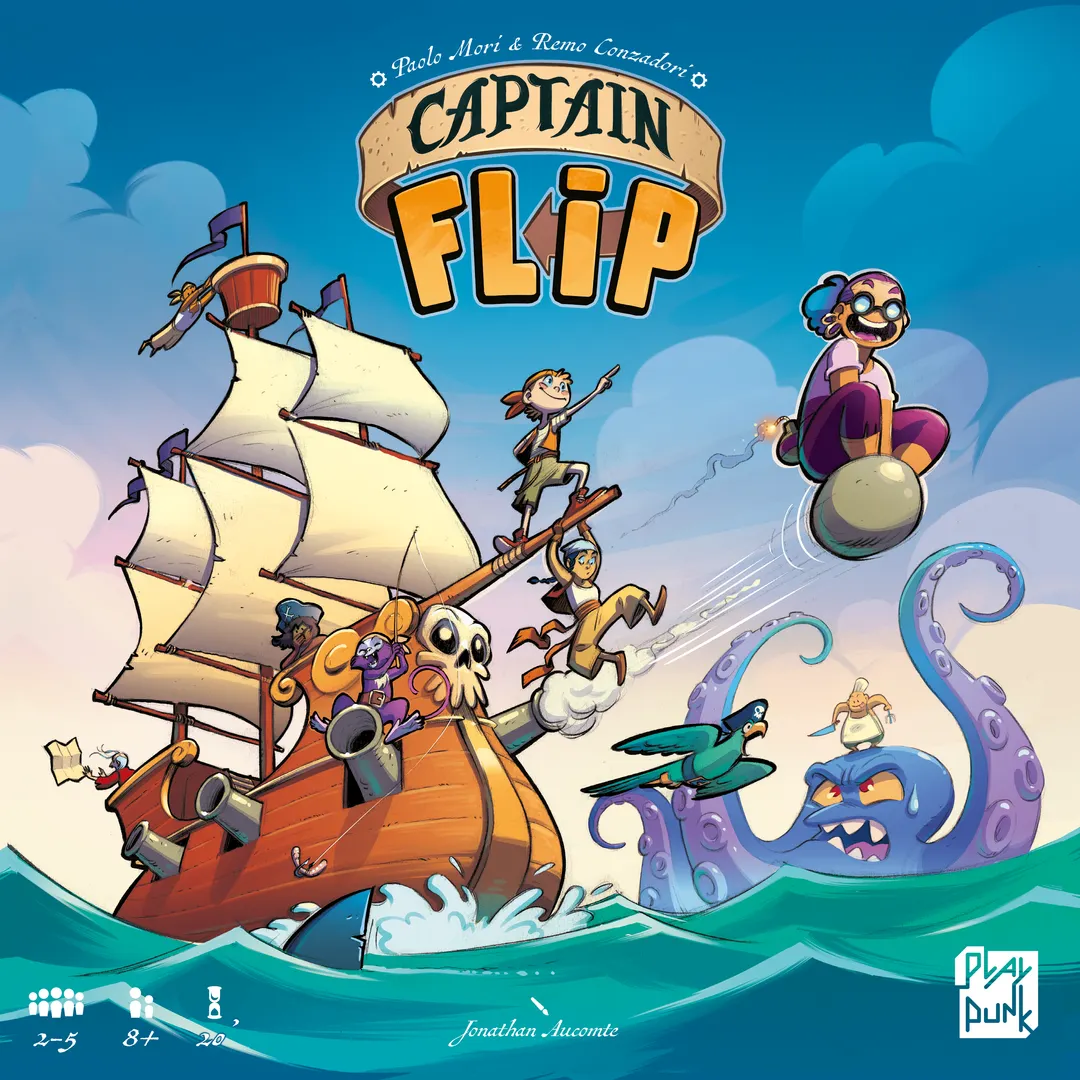
Captain Flip
- 2–5 giocatori
- 20 min
- Complessità 1,2/5
- 2024
2009
Aiuto con le regole di Vasco da Gama
Spiegazioni chiare di turni, effetti delle carte e situazioni dubbie, con riferimenti alle fonti ufficiali e cronologia delle domande salvata.
Per 2 giocatori
Cosa vuoi sapere?
Le risposte vengono dal regolamento ufficiale, con la pagina da verificare.
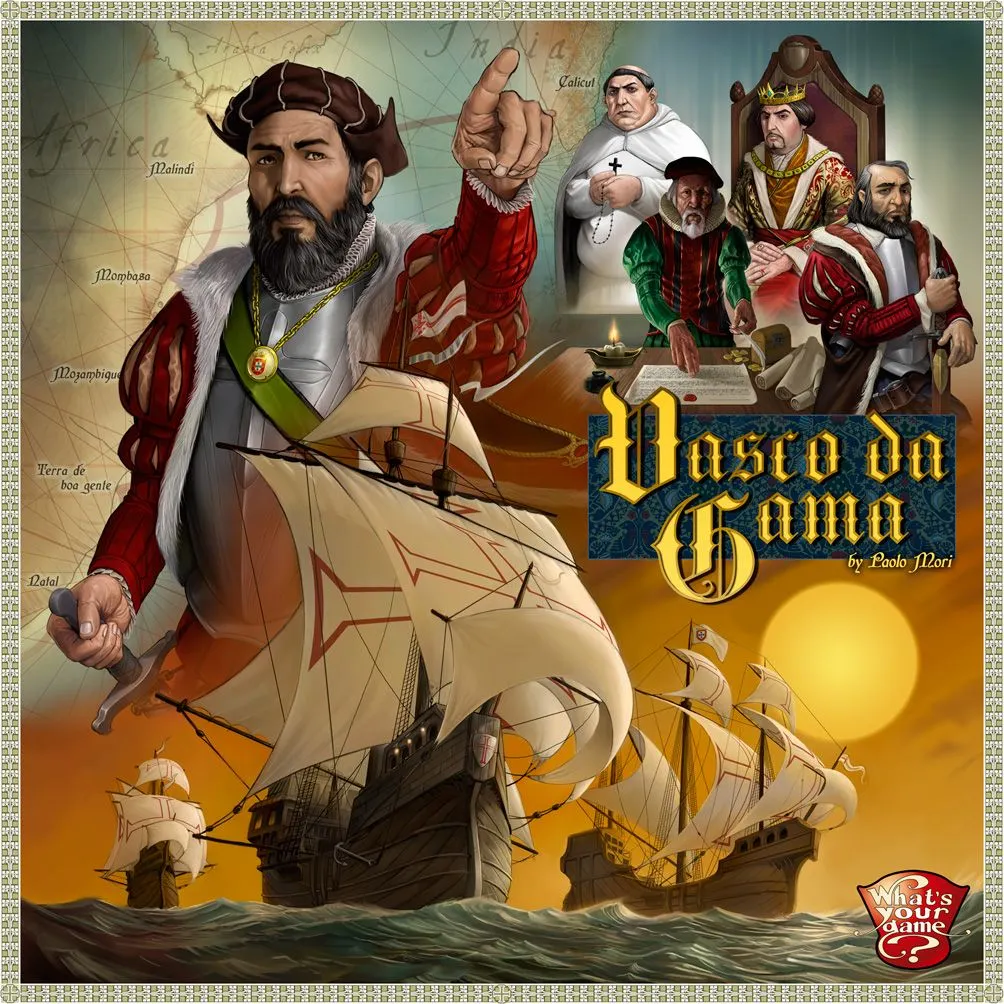
Vasco da Gama è un gioco da tavolo pubblicato nel 2009 per 2–4 giocatori, con partite da 60 a 120 minuti e dai 12 anni in su. È stato ideato da Paolo Mori e le sue meccaniche principali sono Push Your Luck, Tile Placement e Worker Placement.




In inglese
Recruit workers, buy projects, build ships. And use the ships to open new commercial routes to eastern Africa and India, to earn money and glory. This is a resource management game, with an element of risk management, that works like this: Beginning with the start player, each player takes one numbered disc and places it on top of his own coloured disc in one of the four action areas of the board. A Vasco da Gama tile states a number; everything above this number is free of charge, anything below will have to be paid for, so players will take this into account when taking numbered discs. When all players have placed four discs, a modifier to this 'activation number' is shown, and discs are worked by number. In the crew area players may hire crew and a captain, but this costs money. Each round there is a window of ships. The number on the left is the navigation strength, the number on the right is the required amount of different crew. Players choose a ship, pay for the crew and turn the tile to its other side - with a captain on top. In the navigation area, a player takes his ship and places it in a row of his choice, but he has to take care not to exceed the navigation strength of the ship. The game lasts five rounds, after which the player with the most points has won. A brief description from the rule book: Vasco da Gama was charged with finding a maritime route to India. Players play the part of rich shipowners who, under his patronage, aim to achieve prestige and riches. To succeed in the enterprise, they must manage the money and actions at their disposal in order to hire captains, recruit crew, build ships, launch them, and send them to the landings of Natal, Terra de Boa Gente, Mozambique, Malindi, Mombasa, and Calicut. For each ship sent, players will receive an immediate reward and will gain prestige (Victory Points). The farther the ship is sent, the lower the compensation, but the higher the victory score that the player will earn. Ships at landings that are "complete" at the end of the round (i.e. reached by a certain number of Ships) will earn further Victory Points for their owners and will then advance, under certain conditions, to the next Landing. This creates the opportunity to earn again Victory Points in the following Rounds. During each Round, Players take actions in various Areas (Navigation, Recruiting, or Purchase Projects or Characters). Planning is fundamental: The right to take an Action could be free of charge or paid for. The earlier a Player plans to take an Action, the more likely that he will have to pay for it. Players will have to ask themselves if and how much they are ready to pay for the right to act first in a certain area. Vasco da Gama himself will decide which is the first free of charge Action for each Round. He will also help some of the Players by making some money available to them. This great maritime enterprise raises the interest of 4 influential Characters. Aiming to have a substantial role in the development of the new commercial route, they will also provide their favors free of charge to the Players. Francisco Alvares (The Priest) will make available a number of Missionaries to be used as crew members, Girolamo Sernigi (The Merchant) will organize Ships built and manned, Bartolomeu Dias (The Leader) will grant an increased initiative and additional Victory Points, and Manuel 1st (The King) will allow Players to take an additional Action in the name of the Portuguese Kingdom. The winner is the Player with the highest Victory Points score at the end of the game.
Secondo il catalogo, Vasco da Gama supporta da 2 a 4 giocatori. L’intervallo corrisponde al numero di giocatori indicato dall’editore, quindi il gioco si può preparare per qualsiasi gruppo entro quei limiti. Preparazione, alcune regole e punteggio possono comunque variare in base al numero di giocatori: controlla la configurazione esatta nel regolamento della tua edizione.
La durata indicata per Vasco da Gama è di 60–120 minuti, la stima dell’editore per una partita completa. La durata effettiva dipende dal gruppo, dal numero di giocatori e dalla conoscenza delle regole: le prime partite durano di più, i gruppi esperti finiscono prima. Preparazione e spiegazione delle regole non sono comprese nella stima.
Il catalogo indica Vasco da Gama dai 12 anni in su. È la raccomandazione dell’editore e tiene conto della lettura richiesta, della complessità delle regole e dei componenti piccoli, non solo del tema. I più giovani spesso possono giocare con l’aiuto di un adulto: controlla l’età consigliata sulla tua edizione e l’esperienza del tuo gruppo con i giochi da tavolo.
Vasco da Gama ha un punteggio di complessità di 3,2 su 5 secondo i giocatori di BoardGameGeek, il che lo rende un gioco di media complessità. Il punteggio riflette quanta conoscenza delle regole, pianificazione e decisioni richiede una partita tipica. I giochi impegnativi richiedono una prima spiegazione più lunga, quindi conviene usare una guida di preparazione.
Vasco da Gama appartiene a queste categorie: Nautical e Renaissance. Le sue meccaniche principali sono Push Your Luck, Tile Placement e Worker Placement. Le categorie descrivono il tema e l’ambientazione di un gioco, mentre le meccaniche descrivono ciò che i giocatori fanno davvero nel proprio turno. Ogni meccanica porta a una pagina del catalogo con giochi simili.
Gli autori accreditati di Vasco da Gama sono: Paolo Mori. Questi crediti provengono dai dati pubblicati del gioco e indicano le persone responsabili della sua progettazione, non gli illustratori o gli editori. Le pagine degli autori su MeepleRules raccolgono altri titoli degli stessi autori, utili quando un gioco ti piace e ne cerchi di simili.
Il catalogo classifica Vasco da Gama come gioco base. Si gioca da solo con i componenti presenti nella scatola e non richiede altri titoli. Le espansioni, se esistono, aggiungono nuovo contenuto o nuove regole e sono elencate separatamente nel catalogo con un collegamento a questo gioco base.