
- Valutazione BGG
- 7,2
Villainy: Turf War
- 2–4 giocatori
- 60 min
- 2014
2014
Aiuto con le regole di Villainy
Spiegazioni chiare di turni, effetti delle carte e situazioni dubbie, con riferimenti alle fonti ufficiali e cronologia delle domande salvata.
Per 2 giocatori
Cosa vuoi sapere?
Le risposte vengono dal regolamento ufficiale, con la pagina da verificare.
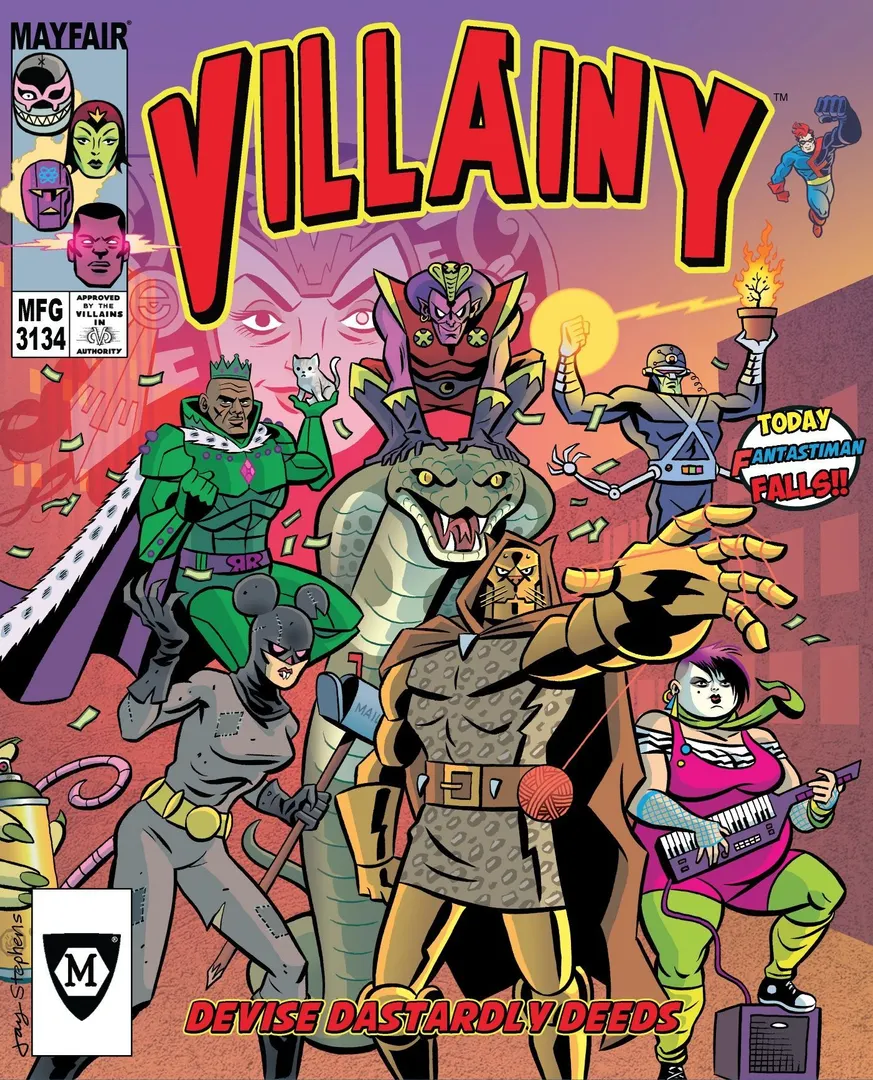
Villainy è un gioco da tavolo pubblicato nel 2014 per 2–4 giocatori, con partite da 90 minuti e dai 12 anni in su. È stato ideato da Nicholas Trahan e le sue meccaniche principali sono Variable Player Powers, Dice Rolling e Open Drafting.




In inglese
Game description from the publisher: Villainy is a game about aspiring super villains competing to be the first to enact their evil plans and overcome Fantastiman, that pesky superhero who watches over the city day and night. It is a fun card-driven character building game featuring a hilarious uncontrolled narrative that unfolds differently every time. As an aspiring super villain, you are trying to make your mark in the world. In Villainy you are trying to be the first villain to complete three plans to beat Fantastiman, that pesky super-hero who watches over the city day and night. You must hire minions to aid you in your quest for world domination. You will have to do crimes and go to work as your alter ego to learn the skills necessary and gain the cards required to see your great plans through to their triumphant end. Today is the day that Fantastiman will fall... Game Mechanics Description: In Villainy, players gradually build a stronger team of villains. Each turn, players typically perform a single action which may include purchasing a new team member with money, increasing one of four team member's stats, earning money, and completing objectives. Each team member has three primary stats: strength, charisma, and intelligence. In addition, they can each acquire 6 abilities such as a scientific knowledge or the possession of a weapon. Team members can also gain an additional special action and extra income by purchasing an alter ego card such as a software engineer. Players draw an initial objective card that describes minimum statistics and abilities a team must have to complete that objective. Players then spend turns building their team to meet those requirements. There is a pool of characters a player can purchase with money. There is another pool of crimes and alter ego cards that a player can select and which will provide money or increase a team member's stats. These pools will cycle throughout the game and choosing which cards to select and which characters to purchase are important to building a strong team. Once the requirements are met, they may spend a turn to complete the objective. The first two objectives are met simply by having a team with the right requirements. The third in addition to having these requirements includes a mechanic where the team fights against Fantastiman. During this third and last objective, players will draw random challenge cards that may decrease their team stats and abilities. If the team overcomes these challenges and still meets the minimum requirements, they can then complete the fight by rolling a high value with a dice. The first player to complete all three objectives is the winner. There are additional challenges or fights which occur both randomly and as a player's action throughout the game. Typically these fights award a bonus to one player without hurting another. It is these challenges and several special abilities that steal from other players that make up the majority of player to player direct conflict.
Secondo il catalogo, Villainy supporta da 2 a 4 giocatori. L’intervallo corrisponde al numero di giocatori indicato dall’editore, quindi il gioco si può preparare per qualsiasi gruppo entro quei limiti. Preparazione, alcune regole e punteggio possono comunque variare in base al numero di giocatori: controlla la configurazione esatta nel regolamento della tua edizione.
La durata indicata per Villainy è di 90 minuti, la stima dell’editore per una partita completa. La durata effettiva dipende dal gruppo, dal numero di giocatori e dalla conoscenza delle regole: le prime partite durano di più, i gruppi esperti finiscono prima. Preparazione e spiegazione delle regole non sono comprese nella stima.
Il catalogo indica Villainy dai 12 anni in su. È la raccomandazione dell’editore e tiene conto della lettura richiesta, della complessità delle regole e dei componenti piccoli, non solo del tema. I più giovani spesso possono giocare con l’aiuto di un adulto: controlla l’età consigliata sulla tua edizione e l’esperienza del tuo gruppo con i giochi da tavolo.
Villainy ha un punteggio di complessità di 2,5 su 5 secondo i giocatori di BoardGameGeek, il che lo rende un gioco piuttosto leggero. Il punteggio riflette quanta conoscenza delle regole, pianificazione e decisioni richiede una partita tipica. I giochi impegnativi richiedono una prima spiegazione più lunga, quindi conviene usare una guida di preparazione.
Villainy appartiene a queste categorie: Comic Book / Strip. Le sue meccaniche principali sono Variable Player Powers, Dice Rolling e Open Drafting. Le categorie descrivono il tema e l’ambientazione di un gioco, mentre le meccaniche descrivono ciò che i giocatori fanno davvero nel proprio turno. Ogni meccanica porta a una pagina del catalogo con giochi simili.
Gli autori accreditati di Villainy sono: Nicholas Trahan. Questi crediti provengono dai dati pubblicati del gioco e indicano le persone responsabili della sua progettazione, non gli illustratori o gli editori. Le pagine degli autori su MeepleRules raccolgono altri titoli degli stessi autori, utili quando un gioco ti piace e ne cerchi di simili.
Il catalogo classifica Villainy come gioco base. Si gioca da solo con i componenti presenti nella scatola e non richiede altri titoli. Le espansioni, se esistono, aggiungono nuovo contenuto o nuove regole e sono elencate separatamente nel catalogo con un collegamento a questo gioco base.