
- Pozycja w BGG
- BGG #8883
- Ocena BGG
- 7,8
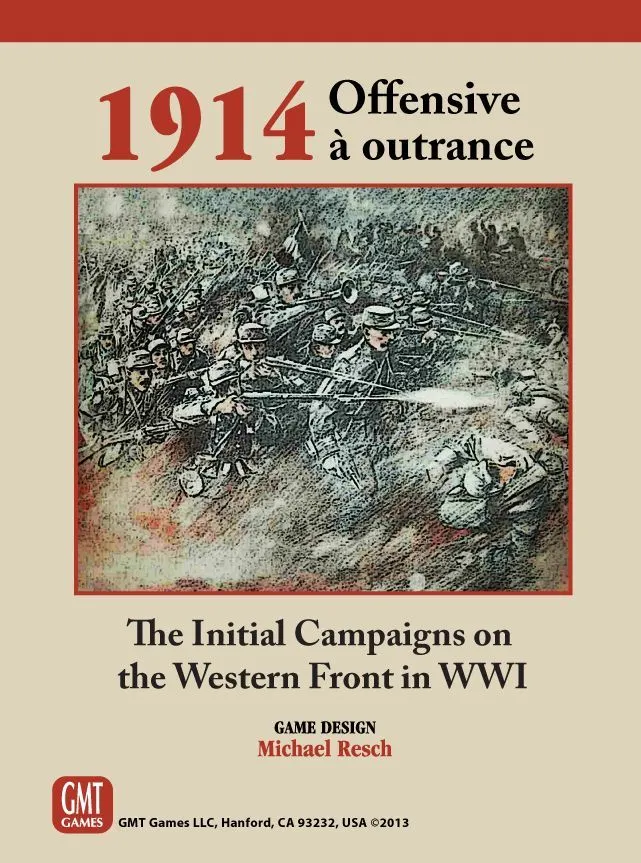
1914: Offensive à outrance
- 1–4 graczy
- Złożoność 4,0/5
- 2013
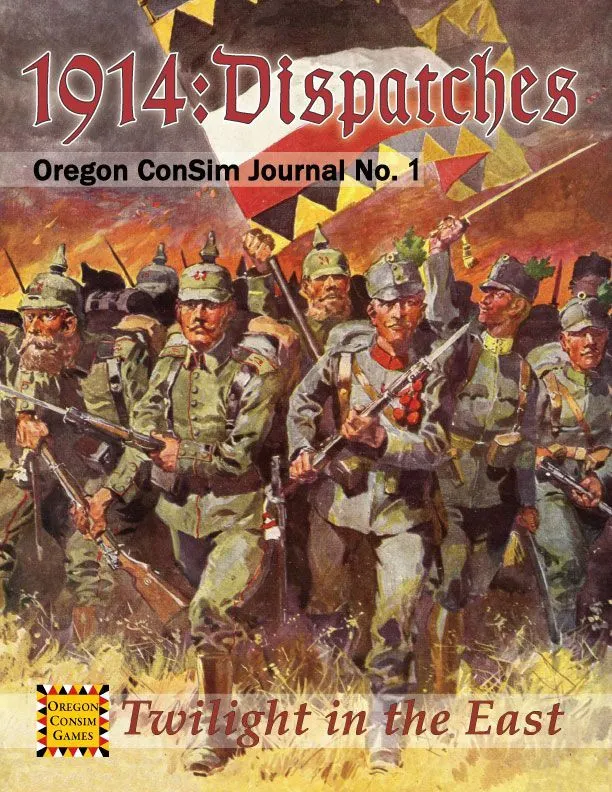
Pomoc w zasadach gry 1914: Dispatches – Twilight in the East
Zrozumiałe wyjaśnienia tur, efektów kart i spornych sytuacji z odnośnikami do oficjalnych źródeł i zapisaną historią pytań.
Co chcesz wiedzieć?
Odpowiedzi pochodzą z oficjalnej instrukcji, ze stroną do sprawdzenia.
1914: Dispatches – Twilight in the East to dodatek do gry 1914: Twilight in the East wydany w 2012 roku dla 2–6 graczy. Projekt gry: Michael Resch. Główne mechaniki: Dice Rolling, Hexagon Grid i Simulation.






Po angielsku
1914: Dispatches is the first issue of Oregon ConSim Journal (a Charles S Roberts Award winning magazine), is a support magazine that focuses on the Eastern Front during 1914 by expanding on the CSR Award winning WWI simulation game 1914: Twilight in the East (TitE). During the design of 1914 TitE a great deal of research material was accumulated that was not incorporated due to space (and time) limitations. The Journal allows some of this material to be brought to light, more thoroughly covering the fascinating 1914 time period. The centerpiece of the publication is a collection of three well-researched historical articles that are paired with new scenarios allowing the subject to be accurately simulated. The time period October–November 1914 contained two distinct campaigns that culminated in very large battles fought in Russian Poland: The Battle of Ivangorod and Battles of Lodz and Krakau. These battles are the topics chosen for two of the scenarios found in the journal. The first, “The Battle of Ivangorod,” is a small introductory scenario that covers the time period 22–26 October when the Austro-Hungarian First Army unsuccessfully fought to clear the Russians from their Vistula River bridgeheads at Ivangorod and Kozienice. Following the Battle of Ivangorod, in early November the German high command acted to regain the operational initiative and protect Germany from the ravages of invasion. Using their excellent railroad network to transfer large bodies of troops, they launched an offensive to penetrate deep into the main Russian forces’ flank and rear. The epic operation is the subject of the Journal’s second scenario, “The Battles of Lodz and Krakau.” This expert scenario, intended for veteran players, is huge, requiring all five maps and almost the entire counter mix. A well known military axiom states: mistakes made in the deployment of troops at the start of operations cannot be righted in the course of the whole campaign. At the outset of WWI this was true for all fronts but nowhere was it more pertinent than on the Eastern Front. The Journal’s third article, “Austria-Hungary’s Botched Deployment in 1914” concentrates on that nation’s botched initial strategic deployment. The game strategy article Playing Both Sides in Galicia details successful opening moves on the Galician front. Based on years of gameplay experience by the designer, the article presents a corps-by-corps breakdown of Austro-Hungarian and Russian armies and offers tested solutions for the challenges they face. Rounding out the contents are two enhanced, professionally-produced Player Aid Cards designed to speed combat resolution in 1914, Twilight in the East. Journal Contents (64 pages): The Austro-Hungarian Army and National Identity 1867–1914 Austria-Hungary’s Botched Deployment in 1914 associated scenario: The Austro-Hungarian Deployment Plan as of Winter 1913/14 (18 counters to be mounted - see expansion counters) Playing Both Sides in Galicia — Galicia Campaign Strategies Prelude to Ivangorod associated scenario: The Battle of Ivangorod (introductory scenario GT 28-29) The Lodz Campaign: Defeating the Russian Steamroller associated scenario: The Battles of Lodz & Krakau (complete scenario GT 36-47) The Polish Legion in 1914 Revised Victory Conditions for the Grand Campaign scenario Also included: Two replacement Player Aid Cards for 1914, Twilight in the East See preview pages. (Source: publisher and BGG user)
Według katalogu 1914: Dispatches – Twilight in the East obsługuje od 2 do 6 graczy. Ten zakres odpowiada liczbie graczy podanej przez wydawcę, więc grę można przygotować dla dowolnej grupy w jego granicach. Przygotowanie, niektóre zasady i punktacja mogą jednak różnić się w zależności od liczby graczy; dokładną konfigurację sprawdź w instrukcji swojego wydania.
1914: Dispatches – Twilight in the East ma ocenę złożoności 3,0 na 5 według graczy BoardGameGeek, co czyni ją grą średnio złożoną. Ocena pokazuje, ile znajomości zasad, planowania i podejmowania decyzji wymaga typowa rozgrywka. Cięższe gry wymagają dłuższego pierwszego tłumaczenia, dlatego przed wieczorem z grami warto skorzystać z przewodnika przygotowania.
1914: Dispatches – Twilight in the East należy do tych kategorii: Wargame, Expansion for Base-game i World War I. Główne mechaniki to Dice Rolling, Hexagon Grid i Simulation. Kategorie opisują temat i świat gry, a mechaniki to, co gracze faktycznie robią w swojej turze. Każda mechanika prowadzi do strony katalogu z podobnymi grami, co pomaga znaleźć coś porównywalnego na kolejny wieczór.
Autorzy wymienieni przy 1914: Dispatches – Twilight in the East to: Michael Resch. Te informacje pochodzą z opublikowanych danych gry i wskazują osoby odpowiedzialne za jej projekt, a nie ilustratorów czy wydawców. Strony autorów w MeepleRules zbierają inne tytuły tych samych twórców, co pomaga, gdy gra ci się podoba i szukasz podobnych.
W katalogu 1914: Dispatches – Twilight in the East figuruje jako dodatek do 1914: Twilight in the East. Dodatki dokładają nową zawartość, zasady lub scenariusze do gry podstawowej i zwykle nie nadają się do samodzielnej gry, więc do korzystania z niego potrzebujesz gry 1914: Twilight in the East. Sprawdź, czy twoje wydanie gry 1914: Twilight in the East jest zgodne, bo niektóre dodatki zmieniano między wydaniami.