

- Pozycja w BGG
- BGG #572
- Ocena BGG
- 8,1
Fire in the Lake
- 1–4 graczy
- 180 min
- Złożoność 4,2/5
- 2014
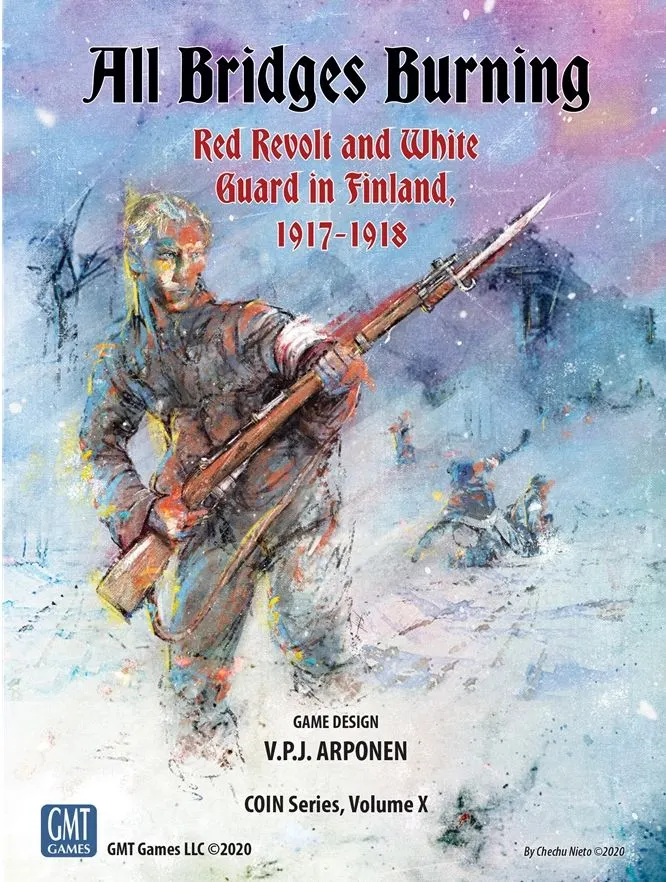
2020
Pomoc w zasadach gry All Bridges Burning: Red Revolt and White Guard in Finland, 1917-1918
Zrozumiałe wyjaśnienia tur, efektów kart i spornych sytuacji z odnośnikami do oficjalnych źródeł i zapisaną historią pytań.
Dla 1 gracza
Co chcesz wiedzieć?
Odpowiedzi pochodzą z oficjalnej instrukcji, ze stroną do sprawdzenia.
All Bridges Burning: Red Revolt and White Guard in Finland, 1917-1918 to gra planszowa wydana w 2020 roku dla 1–3 graczy, z rozgrywką trwającą 180–360 minut i dla osób od 14 lat. Projekt gry: VPJ Arponen. Główne mechaniki: Variable Player Powers, Area Movement i Dice Rolling.





Po angielsku
The year is 1917. Russia’s Tsar Nicholas II has abdicated and Russia slides toward an ever deepening internal crisis. On the western edge of the vast Russian Empire, the uncertainty in Russia is giving rise to a power vacuum in the semi-autonomous Grand Duchy of Finland. For many across the Finnish political spectrum, the turmoil in Russia looks like an opportunity to fulfill the dream of Finnish national independence. Yet the competing factions are unable to agree on a common political vision for the country. By January 1918, a bloody civil war will have broken out in Finland. All Bridges Burning recreates the political and military affairs of the Finnish civil war in a new COIN System volume for three players. The Reds seek to stage a working class revolt and then hold onto their gains, while the White Senate forces seek to reassert control. A third, non-violent Social Democratic faction fights for the survival of moderate leftism and political reform. All three factions must keep the national sentiment conciliatory enough for a post-conflict settlement and national independence. In addition, the non-player powers of Germany and Russia offer military assistance to the Senate and the Reds, respectively. Excessive foreign involvement, however, could quash the dream of Finnish independence and prompt a collective loss of all three player factions. Historical events, asymmetrical action menus, as well as extensive historical design notes familiarize the players with the historical period. A unique sequence of play for three factions poses players –whether veteran or new to the COIN Series– fresh challenges in selecting from the asymmetric commands and special activities. The Reds will find themselves needing to split time and resources between competing tasks of solidifying the Red revolt by creating working organs of civilian administration on the one hand, and fighting an increasingly desperate war against a far more powerful enemy on the other. The White Senate faction, in contrast, has a more traditional war to fight. The Senate will want to enhance their military performance by capabilities such as armored trains, cannons, as well as the Finnish, German-trained 27th Jaeger Battalion. Meanwhile the Social Democrats will be focused on building and maintaining underground networks of information, distributing news across the fronts, and advancing a stagnating political process while fending off retributions from the two warring factions. A simple but effective card-driven non-player system enables the game to be played solitaire as well as in a two-player mode. The structure of the sequence of play, the character of the commands and special activities in the game, the smaller number of players, and compact size combine to enable All Bridges Burning to play fast. The solitaire system has been designed to preserve that speed and fluidity of play. —description from the publisher
Według katalogu All Bridges Burning: Red Revolt and White Guard in Finland, 1917-1918 obsługuje od 1 do 3 graczy. Ten zakres odpowiada liczbie graczy podanej przez wydawcę, więc grę można przygotować dla dowolnej grupy w jego granicach. Przygotowanie, niektóre zasady i punktacja mogą jednak różnić się w zależności od liczby graczy; dokładną konfigurację sprawdź w instrukcji swojego wydania.
Podany czas rozgrywki w All Bridges Burning: Red Revolt and White Guard in Finland, 1917-1918 wynosi 180–360 minut. To szacunek wydawcy dla pełnej partii. Rzeczywisty czas zależy od grupy, liczby graczy i znajomości zasad: pierwsze partie zwykle trwają dłużej, a doświadczone grupy kończą szybciej. Przygotowanie gry i tłumaczenie zasad nie są wliczone w ten szacunek.
Katalog podaje dla All Bridges Burning: Red Revolt and White Guard in Finland, 1917-1918 wiek od 14 lat. To zalecenie wydawcy, które uwzględnia wymagania dotyczące czytania, złożoność zasad i drobne elementy, a nie tylko tematykę. Młodsi gracze często mogą dołączyć z pomocą dorosłego; sprawdź zalecenie wiekowe swojego wydania i weź pod uwagę doświadczenie grupy z grami planszowymi.
All Bridges Burning: Red Revolt and White Guard in Finland, 1917-1918 ma ocenę złożoności 3,6 na 5 według graczy BoardGameGeek, co czyni ją grą średnio złożoną. Ocena pokazuje, ile znajomości zasad, planowania i podejmowania decyzji wymaga typowa rozgrywka. Cięższe gry wymagają dłuższego pierwszego tłumaczenia, dlatego przed wieczorem z grami warto skorzystać z przewodnika przygotowania.
All Bridges Burning: Red Revolt and White Guard in Finland, 1917-1918 należy do tych kategorii: Wargame i Civil War. Główne mechaniki to Variable Player Powers, Area Movement i Dice Rolling. Kategorie opisują temat i świat gry, a mechaniki to, co gracze faktycznie robią w swojej turze. Każda mechanika prowadzi do strony katalogu z podobnymi grami, co pomaga znaleźć coś porównywalnego na kolejny wieczór.
Autorzy wymienieni przy All Bridges Burning: Red Revolt and White Guard in Finland, 1917-1918 to: VPJ Arponen. Te informacje pochodzą z opublikowanych danych gry i wskazują osoby odpowiedzialne za jej projekt, a nie ilustratorów czy wydawców. Strony autorów w MeepleRules zbierają inne tytuły tych samych twórców, co pomaga, gdy gra ci się podoba i szukasz podobnych.
W katalogu All Bridges Burning: Red Revolt and White Guard in Finland, 1917-1918 figuruje jako gra podstawowa. Można w nią grać samodzielnie, korzystając z elementów z pudełka, bez żadnego innego tytułu. Dodatki, jeśli istnieją, dokładają nową zawartość lub zasady i są wymienione w katalogu osobno, z odnośnikiem do tej gry podstawowej.