

- Pozycja w BGG
- BGG #3750
- Ocena BGG
- 6,8
City of Remnants
- 2–4 graczy
- 90 min
- Złożoność 3,1/5
- 2013
2011
Pomoc w zasadach gry Aquileia
Zrozumiałe wyjaśnienia tur, efektów kart i spornych sytuacji z odnośnikami do oficjalnych źródeł i zapisaną historią pytań.
Dla 3 graczy
Co chcesz wiedzieć?
Odpowiedzi pochodzą z oficjalnej instrukcji, ze stroną do sprawdzenia.
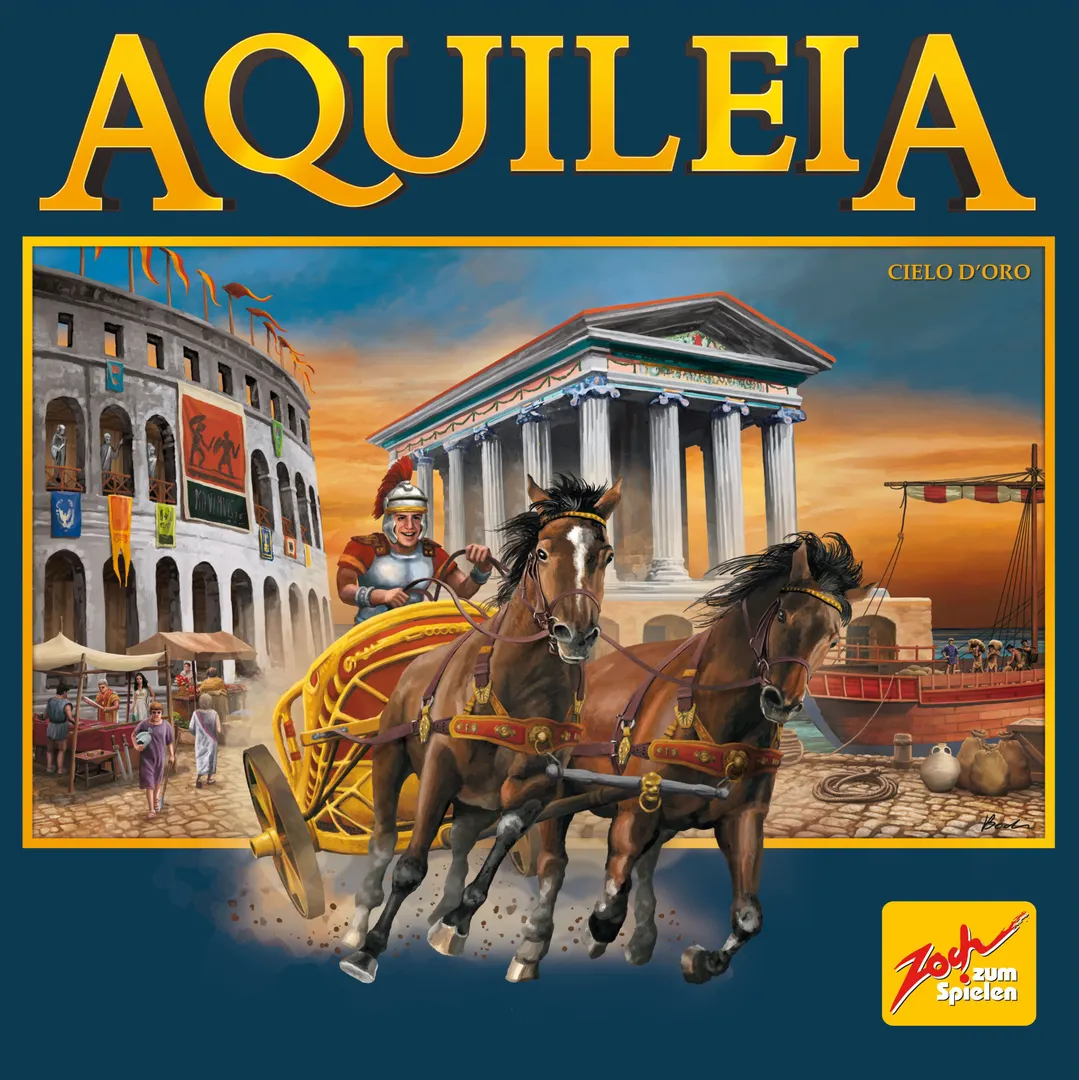
Aquileia to gra planszowa wydana w 2011 roku dla 3–5 graczy, z rozgrywką trwającą 90 minut i dla osób od 12 lat. Projekt gry: Cielo d'Oro. Główne mechaniki: Hand Management, Auction / Bidding i Dice Rolling.




Po angielsku
Aquileia, the second most important city of the Roman Empire, had been originally founded as an outpost against the Barbarian invaders. From its military origin comes the peculiar quadrilateral structure divided by the main streets. Later, the city developed to become an important political and cultural center and a prosperous trading city, especially for precious goods, thanks to its convenient and efficient river port. Important monuments such as the Gladiator Arena, the horse-racing Stadium, and the famous theater were built, as well as craftsmen's workshops, patrician villas which completed the architectural network of the city. In Aquileia, players want to become the most powerful figure in the city by trading and building. Each player, representing a wealthy Aquileian patrician, owns a certain number of henchmen (pawns) which he uses for these main activities: sports playing, culture, trading, and building. Each activity can bring expenses, earnings and sometimes victory points (VPs). Each round begins with a placement phase in which players take turns placing their henchmen on action spaces and their tiebreaker disc on the tiebreaker track. Placing the tiebreaker is mandatory; placing henchmen is not (but you probably want to place them). Once everyone has passed or placed all of their tokens, players resolve the action spaces in numerical order: The Mercatus allows players to buy weapons, arms and slave cards, collect money through a die roll, claim four blue dice for use with the Arena and Stadium, and trade one currency for another. (This is the only way to make change, and some actions require specific currencies; if you must pay bronze and have only silver and gold, then you cannot take that action!) At the Arena, players compare fighting strength, with that number determined by the starting strength on the action space claimed, the roll of three dice and the playing of slave and weapon cards. The winner gets three bronze coins and either double his strength in VPs or a slave card. The second and third best players receive lesser rewards. The Stadium is similar to the Arena, with the horse cards coming into play and the winner receiving gold or silver coins and his choice of two laurel cards; laurel cards deliver 3-10 VPs or are a multiplier for endgame scoring. The Theatrum brings a bid for a dual-colored laurel card, with players needing to ante and raise in particular currencies. In the Forum, players build villas and private banks, sometimes scoring points for doing so when they pay the specific costs with the proper coins. Finally, the Portus gives players a chance to activate their buildings, thereby earning them VPs or money. After six rounds, the game ends and players score VPs for their hidden point cards and the product of their villas' values times laurel cards of a matching color. (For example, a total of 8 points of blue villas and three blue villa cards equals 24 points.) The player with the most victory points wins.
Według katalogu Aquileia obsługuje od 3 do 5 graczy. Ten zakres odpowiada liczbie graczy podanej przez wydawcę, więc grę można przygotować dla dowolnej grupy w jego granicach. Przygotowanie, niektóre zasady i punktacja mogą jednak różnić się w zależności od liczby graczy; dokładną konfigurację sprawdź w instrukcji swojego wydania.
Podany czas rozgrywki w Aquileia wynosi 90 minut. To szacunek wydawcy dla pełnej partii. Rzeczywisty czas zależy od grupy, liczby graczy i znajomości zasad: pierwsze partie zwykle trwają dłużej, a doświadczone grupy kończą szybciej. Przygotowanie gry i tłumaczenie zasad nie są wliczone w ten szacunek.
Katalog podaje dla Aquileia wiek od 12 lat. To zalecenie wydawcy, które uwzględnia wymagania dotyczące czytania, złożoność zasad i drobne elementy, a nie tylko tematykę. Młodsi gracze często mogą dołączyć z pomocą dorosłego; sprawdź zalecenie wiekowe swojego wydania i weź pod uwagę doświadczenie grupy z grami planszowymi.
Aquileia ma ocenę złożoności 2,9 na 5 według graczy BoardGameGeek, co czyni ją grą raczej lekką. Ocena pokazuje, ile znajomości zasad, planowania i podejmowania decyzji wymaga typowa rozgrywka. Cięższe gry wymagają dłuższego pierwszego tłumaczenia, dlatego przed wieczorem z grami warto skorzystać z przewodnika przygotowania.
Aquileia należy do tych kategorii: Economic, Dice i Ancient. Główne mechaniki to Hand Management, Auction / Bidding i Dice Rolling. Kategorie opisują temat i świat gry, a mechaniki to, co gracze faktycznie robią w swojej turze. Każda mechanika prowadzi do strony katalogu z podobnymi grami, co pomaga znaleźć coś porównywalnego na kolejny wieczór.
Autorzy wymienieni przy Aquileia to: Cielo d'Oro. Te informacje pochodzą z opublikowanych danych gry i wskazują osoby odpowiedzialne za jej projekt, a nie ilustratorów czy wydawców. Strony autorów w MeepleRules zbierają inne tytuły tych samych twórców, co pomaga, gdy gra ci się podoba i szukasz podobnych.
W katalogu Aquileia figuruje jako gra podstawowa. Można w nią grać samodzielnie, korzystając z elementów z pudełka, bez żadnego innego tytułu. Dodatki, jeśli istnieją, dokładają nową zawartość lub zasady i są wymienione w katalogu osobno, z odnośnikiem do tej gry podstawowej.