

- Pozycja w BGG
- BGG #4244
- Ocena BGG
- 6,8
Arkwright: The Card Game
- 1–4 graczy
- 60–100 min
- Złożoność 4,0/5
- 2021
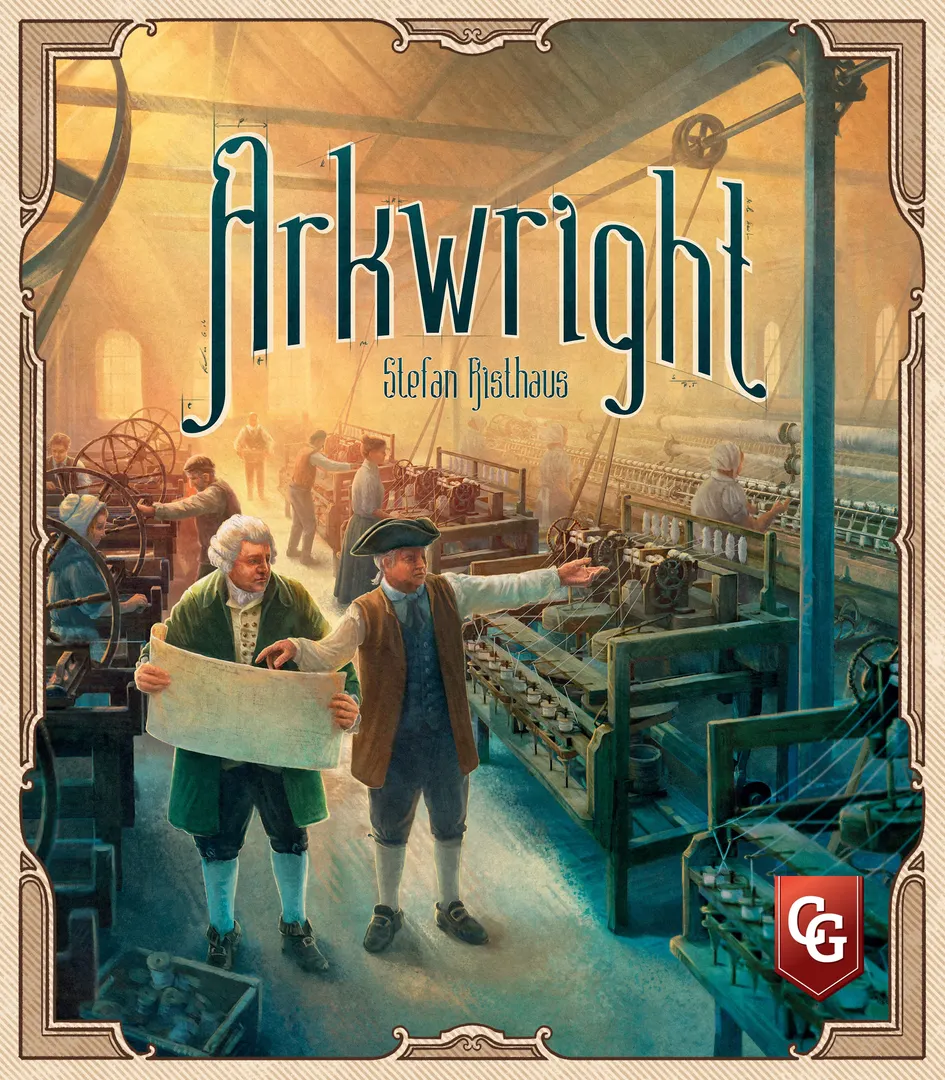
2014
Pomoc w zasadach gry Arkwright
Zrozumiałe wyjaśnienia tur, efektów kart i spornych sytuacji z odnośnikami do oficjalnych źródeł i zapisaną historią pytań.
Dla 1 gracza
Co chcesz wiedzieć?
Odpowiedzi pochodzą z oficjalnej instrukcji, ze stroną do sprawdzenia.
Arkwright to gra planszowa wydana w 2014 roku dla 1–4 graczy, z rozgrywką trwającą 120–240 minut i dla osób od 12 lat. Projekt gry: Stefan Risthaus. Główne mechaniki: Income, Loans i Variable Set-up.








Po angielsku
In Arkwright players run up to four factories in England during the late 18th Century. Your goal is to have the most valuable block of own shares. Thus, you must increase your share value and buy shares from the bank. To run the factories, you need workers. When hiring Workers, demand is automatically created. But of course you want to replace your expensive workers (wage 2-5) by machines (1). To have more output from your factories you may employ new Workers or improve your factory to the next technical level. You fix the price for your goods during an action round. To enhance your chances of selling goods, you improve your factories to higher levels, increase the quality and make some sales promotion. The higher these factors, the better are your chances of success - the higher the price, the lower. Each player has an own set of "action tokens" like "build and modernize factories", "employ new workers", "improve quality" etc. On your turn you place one of those tokens on one of the free spaces in your line of the "Administration board" and pay the according administration costs, ranging from 2 to 10 (even numbers). Some actions depend on how much you paid, i.e. you may buy more machines with one single action, when you pay more (= use a higher space, which is then blocked for the rest of the round). During the game your actions become more and more effective by new tokens, i.e. allow you to buy 3 machines in a single turn instead of 2, increase quality 2 levels instead of only 1...). After each round of actions one kind of factories is active and you have to pay for all your workers and machines there, then sell the manufactured products. The value of your shares increases for sold products and best quality. Goods may also be traded to the colonies by ship - provided you have a contract with the monopoly of the East Indian Company. After four turns each of the factories has produced and the round ends. Players remove the action tokens from the administration board and reveal an event token. After 5 rounds the player with the most valuable block of shares wins. Neither being to be the one with the most shares nor being the one with the highest share value guarantees victory. Arkwright allows you to act in different ways. Run all four factories with most possible output, set the focus on only two factories and improve them more than the others can; use shipping to colony or focus on the home market. In any way you have to react to the opponents and their strategy. Enter markets with deficit in supply or give up business where the other players start to push you out. Buy shares when they are cheap and increase the value, or first make money and buy shares later. To get familiar with the market mechanics you may start with a 120 minutes version "Spinning Jenny", but for those who like full strategy in economic themed games, the 240 minute "Waterframe"-Rules come with more options to improve your factory and use ships.
Według katalogu Arkwright obsługuje od 1 do 4 graczy. Ten zakres odpowiada liczbie graczy podanej przez wydawcę, więc grę można przygotować dla dowolnej grupy w jego granicach. Przygotowanie, niektóre zasady i punktacja mogą jednak różnić się w zależności od liczby graczy; dokładną konfigurację sprawdź w instrukcji swojego wydania.
Podany czas rozgrywki w Arkwright wynosi 120–240 minut. To szacunek wydawcy dla pełnej partii. Rzeczywisty czas zależy od grupy, liczby graczy i znajomości zasad: pierwsze partie zwykle trwają dłużej, a doświadczone grupy kończą szybciej. Przygotowanie gry i tłumaczenie zasad nie są wliczone w ten szacunek.
Katalog podaje dla Arkwright wiek od 12 lat. To zalecenie wydawcy, które uwzględnia wymagania dotyczące czytania, złożoność zasad i drobne elementy, a nie tylko tematykę. Młodsi gracze często mogą dołączyć z pomocą dorosłego; sprawdź zalecenie wiekowe swojego wydania i weź pod uwagę doświadczenie grupy z grami planszowymi.
Arkwright ma ocenę złożoności 4,6 na 5 według graczy BoardGameGeek, co czyni ją grą ciężką. Ocena pokazuje, ile znajomości zasad, planowania i podejmowania decyzji wymaga typowa rozgrywka. Cięższe gry wymagają dłuższego pierwszego tłumaczenia, dlatego przed wieczorem z grami warto skorzystać z przewodnika przygotowania.
Arkwright należy do tych kategorii: Economic i Industry / Manufacturing. Główne mechaniki to Income, Loans i Variable Set-up. Kategorie opisują temat i świat gry, a mechaniki to, co gracze faktycznie robią w swojej turze. Każda mechanika prowadzi do strony katalogu z podobnymi grami, co pomaga znaleźć coś porównywalnego na kolejny wieczór.
Autorzy wymienieni przy Arkwright to: Stefan Risthaus. Te informacje pochodzą z opublikowanych danych gry i wskazują osoby odpowiedzialne za jej projekt, a nie ilustratorów czy wydawców. Strony autorów w MeepleRules zbierają inne tytuły tych samych twórców, co pomaga, gdy gra ci się podoba i szukasz podobnych.
W katalogu Arkwright figuruje jako gra podstawowa. Można w nią grać samodzielnie, korzystając z elementów z pudełka, bez żadnego innego tytułu. Dodatki, jeśli istnieją, dokładają nową zawartość lub zasady i są wymienione w katalogu osobno, z odnośnikiem do tej gry podstawowej.