
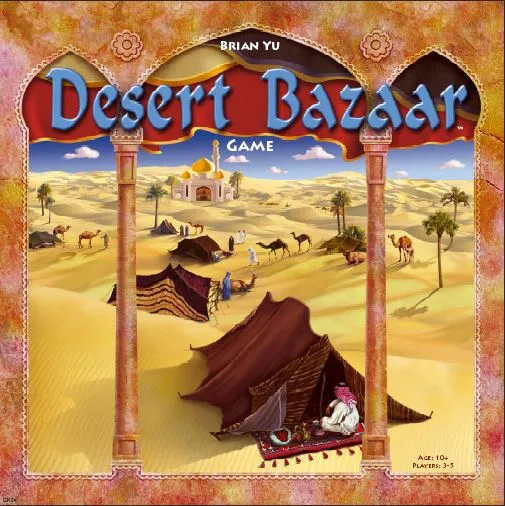
- Pozycja w BGG
- BGG #22 563
- Ocena BGG
- 5,7
Desert Bazaar
- 3–5 graczy
- 45 min
- Złożoność 2,1/5
- 2006
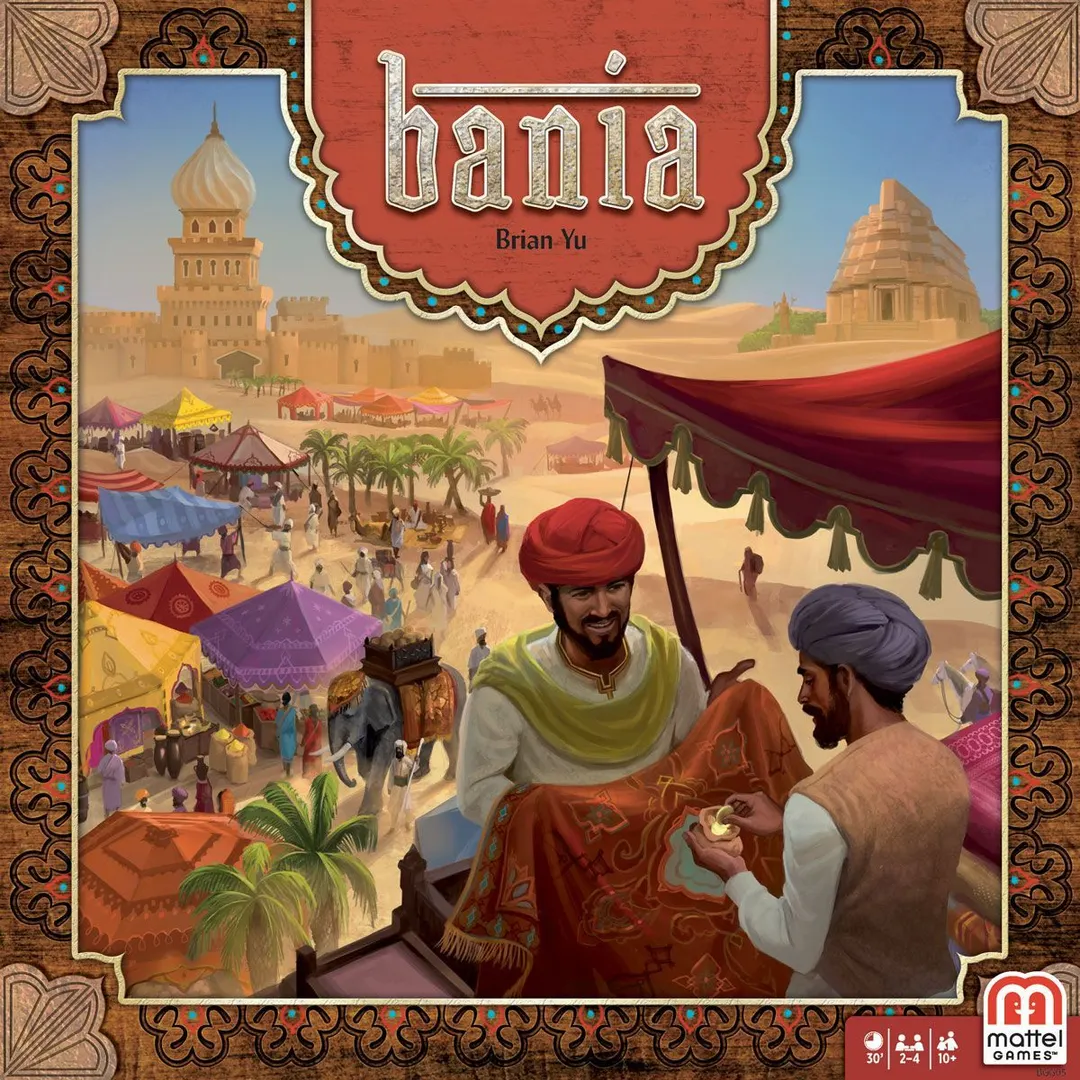
2014
Pomoc w zasadach gry Bania
Zrozumiałe wyjaśnienia tur, efektów kart i spornych sytuacji z odnośnikami do oficjalnych źródeł i zapisaną historią pytań.
Dla 2 graczy
Co chcesz wiedzieć?
Odpowiedzi pochodzą z oficjalnej instrukcji, ze stroną do sprawdzenia.
Bania to gra planszowa wydana w 2014 roku dla 2–4 graczy, z rozgrywką trwającą 30 minut i dla osób od 10 lat. Projekt gry: Brian Yu. Główne mechaniki: Hand Management, Dice Rolling i Tile Placement.



Po angielsku
In a formidable Indian landscape, a burgeoning marketplace is forming. Opportunities are ripe in this community of traders, bankers, moneylenders, and dealers of grains and spices. Fortune awaits the one who plans well and uses his resources wisely. Oil, silk, incense and spices are the currency used to build tents, establish settlements, and amass riches — but commerce brings competition, and the space to build is limited. When there is no more room, the player who has maximized his resources to become the most successful merchant is the victor! In Bania, players use resource cards to buy and build tents, then strategically place these tents on the board to earn points. When no legal moves remain on the board, the game ends and the player with the most points wins. On a turn, a player performs these actions in order, if possible: Collect your bonus: If your elephant marker sits on a tent tile on the board, collect one resource card of each type in the settlement where the marker is located. Buy and place tent tiles OR roll for resources: As explained below. Place your elephant marker: If your elephant marker isn't on the board and you placed tent tiles that turn, place the marker on one tile you placed this turn. Each player starts the game with four tent tiles and eight resource cards: two of each type (oil, spice, silk and incense); one side of the tent tiles shows one of these four resources, while the other side shows three resource symbols (e.g., two spice and one silk). If you want more resources, you can roll the four dice up to three times, locking any dice that you wish while doing so. When you stop rolling, you receive one resource card for each resource symbol showing; in addition, if you have both a front and back half of an elephant showing on the dice, then you receive an elephant marker bonus as at the start of your turn. If you have the right cards in hand, you might instead choose to buy and place tents; if you have twelve or more cards, then you must do so. A tent costs three resource cards matching the three resource symbols on the back and you pay this cost after placing a tent on the game board, but if you place a tent adjacent to other tents, then the cost is discounted based on the colors of adjacent tents, possibly allowing you to place a tent for no cost at all! When you place a tent on its own to start a settlement, you receive 3 points; for all other tents placed, you receive 1 point each. You refill your hand to four tent tiles at the end of your turn — but if you've placed all four, you can immediately draw four new tiles and keep building! A settlement can have at most seven tents in it; when someone places the seventh tent, any elephant markers in the settlement are removed and returned to their owners. The game ends when no more tents can be placed. Whoever placed the final tile scores 3 points, and whoever has the most of each type of resource card scores 2 points. The player with the most points wins.
Według katalogu Bania obsługuje od 2 do 4 graczy. Ten zakres odpowiada liczbie graczy podanej przez wydawcę, więc grę można przygotować dla dowolnej grupy w jego granicach. Przygotowanie, niektóre zasady i punktacja mogą jednak różnić się w zależności od liczby graczy; dokładną konfigurację sprawdź w instrukcji swojego wydania.
Podany czas rozgrywki w Bania wynosi 30 minut. To szacunek wydawcy dla pełnej partii. Rzeczywisty czas zależy od grupy, liczby graczy i znajomości zasad: pierwsze partie zwykle trwają dłużej, a doświadczone grupy kończą szybciej. Przygotowanie gry i tłumaczenie zasad nie są wliczone w ten szacunek.
Katalog podaje dla Bania wiek od 10 lat. To zalecenie wydawcy, które uwzględnia wymagania dotyczące czytania, złożoność zasad i drobne elementy, a nie tylko tematykę. Młodsi gracze często mogą dołączyć z pomocą dorosłego; sprawdź zalecenie wiekowe swojego wydania i weź pod uwagę doświadczenie grupy z grami planszowymi.
Bania ma ocenę złożoności 1,4 na 5 według graczy BoardGameGeek, co czyni ją grą lekką. Ocena pokazuje, ile znajomości zasad, planowania i podejmowania decyzji wymaga typowa rozgrywka. Cięższe gry wymagają dłuższego pierwszego tłumaczenia, dlatego przed wieczorem z grami warto skorzystać z przewodnika przygotowania.
Główne mechaniki gry Bania to Hand Management, Dice Rolling i Tile Placement. Mechaniki opisują, co gracze robią w swojej turze, na przykład rzucają kośćmi, dobierają karty lub rozmieszczają robotników. Każda mechanika prowadzi do strony katalogu z podobnymi grami, jeśli spodobała ci się gra Bania.
Autorzy wymienieni przy Bania to: Brian Yu. Te informacje pochodzą z opublikowanych danych gry i wskazują osoby odpowiedzialne za jej projekt, a nie ilustratorów czy wydawców. Strony autorów w MeepleRules zbierają inne tytuły tych samych twórców, co pomaga, gdy gra ci się podoba i szukasz podobnych.
W katalogu Bania figuruje jako gra podstawowa. Można w nią grać samodzielnie, korzystając z elementów z pudełka, bez żadnego innego tytułu. Dodatki, jeśli istnieją, dokładają nową zawartość lub zasady i są wymienione w katalogu osobno, z odnośnikiem do tej gry podstawowej.