
- Pozycja w BGG
- BGG #8942
- Ocena BGG
- 7,6
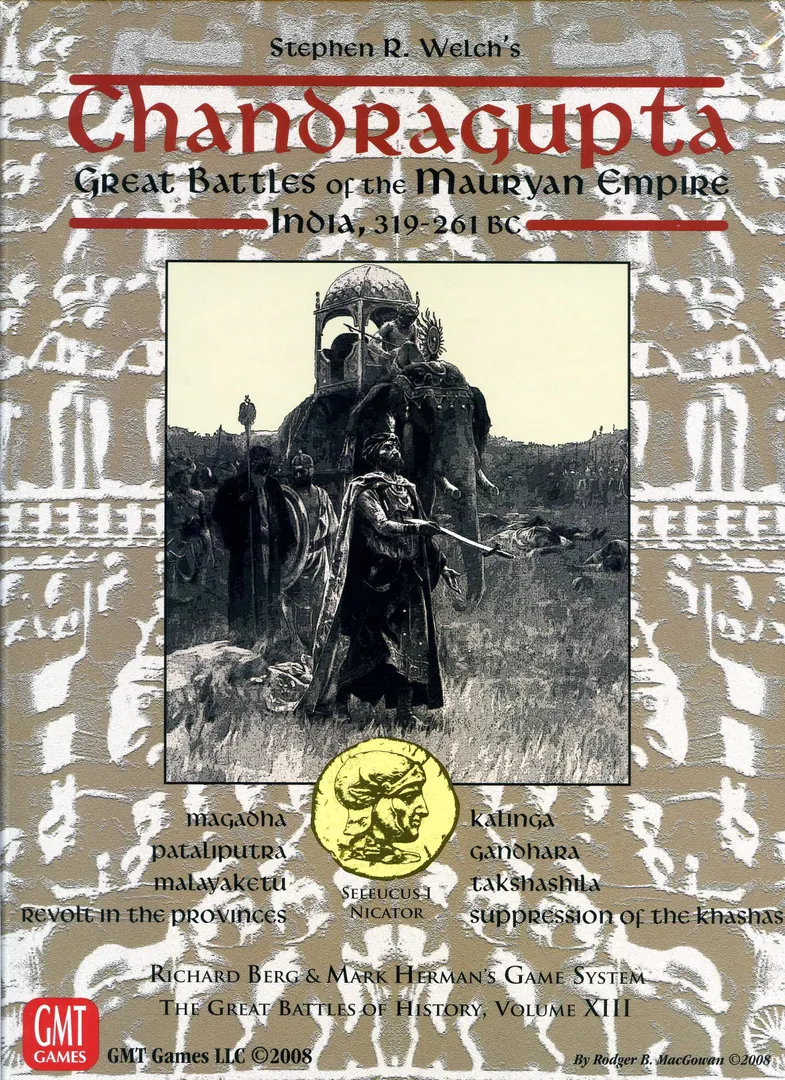
Chandragupta: Great Battles of the Mauryan Empire – India, 319-261 BC
- 2 graczy
- 240 min
- Złożoność 3,8/5
- 2008
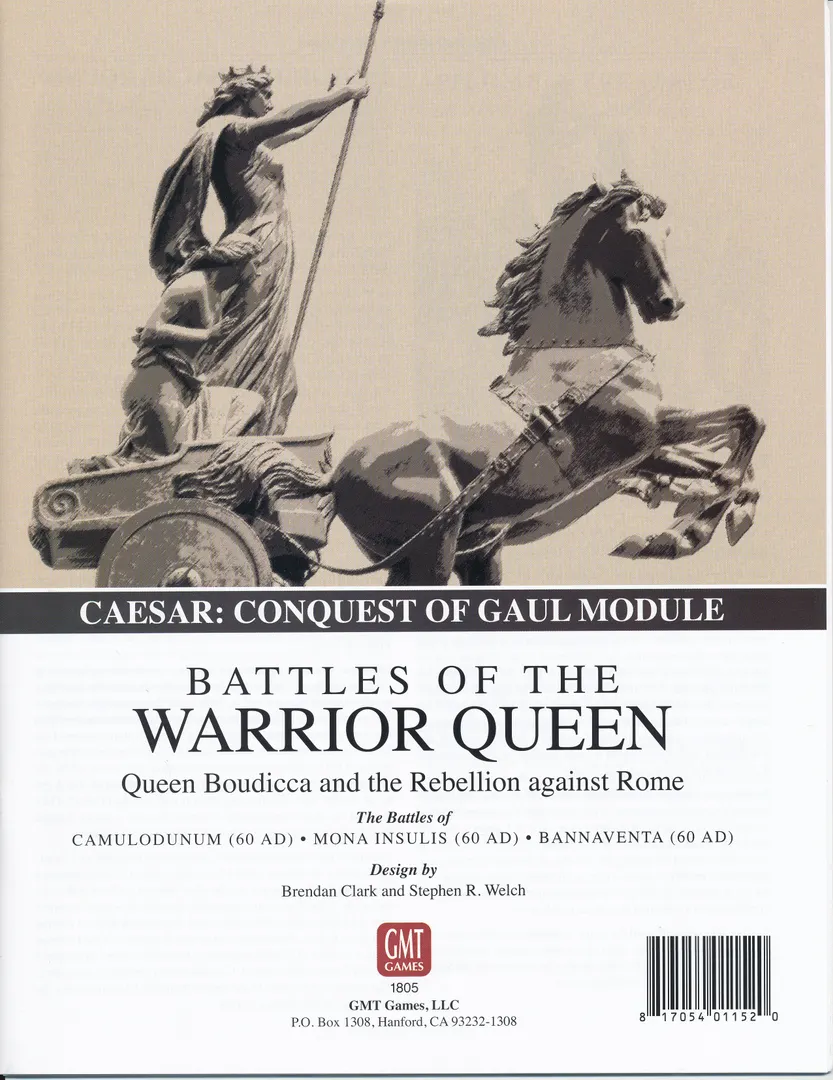
Pomoc w zasadach gry Battles of the Warrior Queen
Zrozumiałe wyjaśnienia tur, efektów kart i spornych sytuacji z odnośnikami do oficjalnych źródeł i zapisaną historią pytań.
Co chcesz wiedzieć?
Odpowiedzi pochodzą z oficjalnej instrukcji, ze stroną do sprawdzenia.
Battles of the Warrior Queen to dodatek do gry Caesar: Conquest of Gaul wydany w 2017 roku dla 2 graczy. Projekt gry: Brendan Clark i Stephen R. Welch. Główne mechaniki: Dice Rolling, Hexagon Grid i Simulation.









Po angielsku
It is AD60, and Governor of Britannia C. Suetonius Paulinus stands ready to deal his final blow against a vicious insurgency in Rome’s new province. Inspired by Rome’s implacable opponents, the Druids, the remaining fanatical warriors of a two-year insurgency hold out on the island of Anglesey. Having made an amphibious landing on the island’s shores, Paulinus and his legionaries must cut their way through fierce opposition on the beach. While his cohorts ravage the island, a messenger reaches Paulinus with news of a tribe that is rampaging the eastern fringes of his province. The Iceni, led by Queen Boudicca, are reported to have murdered local Roman officials and their guards. Other reports soon arrive that the Iceni’s revolt is gathering both force and momentum as local tribes are responding to Boudicca’s call for open revolt. A large warrior force is said to be devastating Roman villas and farmsteads as it heads south towards the first Roman colony in Britannia, Camulodunum. Paulinus realizes that with all four of his legions posted in the north and west, this new menace has the potential to ravage Roman colonies and cut his lines of communication. He faces the very real prospect of being Governor of Britannia in name only. Battles of the Warrior Queen covers the major engagements during the rebellion of the Iceni tribe and Boudicca’s allies against the legions of Emperor Nero. Led by Queen Boudicca, the rebellion would be the greatest British threat to nearly four centuries of Roman domination of Britain. Battle of Mona Insulis Separated from mainland Britain by the treacherous waters of the Menai Straits, Paulinus faced the challenge of making an opposed beach landing on the Welsh island of Mona Insulis (today’s Anglesey). The Britons, arrayed along the shore in a dense and heavily armed line of battle, awaited the assault. Helping whip them into a battle frenzy were the Druid priests, for whom the island was their last sanctuary. Battle of Camulodunum On learning that the Iceni tribe had risen in revolt and were heading towards the Roman colony of Camulodunum (modern-day Colchester), the IXth Legion (named as “Hispana”) set off from its base in Lindum (modern-day Lincoln), under the command of legate Petillius Cerialis. Cerialis was a mercurial individual who had escaped the brink of military disaster before. His luck would be tried once again in his encounter with the Britons. Battle of Bannaventa After arriving on the mainland, Paulinus rode east and south in great haste. Outside Londinium news of the defeat of Cerialis and his IXth Legion reached him. Ordering evacuation of the city, Paulinus withdrew hurriedly northwards to the midlands and urgently concentrated the XIVth Gemina and the XXth Legions. As Boudicca’s horde approached, Paulinus drew up his troops in close order in a defile, protected on his flanks and in his rear by dense forest. He new that the Queen of the Iceni would struggle to keep her disparate coalition in check for long, and would soon be compelled to attack. Whichever way it went, this would likely be the final, climatic battle of Boudicca’s rebellion against Rome. To play this module you will need the maps, counters and rules that come with this module and the rules and some counters from Caesar: Conquest of Gaul. Battles of the Warrior Queen can also be played with the Simple Great Battles of History (SGBoH) rules. Components: One 32” and 24” back printed map sheet (one full and two half size game maps) 140 counters (from the GMT Website)
Według katalogu Battles of the Warrior Queen obsługuje 2 graczy. To liczba graczy podana przez wydawcę, więc gra jest zaprojektowana dokładnie dla takiej liczby uczestników. Warianty dla grup innej wielkości, jeśli w ogóle istnieją, opisano w instrukcji twojego wydania; sprawdź ją uważnie, zanim przygotujesz inną konfigurację stołu.
Battles of the Warrior Queen ma ocenę złożoności 3,0 na 5 według graczy BoardGameGeek, co czyni ją grą średnio złożoną. Ocena pokazuje, ile znajomości zasad, planowania i podejmowania decyzji wymaga typowa rozgrywka. Cięższe gry wymagają dłuższego pierwszego tłumaczenia, dlatego przed wieczorem z grami warto skorzystać z przewodnika przygotowania.
Battles of the Warrior Queen należy do tych kategorii: Wargame i Ancient. Główne mechaniki to Dice Rolling, Hexagon Grid i Simulation. Kategorie opisują temat i świat gry, a mechaniki to, co gracze faktycznie robią w swojej turze. Każda mechanika prowadzi do strony katalogu z podobnymi grami, co pomaga znaleźć coś porównywalnego na kolejny wieczór.
Autorzy wymienieni przy Battles of the Warrior Queen to: Brendan Clark i Stephen R. Welch. Te informacje pochodzą z opublikowanych danych gry i wskazują osoby odpowiedzialne za jej projekt, a nie ilustratorów czy wydawców. Strony autorów w MeepleRules zbierają inne tytuły tych samych twórców, co pomaga, gdy gra ci się podoba i szukasz podobnych.
W katalogu Battles of the Warrior Queen figuruje jako dodatek do Caesar: Conquest of Gaul. Dodatki dokładają nową zawartość, zasady lub scenariusze do gry podstawowej i zwykle nie nadają się do samodzielnej gry, więc do korzystania z niego potrzebujesz gry Caesar: Conquest of Gaul. Sprawdź, czy twoje wydanie gry Caesar: Conquest of Gaul jest zgodne, bo niektóre dodatki zmieniano między wydaniami.