
- Ocena BGG
- 6,9
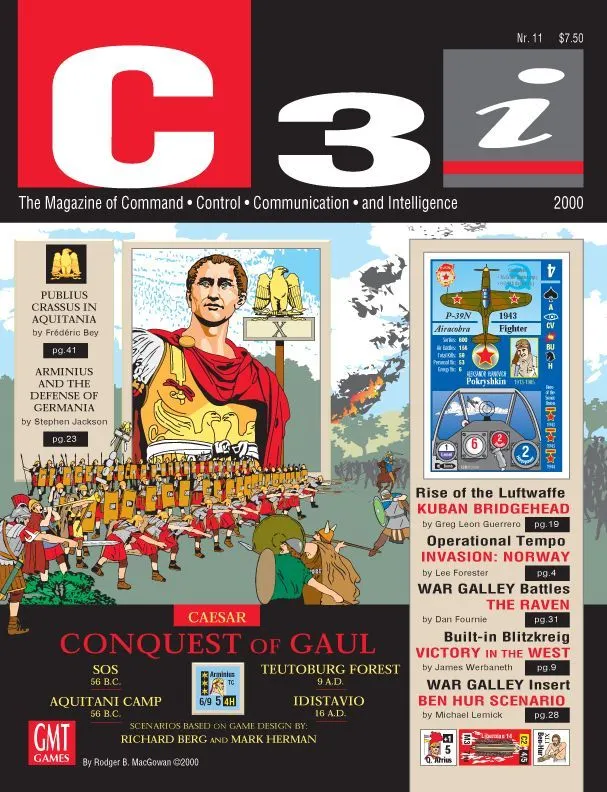
Arminius and the Defense of Germania
- 2 graczy
- Złożoność 3,8/5
- 2000

1998
Pomoc w zasadach gry Caesar: Conquest of Gaul
Zrozumiałe wyjaśnienia tur, efektów kart i spornych sytuacji z odnośnikami do oficjalnych źródeł i zapisaną historią pytań.
Dla 1 gracza
Co chcesz wiedzieć?
Odpowiedzi pochodzą z oficjalnej instrukcji, ze stroną do sprawdzenia.
Caesar: Conquest of Gaul to gra planszowa wydana w 1998 roku dla 1–4 graczy, z rozgrywką trwającą 240 minut i dla osób od 12 lat. Projekt gry: Richard H. Berg i Mark Herman. Główne mechaniki: Dice Rolling, Grid Movement i Hexagon Grid.











Po angielsku
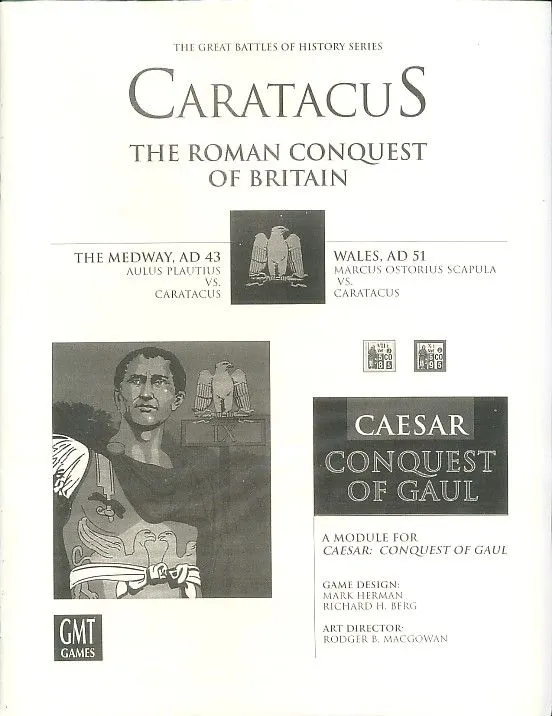
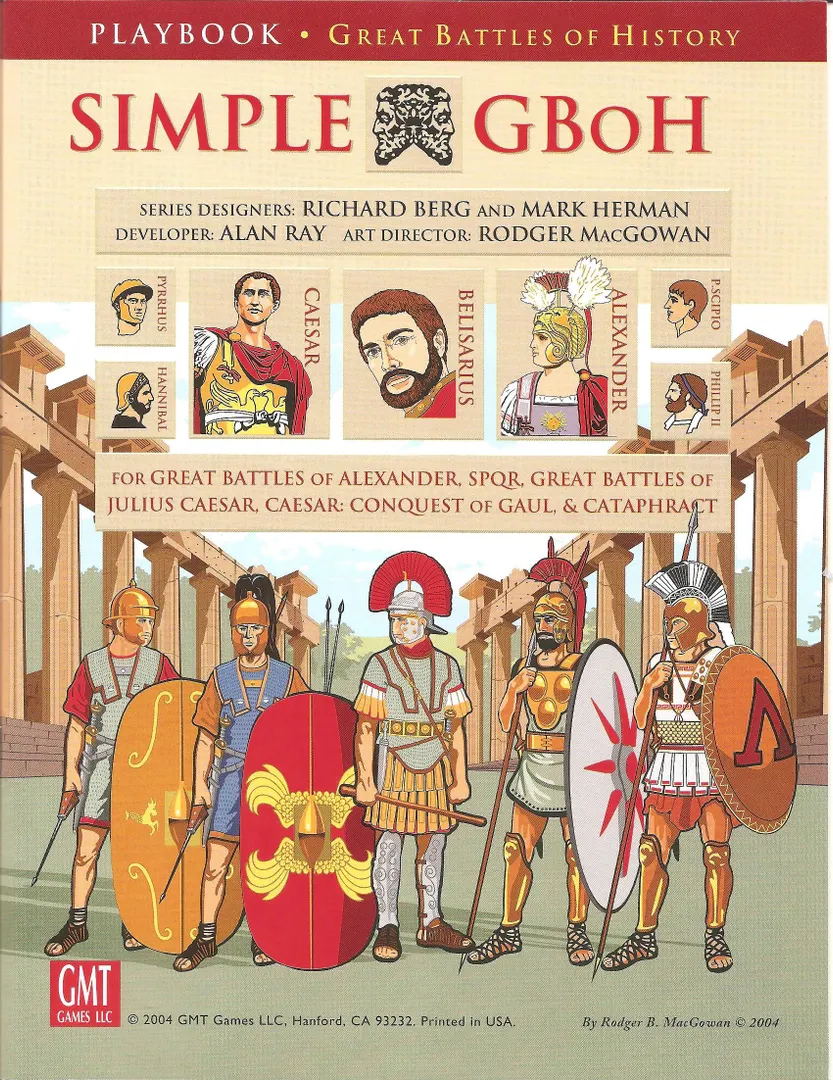
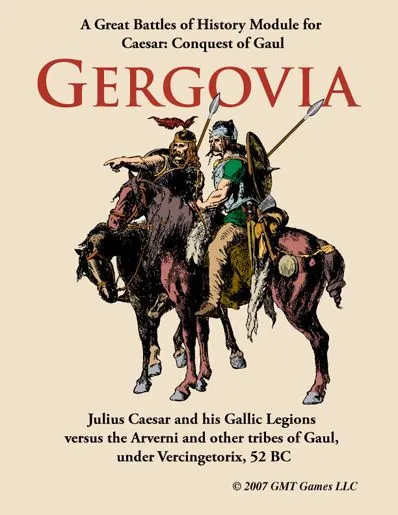
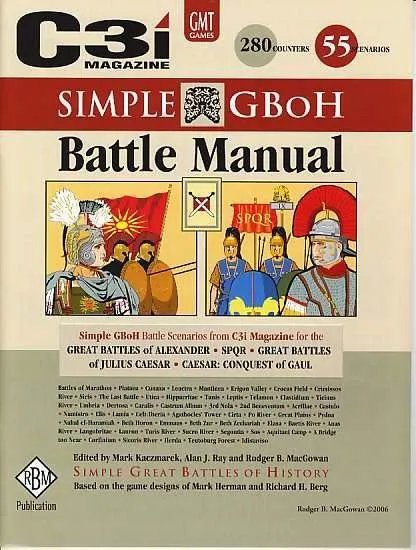
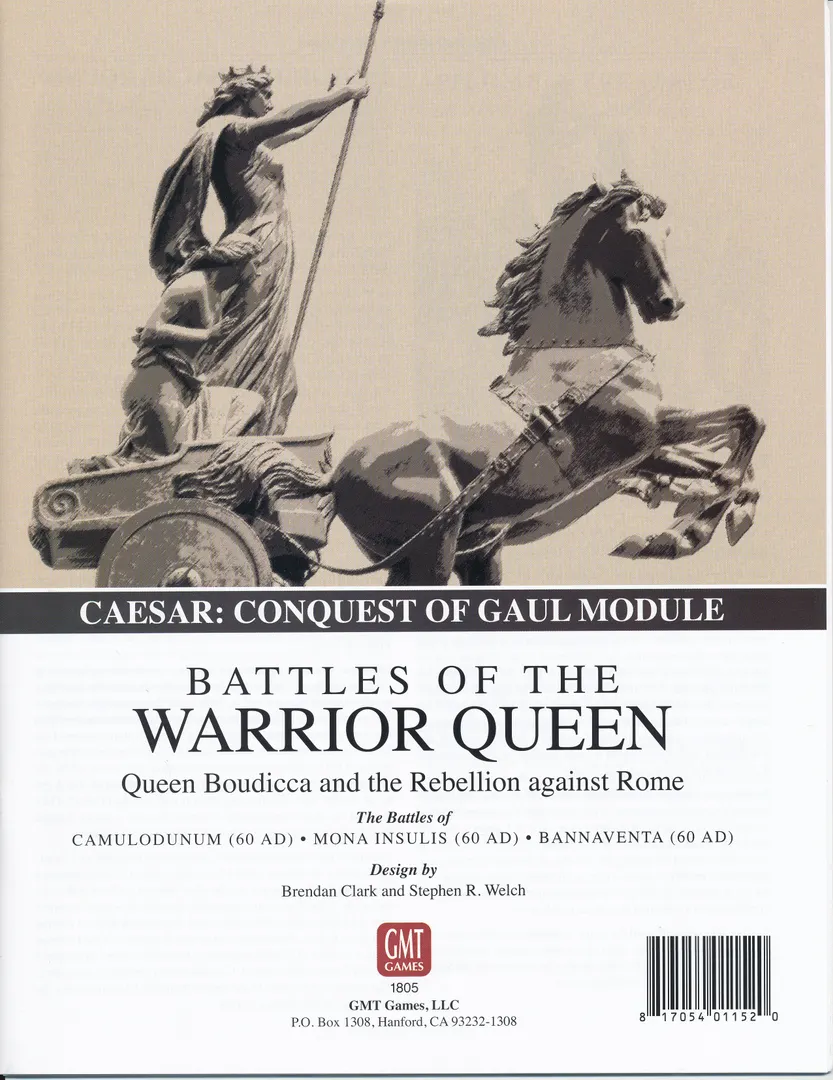
In 58 BC, Gaius Julius Caesar was appointed by the Roman Senate as proconsul for Gaul, for which he was given four legions. The ambitious Caesar, a military ingenue, had little idea of how lucky he was going to be -- as he was in usually everything he did -- because, within a short space of a few years, after coming to the rescue of the Gauls against incursions from Germanic tribes to the east, Caesar himself decided to bring the rest of the barbarian tribes under the domain of Republican Rome...and, at the same time, increase his visibility among the Roman people. From a military point of view it was an immense achievement, one that fueled Roman imperialist feelings like no other war. For the Gauls it meant subjugation. For the gamer, it means six battles of Pure Excitement. Bibracte 58BC Caesar is called on by the Aeudui to repel the Helvetii. Caesar corners the Helvetii near the Aeudui oppidum, Bibracte, and forces them to attack him. The Helvetii fall back, regroup and, as Caesar's legions march toward them, attack again. At this moment, contingents of the Boii and Tulingi tribes hit Caesar's right flank. The Rhine 58BC Having defeated the Helvetii, Caesar is now asked by the Gauls to do the same against the aggressive Germans. The German tribes are led by a very capable and wily chief, Ariovistus -- he outmaneuvers Caesar to cut his supply line, to which Caesar reacts by outbluffing the Germans so that their lines are now cut. The Sabis 57BC Having decided to pacify Gaul, Caesar realizes he will have to start in the north, with the Belgae, the most dangerous tribe. He marches against them, reaching the banks of the Sabis (today, the Sambre) River. Without warning the Nervii and their allies, the Viromandui and Atrebates, emerge from the woods in full barbarian fury. Bay of Biscay 56BC The sea-oriented Amorican tribes of NW Gaul proved most difficult. They could not be defeated on land, so had to be attacked at sea. For that purpose, Caesar had his men build an entire fleet of biremes from scratch in less than two months. The Roman fleet, under Admiral Decimus Junius Brutus faced a difficult foe. Britannia 55BC Late Summer, and Caesar decides to cross the Channel. A fleet of 80 warships and transports reach the shores of Britannia near modern Dover. But their cavalry has been dispersed by a storm, and the Romans have a difficult time beaching their galleys. The Romans are beset by large numbers of Britons. Lutetia 52BC There are rumblings of a Gallic uprising, and Caesar sends his right-hand-man Titus Labienus, with four legions, against the local tribes around what is now Paris (Lutetia). After some up and down river maneuvering by both armies, the Gauls attack Labienus in a classic set-piece battle that serves as a learning scenario. Game Features: Eight of Rome's most vaunted legions, including Caesar's favorite, the Xth, and its maximum-rated 1st cohort...each with its own artillery, auxiliares and hired cavalry. Ten tribes of sword-armed, axe-throwing barbarian infantry, fueled by special rules for Barbarian Impetuosity and Ferocity. For the first time in the GBoH system, war galleys, sail ships and transports...all in a preview of the Naval Warfare system for the series. A much simplified command system (as opposed to the hierarchical system in Julius Caesar: The Civil Wars), reflecting the smaller Roman armies as well as the leadership theories of the tribes. All three major land battles of the war, a full-scale invasion scenario as well as a smaller battle perfect for getting a feel for the game. Special rules for Hit and Run tactics, as well as revised artillery use mechanics. The *feared German cavalry...a combination of light horse and light infantry so effective that even the disciplined Romans sought to avoid confrontation. A system that is perfect for solitaire play. TIME SCALE: 20 minutes per turn MAP SCALE: 75 yards per hex UNIT SCALE: 100-150 men per size point NUMBER OF PLAYERS: One to four (source: GMT website) Expansion Modules: Caratacus: two battles from the Claudian invasion of Britannia Gergovia: Caesar's defeat in 52 BCE Battles of the Warrior Queen: Covers the major engagements during the rebellion of the Iceni tribe and Boudicca’s allies against the legions of Emperor Nero. Led by Queen Boudicca, the rebellion would be the greatest British threat to nearly four centuries of Roman domination of Britain (c. A.D 70).
Według katalogu Caesar: Conquest of Gaul obsługuje od 1 do 4 graczy. Ten zakres odpowiada liczbie graczy podanej przez wydawcę, więc grę można przygotować dla dowolnej grupy w jego granicach. Przygotowanie, niektóre zasady i punktacja mogą jednak różnić się w zależności od liczby graczy; dokładną konfigurację sprawdź w instrukcji swojego wydania.
Podany czas rozgrywki w Caesar: Conquest of Gaul wynosi 240 minut. To szacunek wydawcy dla pełnej partii. Rzeczywisty czas zależy od grupy, liczby graczy i znajomości zasad: pierwsze partie zwykle trwają dłużej, a doświadczone grupy kończą szybciej. Przygotowanie gry i tłumaczenie zasad nie są wliczone w ten szacunek.
Katalog podaje dla Caesar: Conquest of Gaul wiek od 12 lat. To zalecenie wydawcy, które uwzględnia wymagania dotyczące czytania, złożoność zasad i drobne elementy, a nie tylko tematykę. Młodsi gracze często mogą dołączyć z pomocą dorosłego; sprawdź zalecenie wiekowe swojego wydania i weź pod uwagę doświadczenie grupy z grami planszowymi.
Caesar: Conquest of Gaul ma ocenę złożoności 3,5 na 5 według graczy BoardGameGeek, co czyni ją grą średnio złożoną. Ocena pokazuje, ile znajomości zasad, planowania i podejmowania decyzji wymaga typowa rozgrywka. Cięższe gry wymagają dłuższego pierwszego tłumaczenia, dlatego przed wieczorem z grami warto skorzystać z przewodnika przygotowania.
Caesar: Conquest of Gaul należy do tych kategorii: Wargame i Ancient. Główne mechaniki to Dice Rolling, Grid Movement i Hexagon Grid. Kategorie opisują temat i świat gry, a mechaniki to, co gracze faktycznie robią w swojej turze. Każda mechanika prowadzi do strony katalogu z podobnymi grami, co pomaga znaleźć coś porównywalnego na kolejny wieczór.
Autorzy wymienieni przy Caesar: Conquest of Gaul to: Richard H. Berg i Mark Herman. Te informacje pochodzą z opublikowanych danych gry i wskazują osoby odpowiedzialne za jej projekt, a nie ilustratorów czy wydawców. Strony autorów w MeepleRules zbierają inne tytuły tych samych twórców, co pomaga, gdy gra ci się podoba i szukasz podobnych.
W katalogu Caesar: Conquest of Gaul figuruje jako gra podstawowa. Można w nią grać samodzielnie, korzystając z elementów z pudełka, bez żadnego innego tytułu. Dodatki, jeśli istnieją, dokładają nową zawartość lub zasady i są wymienione w katalogu osobno, z odnośnikiem do tej gry podstawowej.