

- Ocena BGG
- 5,9
Cheesonomics: Extra Sharp Expansion
- 2–5 graczy
- 20 min
- 2014
2014
Pomoc w zasadach gry Cheesonomics
Zrozumiałe wyjaśnienia tur, efektów kart i spornych sytuacji z odnośnikami do oficjalnych źródeł i zapisaną historią pytań.
Dla 2 graczy
Co chcesz wiedzieć?
Odpowiedzi pochodzą z oficjalnej instrukcji, ze stroną do sprawdzenia.
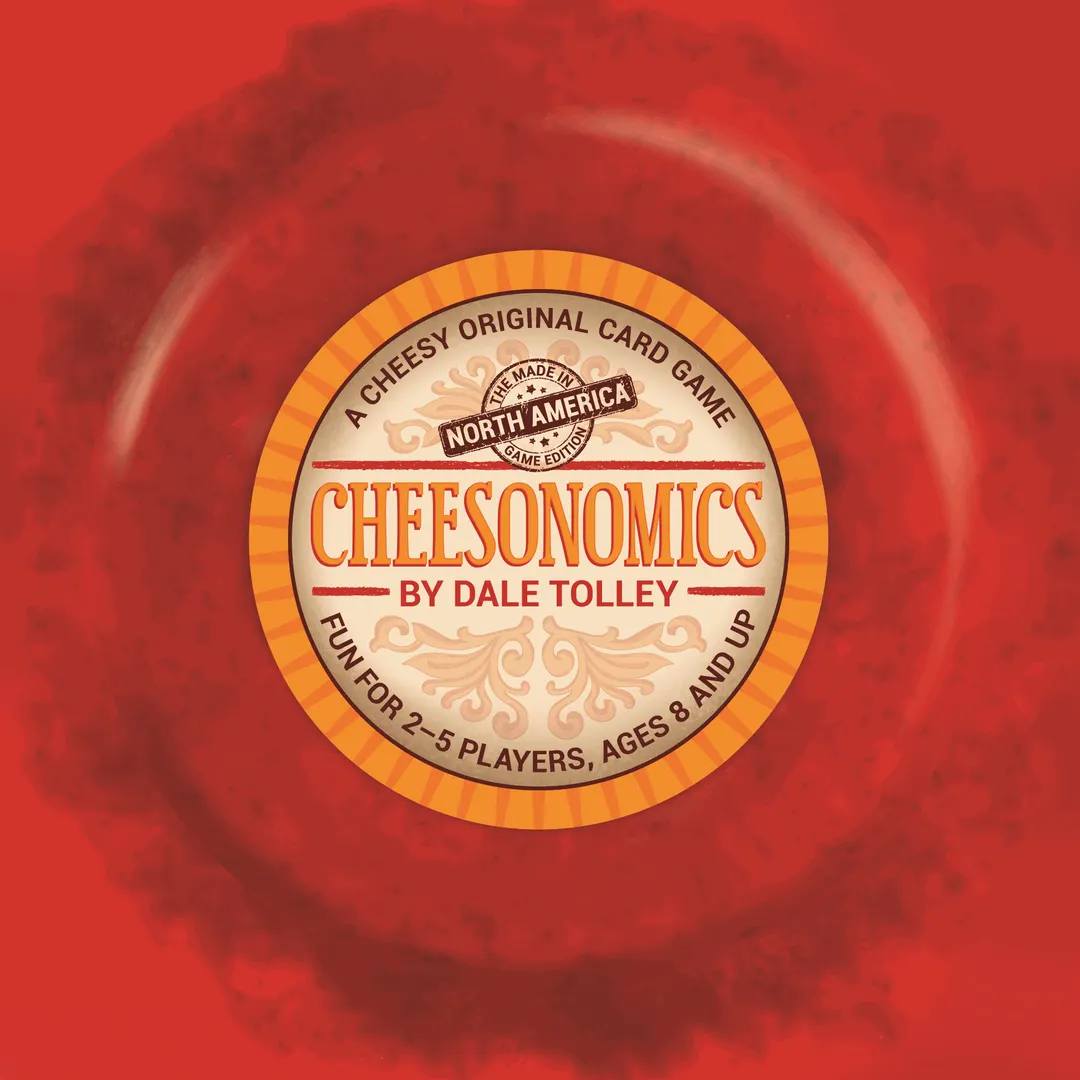
Cheesonomics to gra planszowa wydana w 2014 roku dla 2–5 graczy, z rozgrywką trwającą 20 minut i dla osób od 8 lat. Projekt gry: Dale Tolley. Główne mechaniki: Hand Management, Take That i Set Collection.


Po angielsku
Cheesonomics is a cheesy original card game for 2-5 players ages 8 and up that takes about 20-30 minutes to play. It is a strategic set collecting, memory-based, hand management card game based on controlling and manipulating the supply and demand of various types of cheese from cheese markets throughout North America or Europe. The European edition of Cheesonomics features cheese from France, Germany, Italy, The Netherlands and Scandinavia. The North American edition of Cheesonomics features cheese from Wisconsin, California, New York, Oregon and Canada. The overall goal of Cheesonomics is to manage your cheese supply, churn the right colors or animal types from your opponents' hands, produce the market's most demanded colors of cheese to milk the most profit, and earn the most curd cash by selling different colors of cheese at high market prices. Cheesonomics can be played at three different skill levels - mild, sharp and extra sharp - allowing gamers to adjust the game according to their own playing palate. Each game starts with three market wheels made up of 5 market wedges, and each player receives five cheese wedges and a cheese knife marked with either cheddar, edam, feta, gouda or parmesan. On each turn, the active player begins by retrieving his cheese knife from the serving tray - if it was placed there on a previous turn - and then chooses one of three different culinary actions: Churn Cheese, Produce Cheese or Sell Cheese. Churning cheese allows a player to collect cheese wedges from opponents. When churning, the active player asks for one color or animal type. The colors are red, orange, yellow, green or blue, and animals are cow, sheep, goat, yak, and reindeer. If an opponent has that type of cheese card, he must give the active player one card of that type. If he does not have that card type, the opponent must show his hand and give the active player one wedge of the active player's choice. The active player then protects his product by placing his cheese knife over that color or animal type on the provided serving tray. No other player can churn for that type of cheese until the knife is removed on that player's next turn. Instead of Churning, a player could Produce cheese. To do this, the active player simply plays all cheese wedges of one color or animal type from his hand face up onto the table into a cheese wheel. These wedges will be available for sale in future turns. The player then draws cheese wedges until he has five total wedges in his hand. Instead of Churning or Producing cheese, the active player could Sell Cheese. To sell, a player chooses up to three wedges of one color or animal type from previously-formed cheese and gains curd cash depending on the market, which is the sum of face-up, matching color market wedges. After selling cheese, the active player now "Mooves" the market, choosing one market wedge representing the color of the cheese sold in the transaction and flipping that wedge to the opposite side. The game ends when the cheese wedge draw pile is exhausted during a player's turn. The cheesemonger who has the most curd cash is the cheesy champion! Cheesonomics has even more to offer players who wish to try out the Sharp and Extra Sharp flavors of the game. In the Sharp game, players can now further manipulate the market. Whenever a Sell Cheese action is taken, that player now also chooses a wedge in the market to completely replace with one from his personal supply of market wedges. There are also certain cheese wedges with market symbols that may be activated during a Sell Cheese action that can allow a player to discard one of their market wedges and gain another or give a market wedge to one of the other players and take one of theirs. The Extra Sharp game is for the truly adventurous Cheeseheads! As an expansion to Cheesonomics, players can add in the Extra Sharp cheese wedge cards that introduce growth hormone, organic and smelly cheese wedges. Each of these new cheese wedge types have special rules that affect a Sell Cheese action, allowing players the choice to boost their production with growth hormones, earn more curds at game end with quality organic cheeses, or use pungent aromas to prevent players from flipping or removing market wedges.
Według katalogu Cheesonomics obsługuje od 2 do 5 graczy. Ten zakres odpowiada liczbie graczy podanej przez wydawcę, więc grę można przygotować dla dowolnej grupy w jego granicach. Przygotowanie, niektóre zasady i punktacja mogą jednak różnić się w zależności od liczby graczy; dokładną konfigurację sprawdź w instrukcji swojego wydania.
Podany czas rozgrywki w Cheesonomics wynosi 20 minut. To szacunek wydawcy dla pełnej partii. Rzeczywisty czas zależy od grupy, liczby graczy i znajomości zasad: pierwsze partie zwykle trwają dłużej, a doświadczone grupy kończą szybciej. Przygotowanie gry i tłumaczenie zasad nie są wliczone w ten szacunek.
Katalog podaje dla Cheesonomics wiek od 8 lat. To zalecenie wydawcy, które uwzględnia wymagania dotyczące czytania, złożoność zasad i drobne elementy, a nie tylko tematykę. Młodsi gracze często mogą dołączyć z pomocą dorosłego; sprawdź zalecenie wiekowe swojego wydania i weź pod uwagę doświadczenie grupy z grami planszowymi.
Cheesonomics ma ocenę złożoności 1,7 na 5 według graczy BoardGameGeek, co czyni ją grą lekką. Ocena pokazuje, ile znajomości zasad, planowania i podejmowania decyzji wymaga typowa rozgrywka. Cięższe gry wymagają dłuższego pierwszego tłumaczenia, dlatego przed wieczorem z grami warto skorzystać z przewodnika przygotowania.
Cheesonomics należy do tych kategorii: Card Game, Economic i Memory. Główne mechaniki to Hand Management, Take That i Set Collection. Kategorie opisują temat i świat gry, a mechaniki to, co gracze faktycznie robią w swojej turze. Każda mechanika prowadzi do strony katalogu z podobnymi grami, co pomaga znaleźć coś porównywalnego na kolejny wieczór.
Autorzy wymienieni przy Cheesonomics to: Dale Tolley. Te informacje pochodzą z opublikowanych danych gry i wskazują osoby odpowiedzialne za jej projekt, a nie ilustratorów czy wydawców. Strony autorów w MeepleRules zbierają inne tytuły tych samych twórców, co pomaga, gdy gra ci się podoba i szukasz podobnych.
W katalogu Cheesonomics figuruje jako gra podstawowa. Można w nią grać samodzielnie, korzystając z elementów z pudełka, bez żadnego innego tytułu. Dodatki, jeśli istnieją, dokładają nową zawartość lub zasady i są wymienione w katalogu osobno, z odnośnikiem do tej gry podstawowej.