
- Ocena BGG
- 8,1
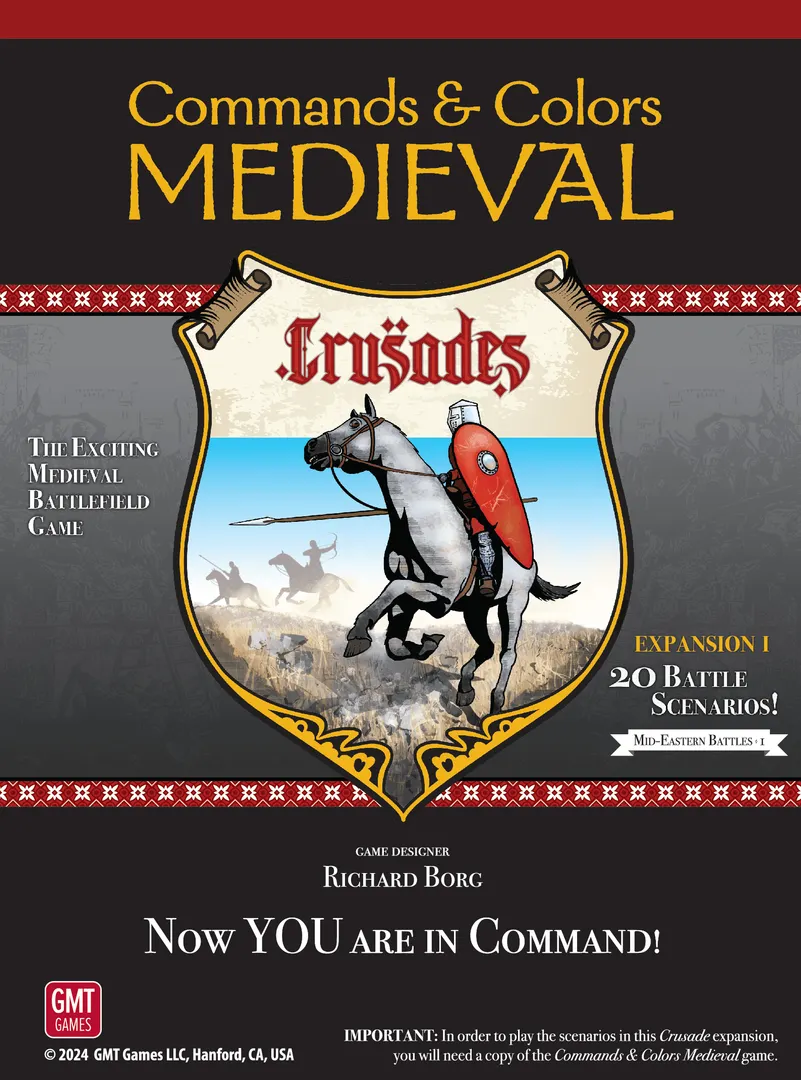
Commands & Colors: Medieval – Expansion #1 Crusades Mid-Eastern Battles I
- 2 graczy
- 60–120 min
- Złożoność 2,0/5
- 2024
2019
Pomoc w zasadach gry Commands & Colors: Medieval
Zrozumiałe wyjaśnienia tur, efektów kart i spornych sytuacji z odnośnikami do oficjalnych źródeł i zapisaną historią pytań.
Dla 2 graczy
Co chcesz wiedzieć?
Odpowiedzi pochodzą z oficjalnej instrukcji, ze stroną do sprawdzenia.
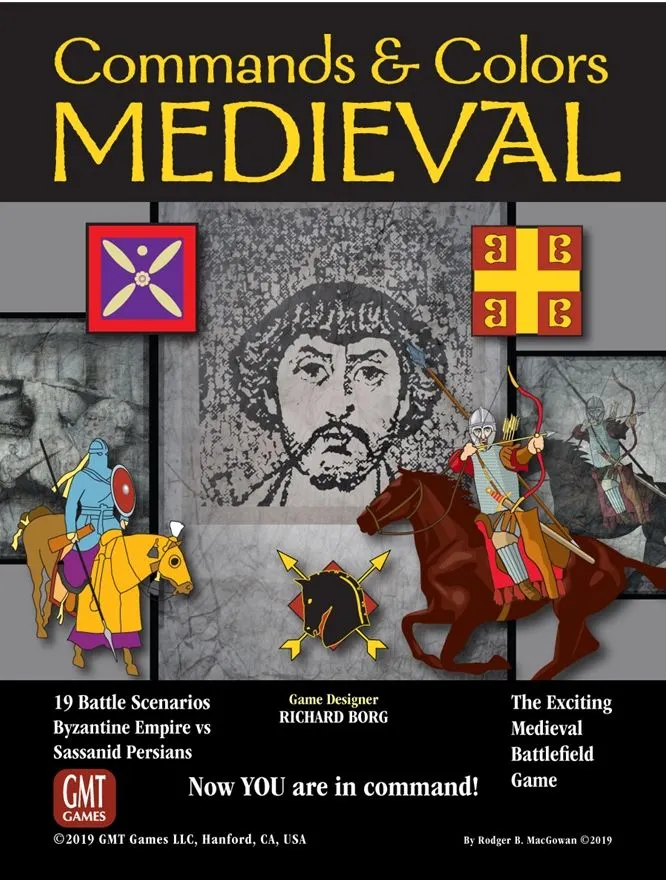
Commands & Colors: Medieval to gra planszowa wydana w 2019 roku dla 2 graczy, z rozgrywką trwającą 60–120 minut i dla osób od 12 lat. Projekt gry: Richard Borg. Główne mechaniki: Dice Rolling, Hexagon Grid i Line of Sight.




Po angielsku
Game description from the designer: Commands & Colors: Medieval is based on the Commands & Colors game system and by design is not overly complex. The Medieval game introduces many new game concepts to the Commands & Colors system, which add historical depth and flavor. Some of the new concepts are: Superior armor and status when battling Cavalry units increase to 4 blocks Heavy infantry battle dice are reduced from 5 dice down to 4 Light Bow Cavalry units can employ the Parthian Shot when they evade Still, some Commands & Colors game mechanics remain familiar to players of other games in the system, like the deck of Medieval Command cards that drive movement while creating a “fog of war,” and the battle dice that will resolve combat quickly and efficiently. The stylized battlefield scenario maps emphasize the important terrain features and highlight the historical deployment of forces in scale with the game system. The scale of the game is flexible, and varies from battle to battle. For some scenarios, a unit may represent a Chiliarchy of soldiers, while in other scenarios a unit may represent just a few brave warriors. The battlefield tactics, however, that you will need to execute to gain victory conform remarkably well to the strengths and limitations of the various medieval unit types, their weapons, the terrain, and history. The medieval battles showcased in the scenario book focus on the historical confrontations between the Byzantine Empire and Sassanid Persians (530 to 627 AD) with a slight detour to battle the Moors and their rebel allies (645 - 648 AD). The Byzantine Empire during this period of medieval history was one of constant transition and reorganization. Its army tended to mirror its eastern adversaries by deploying an increasing number of armored cavalry formations (Cataphracts) and more missile troops. Yet, it was how the Byzantines adapted their battlefield tactics in relation to the enemy it faced that is perhaps the chief reason for the longevity of their Empire. Although the Byzantine army fought on other frontiers, against a multitude of opponents, Visigoths, Vandals, Ostrogoths, Franks, Alemanni, those conflicts are beyond the scope and space of this one package. Additional expansion modules that address those battles will be forthcoming.
Według katalogu Commands & Colors: Medieval obsługuje 2 graczy. To liczba graczy podana przez wydawcę, więc gra jest zaprojektowana dokładnie dla takiej liczby uczestników. Warianty dla grup innej wielkości, jeśli w ogóle istnieją, opisano w instrukcji twojego wydania; sprawdź ją uważnie, zanim przygotujesz inną konfigurację stołu.
Podany czas rozgrywki w Commands & Colors: Medieval wynosi 60–120 minut. To szacunek wydawcy dla pełnej partii. Rzeczywisty czas zależy od grupy, liczby graczy i znajomości zasad: pierwsze partie zwykle trwają dłużej, a doświadczone grupy kończą szybciej. Przygotowanie gry i tłumaczenie zasad nie są wliczone w ten szacunek.
Katalog podaje dla Commands & Colors: Medieval wiek od 12 lat. To zalecenie wydawcy, które uwzględnia wymagania dotyczące czytania, złożoność zasad i drobne elementy, a nie tylko tematykę. Młodsi gracze często mogą dołączyć z pomocą dorosłego; sprawdź zalecenie wiekowe swojego wydania i weź pod uwagę doświadczenie grupy z grami planszowymi.
Commands & Colors: Medieval ma ocenę złożoności 2,6 na 5 według graczy BoardGameGeek, co czyni ją grą raczej lekką. Ocena pokazuje, ile znajomości zasad, planowania i podejmowania decyzji wymaga typowa rozgrywka. Cięższe gry wymagają dłuższego pierwszego tłumaczenia, dlatego przed wieczorem z grami warto skorzystać z przewodnika przygotowania.
Commands & Colors: Medieval należy do tych kategorii: Wargame i Medieval. Główne mechaniki to Dice Rolling, Hexagon Grid i Line of Sight. Kategorie opisują temat i świat gry, a mechaniki to, co gracze faktycznie robią w swojej turze. Każda mechanika prowadzi do strony katalogu z podobnymi grami, co pomaga znaleźć coś porównywalnego na kolejny wieczór.
Autorzy wymienieni przy Commands & Colors: Medieval to: Richard Borg. Te informacje pochodzą z opublikowanych danych gry i wskazują osoby odpowiedzialne za jej projekt, a nie ilustratorów czy wydawców. Strony autorów w MeepleRules zbierają inne tytuły tych samych twórców, co pomaga, gdy gra ci się podoba i szukasz podobnych.
W katalogu Commands & Colors: Medieval figuruje jako gra podstawowa. Można w nią grać samodzielnie, korzystając z elementów z pudełka, bez żadnego innego tytułu. Dodatki, jeśli istnieją, dokładają nową zawartość lub zasady i są wymienione w katalogu osobno, z odnośnikiem do tej gry podstawowej.