
- Pozycja w BGG
- BGG #3399
- Ocena BGG
- 6,8
Tao Long: The Way of the Dragon
- 2 graczy
- 10–30 min
- Złożoność 2,7/5
- 2017

1400
Pomoc w zasadach gry Congkak
Zrozumiałe wyjaśnienia tur, efektów kart i spornych sytuacji z odnośnikami do oficjalnych źródeł i zapisaną historią pytań.
Dla 2 graczy
Co chcesz wiedzieć?
Odpowiedzi pochodzą z oficjalnej instrukcji, ze stroną do sprawdzenia.
Congkak to gra planszowa wydana w 1400 roku dla 2 graczy i dla osób od 6 lat. Główne mechaniki: Mancala.






Po angielsku
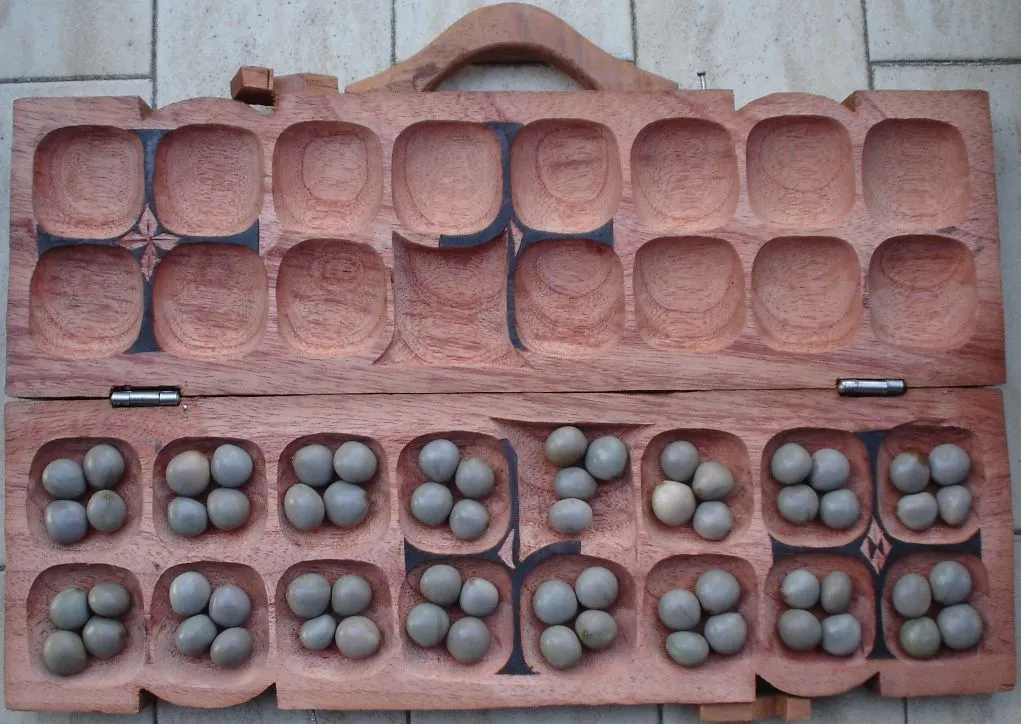
Congkak (also known as Sungka and Chongka among others), is a multi-lap sowing game likely derived from Mancala in the 15th century. Most Congkak or Sungka boards have seven pits on each of two sides, with a storehouse on each end of the board for each player. However, some boards have more or less pits. Each side of the board belongs to one player. Boards are usually made of wood and carved into different designs. The seeds are cowrie shells, though other items can be used. The game is played similar to Mancala with some notable differences. The goal of the game is to obtain the most seeds. The game starts off with seven seeds in each pit. Players get seeds by placing seeds into their storehouse. Players take the first turn simultaneously. During a player's turn, a player picks up pieces on their side of the board and drops a seed in each pit clockwise, placing a seed in their storehouse, but skipping the opponent's storehouse. If a player drops the final seed in a pit with seeds, the player picks up the seeds in the pit and continues their turn, distributing the picked up seeds in another lap. If a player drops the final seed in an empty pit on their side of the board, they capture all the seeds in the corresponding pit on the opponent's side of the board (as well as the seed they placed in an empty pit). A player's turn ends when a seed lands in an empty pit regardless of which side it lands. Play proceeds until all the seeds on one side of the board are empty. If there are still seeds on a side of the board, the player who owns the side gets all those sides. Games can also be played in rounds. At the end of a round, each player fills up each pit on their side with the seeds they had in their storehouse; each pit gets seven seeds as in setup. Leftover seeds remain in their storehouse. If there are not enough seeds to fill a pit, the pit gets burned and removed from play. Players cannot put seeds into the burned pit. The series of rounds can be finished when a player can no longer sufficiently fill one pit with seven seeds.
Według katalogu Congkak obsługuje 2 graczy. To liczba graczy podana przez wydawcę, więc gra jest zaprojektowana dokładnie dla takiej liczby uczestników. Warianty dla grup innej wielkości, jeśli w ogóle istnieją, opisano w instrukcji twojego wydania; sprawdź ją uważnie, zanim przygotujesz inną konfigurację stołu.
Katalog podaje dla Congkak wiek od 6 lat. To zalecenie wydawcy, które uwzględnia wymagania dotyczące czytania, złożoność zasad i drobne elementy, a nie tylko tematykę. Młodsi gracze często mogą dołączyć z pomocą dorosłego; sprawdź zalecenie wiekowe swojego wydania i weź pod uwagę doświadczenie grupy z grami planszowymi.
Congkak ma ocenę złożoności 3,0 na 5 według graczy BoardGameGeek, co czyni ją grą średnio złożoną. Ocena pokazuje, ile znajomości zasad, planowania i podejmowania decyzji wymaga typowa rozgrywka. Cięższe gry wymagają dłuższego pierwszego tłumaczenia, dlatego przed wieczorem z grami warto skorzystać z przewodnika przygotowania.
Congkak należy do tych kategorii: Abstract Strategy. Główne mechaniki to Mancala. Kategorie opisują temat i świat gry, a mechaniki to, co gracze faktycznie robią w swojej turze. Każda mechanika prowadzi do strony katalogu z podobnymi grami, co pomaga znaleźć coś porównywalnego na kolejny wieczór.
W katalogu Congkak figuruje jako gra podstawowa. Można w nią grać samodzielnie, korzystając z elementów z pudełka, bez żadnego innego tytułu. Dodatki, jeśli istnieją, dokładają nową zawartość lub zasady i są wymienione w katalogu osobno, z odnośnikiem do tej gry podstawowej.