
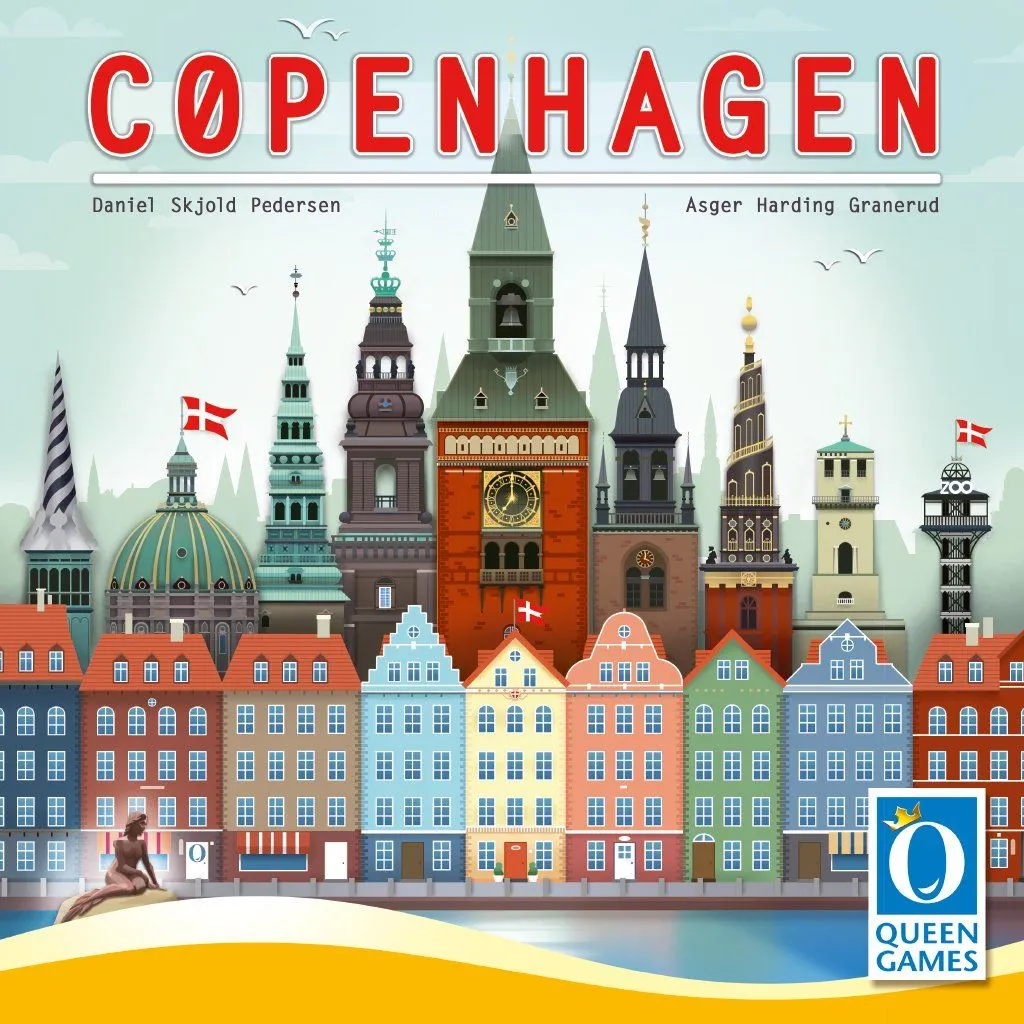
- Pozycja w BGG
- BGG #1575
- Ocena BGG
- 6,9
Copenhagen
- 2–4 graczy
- 20–40 min
- Złożoność 1,7/5
- 2019
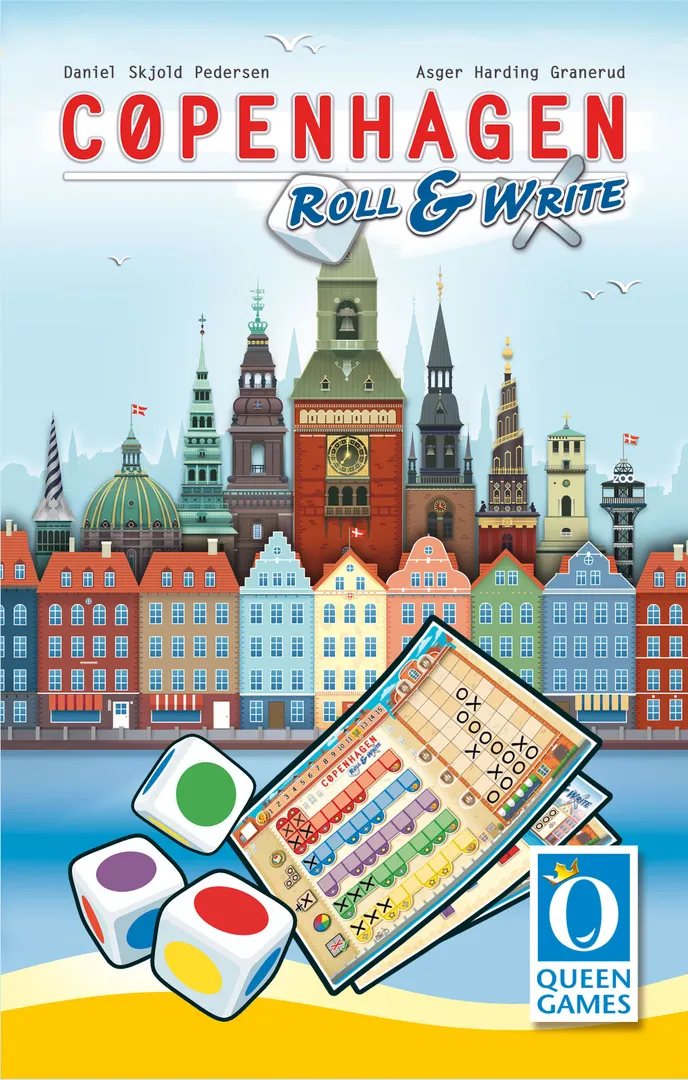
2019
Pomoc w zasadach gry Copenhagen: Roll & Write
Zrozumiałe wyjaśnienia tur, efektów kart i spornych sytuacji z odnośnikami do oficjalnych źródeł i zapisaną historią pytań.
Dla 2 graczy
Co chcesz wiedzieć?
Odpowiedzi pochodzą z oficjalnej instrukcji, ze stroną do sprawdzenia.
Copenhagen: Roll & Write to gra planszowa wydana w 2019 roku dla 2–4 graczy, z rozgrywką trwającą 20–40 minut i dla osób od 8 lat. Projekt gry: Asger Aleksandrov Granerud i Daniel Skjold Pedersen. Główne mechaniki: Dice Rolling, Paper-and-Pencil i Pattern Building.






Po angielsku
Copenhagen: Roll & Write features gameplay similar to the Copenhagen board game, but with players now finishing the facade of their building thanks to the colors shown on rolled dice, not drafted and played cards. In the game, each player has a paper scoresheet that shows a building and five colored lines of boxes. A sheet in the center of the playing area shows various polyomino tiles in those same five colors, with tiles of two and three spaces on one side of a central divider and tiles of four and five spaces on the other side. The game includes five six-sided dice that feature the above mentioned five colors on five of their sides as well as a sixth color that serves as a joker. Each player starts with two red stars on their scoresheet; you can spend one of these stars on your turn to reroll as many dice as you wish. On a turn, you roll the five dice. If you have rerolls in reserve, you can use them if you wish. You then choose a group of dice in a single color, then you see the shape of the polyomino that corresponds to this choice, then you draw that polyomino on the facade of the building, with the polyomino needing to "rest" on the bottom of the building area. One space in this polyomino is brick (represented by an "X") while the other spaces are all windows (represented by an "O"). If you created a polyomino of four or five spaces, you cross it off the central sheet of paper as each tile shown on the right side of the sheet can be used only once. Each other player then gets to choose one of the dice that you didn't use to claim that polyomino, then fill in the leftmost empty box of that color on their scoresheet. These boxes might have a symbol underneath them. If the box has a + under it, then this player can cross off the + on a future turn to add one "phantom" die showing this color to whatever they rolled that round, e.g., if you cross off a blue +, you effectively rolled three blue dice that turn instead of two. If a box has a star under it, then you can cross out that star on a future turn to use the power of that color: Red lets you reroll as many dice as you want. Blue lets you change one brick space to a window space when you're drawing something into your facade. Purple lets you draw one brick space in an empty space of your choice (as long as this space isn't floating in air). Green lets you change all dice of one color to another color of your choice. Yellow lets you use a polyomino shape that was crossed out on a previous turn. You can use as many stars as you wish on your turn. When you fill in a horizontal row in the facade of your building, you score 2 points if all the spaces are filled with windows and 1 point if at least one space holds brick; when you fill in a vertical column, you score 4 points and 2 points under the same condition. When you fill in predesignated rows and columns, you receive an immediate bonus — either drawing one window in an empty space or crossing off two boxes in one or two color lines on your scoresheet. If you cross out the final space in a color line, you score 2 points. Gameplay continues until someone has scored 12 or more points. Complete the round so that each player has had the same number of turns, then whoever has the most points wins!
Według katalogu Copenhagen: Roll & Write obsługuje od 2 do 4 graczy. Ten zakres odpowiada liczbie graczy podanej przez wydawcę, więc grę można przygotować dla dowolnej grupy w jego granicach. Przygotowanie, niektóre zasady i punktacja mogą jednak różnić się w zależności od liczby graczy; dokładną konfigurację sprawdź w instrukcji swojego wydania.
Podany czas rozgrywki w Copenhagen: Roll & Write wynosi 20–40 minut. To szacunek wydawcy dla pełnej partii. Rzeczywisty czas zależy od grupy, liczby graczy i znajomości zasad: pierwsze partie zwykle trwają dłużej, a doświadczone grupy kończą szybciej. Przygotowanie gry i tłumaczenie zasad nie są wliczone w ten szacunek.
Katalog podaje dla Copenhagen: Roll & Write wiek od 8 lat. To zalecenie wydawcy, które uwzględnia wymagania dotyczące czytania, złożoność zasad i drobne elementy, a nie tylko tematykę. Młodsi gracze często mogą dołączyć z pomocą dorosłego; sprawdź zalecenie wiekowe swojego wydania i weź pod uwagę doświadczenie grupy z grami planszowymi.
Copenhagen: Roll & Write ma ocenę złożoności 1,6 na 5 według graczy BoardGameGeek, co czyni ją grą lekką. Ocena pokazuje, ile znajomości zasad, planowania i podejmowania decyzji wymaga typowa rozgrywka. Cięższe gry wymagają dłuższego pierwszego tłumaczenia, dlatego przed wieczorem z grami warto skorzystać z przewodnika przygotowania.
Copenhagen: Roll & Write należy do tych kategorii: Puzzle. Główne mechaniki to Dice Rolling, Paper-and-Pencil i Pattern Building. Kategorie opisują temat i świat gry, a mechaniki to, co gracze faktycznie robią w swojej turze. Każda mechanika prowadzi do strony katalogu z podobnymi grami, co pomaga znaleźć coś porównywalnego na kolejny wieczór.
Autorzy wymienieni przy Copenhagen: Roll & Write to: Asger Aleksandrov Granerud i Daniel Skjold Pedersen. Te informacje pochodzą z opublikowanych danych gry i wskazują osoby odpowiedzialne za jej projekt, a nie ilustratorów czy wydawców. Strony autorów w MeepleRules zbierają inne tytuły tych samych twórców, co pomaga, gdy gra ci się podoba i szukasz podobnych.
W katalogu Copenhagen: Roll & Write figuruje jako gra podstawowa. Można w nią grać samodzielnie, korzystając z elementów z pudełka, bez żadnego innego tytułu. Dodatki, jeśli istnieją, dokładają nową zawartość lub zasady i są wymienione w katalogu osobno, z odnośnikiem do tej gry podstawowej.