- Ocena BGG
- 7,5
Cuba Libre: Calixto Bot Update Pack
- 1–4 graczy
- 180 min
- Złożoność 4,0/5
- 2026
2013
Pomoc w zasadach gry Cuba Libre
Zrozumiałe wyjaśnienia tur, efektów kart i spornych sytuacji z odnośnikami do oficjalnych źródeł i zapisaną historią pytań.
Dla 1 gracza
Co chcesz wiedzieć?
Odpowiedzi pochodzą z oficjalnej instrukcji, ze stroną do sprawdzenia.
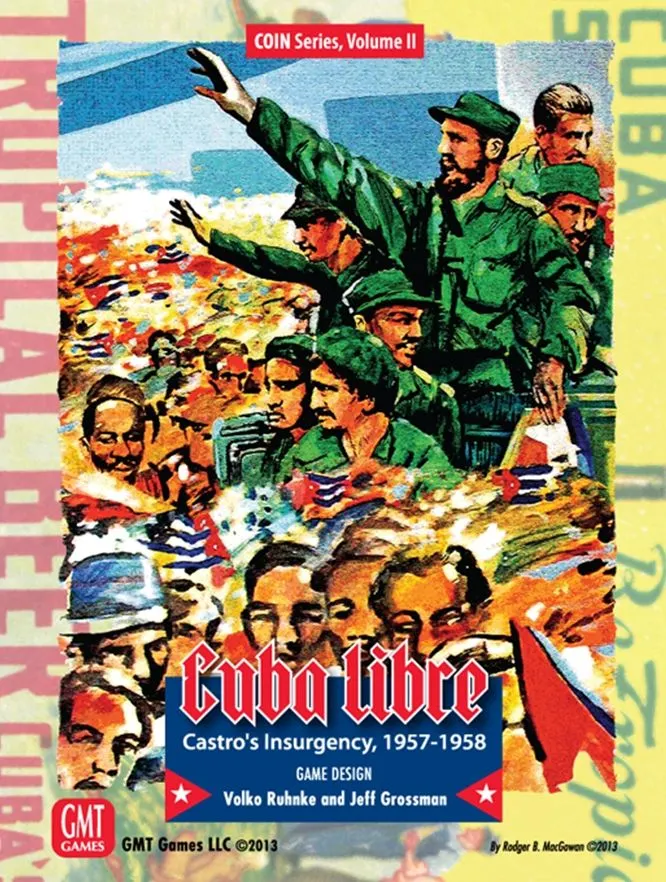
Cuba Libre to gra planszowa wydana w 2013 roku dla 1–4 graczy, z rozgrywką trwającą 180 minut i dla osób od 14 lat. Projekt gry: Volko Ruhnke i Jeff Grossman. Główne mechaniki: Variable Player Powers, Area Movement i Dice Rolling.




Po angielsku
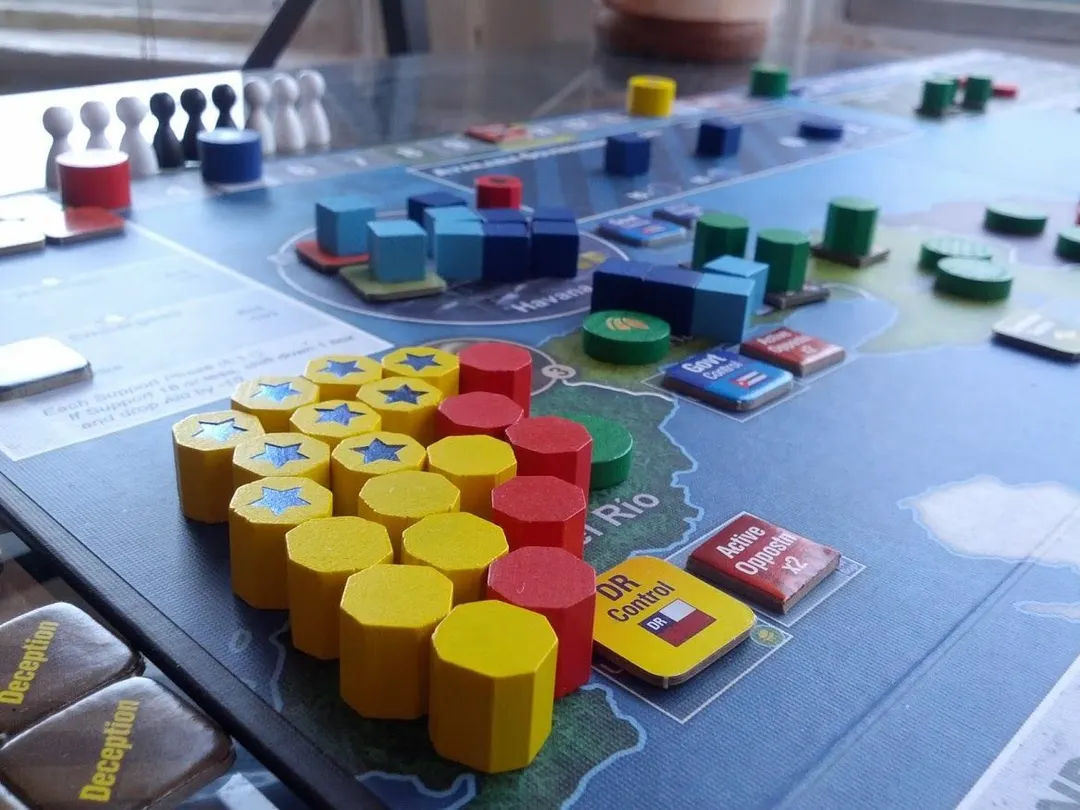
In December 1956, paroled rebel Fidel Castro returned to Cuba to launch his revolution with virtually no political base and—after a disastrous initial encounter with government forces—a total of just 12 men. Two years later, through masterful propaganda and factional maneuver, Castro, his brother Raúl, and iconic revolutionary Che Guevara had united disparate guerrillas and exploited Cubans’ deep opposition to their dictator Fulgencio Batista y Zaldívar. Castro’s takeover of the country became a model for Leftist insurgency. Castro’s Insurgency Following up on GMT Games’ Andean Abyss about insurgency in modern Colombia, the next volume in the COIN Series, Cuba Libre, takes 1 to 4 players into the Cuban Revolution. Castro’s “26 July Movement” must expand from its bases in the Sierra Maestra mountains to fight its way to Havana. Meanwhile, anti-communist student groups, urban guerrillas, and expatriates try to de-stabilize the Batista regime from inside and out, while trying not to pave the way for a new dictatorship under Castro. Batista’s Government must maintain steam to counter the twin insurgency, while managing two benefactors: its fragile US Alliance and its corrupting Syndicate skim. And in the midst of the turmoil, Meyer Lansky and his Syndicate bosses will jockey to keep their Cuban gangster paradise alive. COIN Series, Volume II Cuba Libre will be easy to learn for Andean Abyss players—both volumes share the same innovative Series: COIN (GMT) system. Like Volume I, Cuba Libre is equally playable solitaire or by multiple players up to 4—and with a shorter time to completion than Andean Abyss. But Cuba Libre’s situation and strategic challenges will be new. A deck of 48 fresh events brings 1950s Cuba to life and includes … • The Twelve: The first wave’s escape to the Sierra Maestra—inspirational legend or harbinger of defeat? • El Che and Raúl: Brilliant in the field, or bungling hostage-takers? • Operation Fisherman: Can the rebels pull off a second invasion? • General Strike: Urban disruption or rebel embarrassment? • Radio Rebelde: Are the masses tuning in, or just the Army direction finders? • Pact of Caracas: Can the rebels unite? • Armored Cars: Mobile striking power, but in whose hands? • Rolando Masferrer: Brutal pro-government tactics—will they help or hurt? • Fat Butcher: Can the Mob’s enforcer protect its casinos? • Sinatra: Frankie’s Havana show a boom or bust, and who collects? … and much more. New twists match the COIN Series system to the situation in 1950s Cuba: • It’s the insurgents who build lasting capabilities, while the Government is limited to fleeting bursts of momentum. • The Syndicate’s bases are Casinos—expensive to build, but so important to Cuba no army will destroy them. • Syndicate special activities include calling in the “muscle” of Government troops and police to protect mob assets. • Stacks of Syndicate cash awaiting launder can fall in anyone’s hands—even the corrupt Government’s. • The Government has its own terror tactic—reprisals—and can skim a portion of Syndicate profits. • The eroding US Alliance with Batista overshadows all Government actions, not just through aid levels but also through the day-to-day ability of troops and police to operate. • Even if Batista flees, the struggle may not end—the counterrevolutionary government may even become stronger! Multiplayer, 2-Player, Solitaire Cuba Libre provides up to 4 players with contrasting roles and overlapping victory conditions for rich diplomatic interaction. For 2- or 3-player games, players can represent alliances of factions, or the game system can control non-player factions . Or a single player as the Cuban Revolutionaries can attempt to topple Batista and seize power for themselves. The non-player sides will fight one another as well as the players, but too much power in the hands of any one of them will mean player defeat. More COIN Series Volumes to Come Andean Abyss and now Cuba Libre present a game system on modern insurgency readily adaptable to other conflicts, particularly those featuring the interaction of many sides (thus the name COunterINsurgency Series). A rich and under-represented history of guerrilla warfare beckons, as modern insurgency offers virtually unlimited, under-gamed topics for the COIN Series. Volume III is A Distant Plain—Insurgency in Afghanistan. Volume IV is Fire in the Lake—Insurgency in Vietnam.
Według katalogu Cuba Libre obsługuje od 1 do 4 graczy. Ten zakres odpowiada liczbie graczy podanej przez wydawcę, więc grę można przygotować dla dowolnej grupy w jego granicach. Przygotowanie, niektóre zasady i punktacja mogą jednak różnić się w zależności od liczby graczy; dokładną konfigurację sprawdź w instrukcji swojego wydania.
Podany czas rozgrywki w Cuba Libre wynosi 180 minut. To szacunek wydawcy dla pełnej partii. Rzeczywisty czas zależy od grupy, liczby graczy i znajomości zasad: pierwsze partie zwykle trwają dłużej, a doświadczone grupy kończą szybciej. Przygotowanie gry i tłumaczenie zasad nie są wliczone w ten szacunek.
Katalog podaje dla Cuba Libre wiek od 14 lat. To zalecenie wydawcy, które uwzględnia wymagania dotyczące czytania, złożoność zasad i drobne elementy, a nie tylko tematykę. Młodsi gracze często mogą dołączyć z pomocą dorosłego; sprawdź zalecenie wiekowe swojego wydania i weź pod uwagę doświadczenie grupy z grami planszowymi.
Cuba Libre ma ocenę złożoności 3,6 na 5 według graczy BoardGameGeek, co czyni ją grą średnio złożoną. Ocena pokazuje, ile znajomości zasad, planowania i podejmowania decyzji wymaga typowa rozgrywka. Cięższe gry wymagają dłuższego pierwszego tłumaczenia, dlatego przed wieczorem z grami warto skorzystać z przewodnika przygotowania.
Cuba Libre należy do tych kategorii: Economic, Wargame i Political. Główne mechaniki to Variable Player Powers, Area Movement i Dice Rolling. Kategorie opisują temat i świat gry, a mechaniki to, co gracze faktycznie robią w swojej turze. Każda mechanika prowadzi do strony katalogu z podobnymi grami, co pomaga znaleźć coś porównywalnego na kolejny wieczór.
Autorzy wymienieni przy Cuba Libre to: Volko Ruhnke i Jeff Grossman. Te informacje pochodzą z opublikowanych danych gry i wskazują osoby odpowiedzialne za jej projekt, a nie ilustratorów czy wydawców. Strony autorów w MeepleRules zbierają inne tytuły tych samych twórców, co pomaga, gdy gra ci się podoba i szukasz podobnych.
W katalogu Cuba Libre figuruje jako gra podstawowa. Można w nią grać samodzielnie, korzystając z elementów z pudełka, bez żadnego innego tytułu. Dodatki, jeśli istnieją, dokładają nową zawartość lub zasady i są wymienione w katalogu osobno, z odnośnikiem do tej gry podstawowej.