

- Pozycja w BGG
- BGG #141
- Ocena BGG
- 8,0
Tainted Grail: The Fall of Avalon
- 1–4 graczy
- 60–120 min
- Złożoność 3,4/5
- 2019
2019
Pomoc w zasadach gry Day Night Z
Zrozumiałe wyjaśnienia tur, efektów kart i spornych sytuacji z odnośnikami do oficjalnych źródeł i zapisaną historią pytań.
Dla 1 gracza
Co chcesz wiedzieć?
Odpowiedzi pochodzą z oficjalnej instrukcji, ze stroną do sprawdzenia.
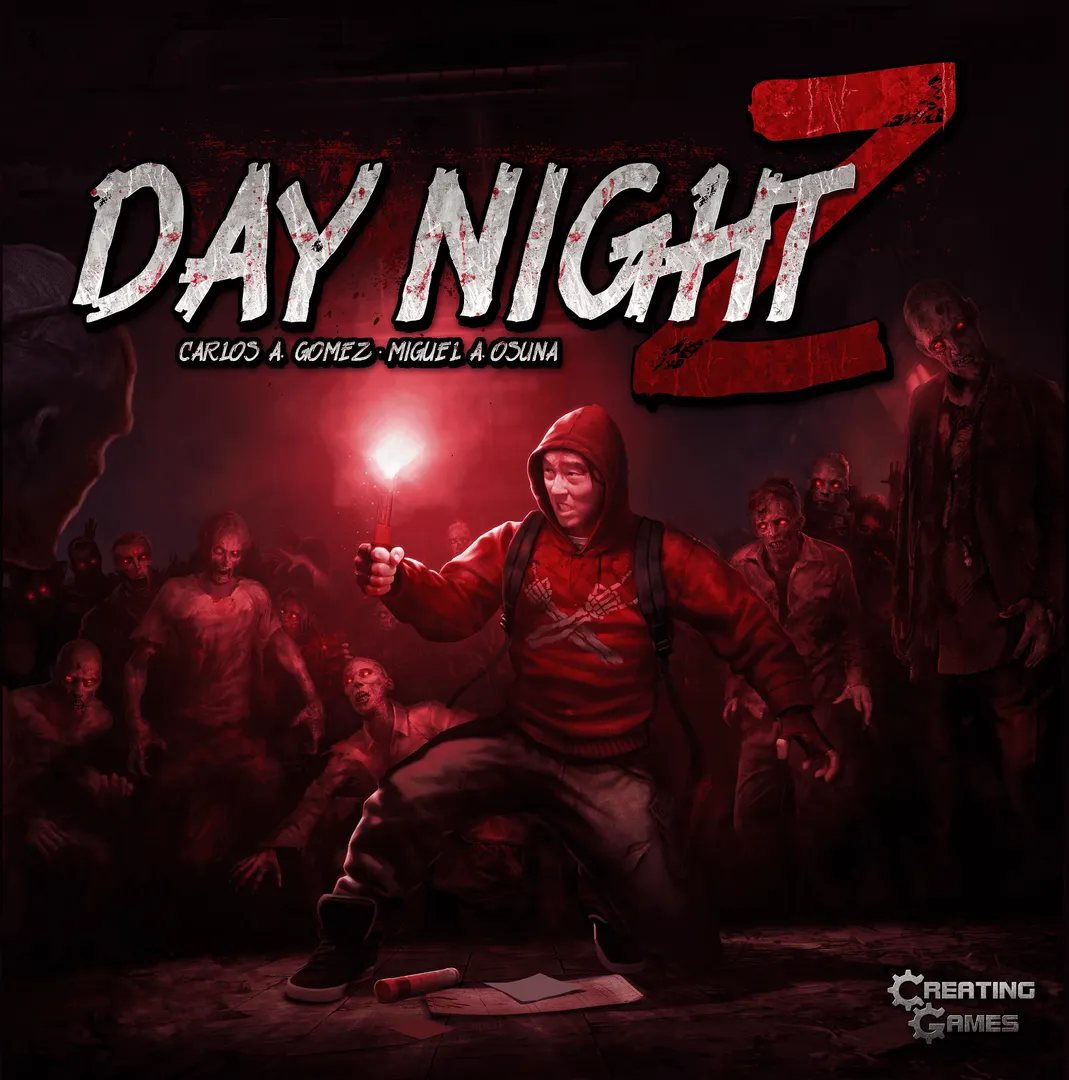
Day Night Z to gra planszowa wydana w 2019 roku dla 1–4 graczy, z rozgrywką trwającą 60–150 minut i dla osób od 14 lat. Główne mechaniki: Area Movement, Dice Rolling i Storytelling.

Po angielsku
“All hope abandon ye who enter here. Welcome to the grimdark. Welcome to DAYNIGHTZ™” Dawn breaks on the refuge, and the sunrays bring you the feared news…the day has come, the day to go back to the city. When this damned thing started, you joined a group of survivors that had gathered in the woods, fleeing from the city. With tremendous effort, you erected a makeshift refuge to fend off the foul creatures, waiting for the army to come and save you. However, help is not coming, you know that now. And so do the traitors who quietly left the refuge last night, taking most of the remaining supplies with them. Now you are forced to go back to the city: It’s the only option if you want to survive another day… This is the starting point of DAYNIGHTZ™. You get to pick a group of up to 4 survivors, each with its own character sheet that shows its attributes and abilities, a backpack and some equipment. Now you’re ready to start your adventure in a nightmare world, where the dead rule above the living. What is your goal? That depends on the game mode chosen: -> In campaign mode you will have to brave narrative missions where you will have to fight and take difficult decisions, that will determine your progress, culminating in one of three possible endings. -> In survival mode you will roam from city to city, with complete freedom to do whatever it takes to survive another day on this hell on earth. How are you going to achieve your goal? The game is divided in 3 segments: Adventure Phase, Travel Phase and Refuge Phase. 1) Adventure Phase: This is the most important phase of the game. In it, players will roam the streets and alleys of the city, exploring locales, suffering encounters and generally trying to keep a low profile while striving to achieve their goals (established by the campaign mission in the campaign mode or by their own interests in the survival mode). One of the many things that set DAYNIGHTZ™ apart from other games is that is played on TWO LEVELS. What does that mean? On one hand there is the City board, consisting of a labyrinth of streets, alleys, surprise zones and locations. On the other hand, whenever the players want to explore a certain location, or due to the triggering of events and conditions, players will lay out tiles to represent that particular location. Each location has its own set of tiles, depending on its nature. For example, the Firemen Park location consists of the parking tile, the locker room tile and the offices tile. 2) Travel Phase: Once the Adventure Phase is finished, survivors will have to trudge back to their refuge with their meager loot. In this phase survivors will have to face different situations, like zombie encounters, coming across abandoned structures (farms, etc) and being assaulted by other survivor groups. 3) Refuge Phase: This is a management phase, where survivors will have to handle, upgrade and defend their base. While in the refuge survivors can do a lot of stuff: recover from their wounds/infections, level up, stock supplies, farm food, upgrade the refuge’s defenses…The refuge, though, will be attacked regularly by either roamer’s packs or other survivor groups, who can also steal and sabotage your base. That is more likely to happen if you’re away for extended periods, so try to do your city supply runs as fast as possible… What is the core mechanic? DAYNIGHTZ™ is based on a double profile system, for both the zombies and the survivors: during the day, zombies use their worse profile, while during the night, zombie use their better profile and survivors will use their worse profile, unless they’re equipped with a light source…which are obviously very scarce and run out very fast! The day and night cycle is controlled through a timetable located on the City board. On top of that, other elements can make the brave survivor’s life even more difficult: - Threat Counter: Consists of a counter that increases as a result of diverse things happening, like survivors making noise, environmental effects, zombies amassing, etc. The higher the Threat counter, the higher the risk the survivors are taking by staying in the city. - Threat Encounters: Each end of turn you will verify the conditions stated in a card. If you meet the conditions, you will suffer a Threat encounter. That might not happen very frequently but…beware when it does happen! - The Hunter: The Hunter is the most dangerous zombie in the game. Luckily, it only appears at night; unfortunately, when it appears it will attack all the survivors who are out in the open (in streets and alleys). So keep this in mind: you don’t want to be wandering around in the open at night! - Survivor’s health and stress: DAYNIGHTZ™ is a very realistic game. Thus, the more wounded your survivor is, the more difficult it will be for him/her to accomplish actions (in combat or out of it). Also, your survivor will be able to do less actions the more wounded he/she is. Stress is also key, as your survivor will be affected by events depending on their stress level, which can also impact on their attribute checks. - Infection: Survivors can get infected when wounded by a zombies, while searching corpses or by other special effects. Once infected, the disease will deteriorate the survivor and if not treated, will end up killing him/her. Of course, the infection will be more easily neutered in its early stages; the more you wait, the harder it will be to remove it. While infected, your survivor will periodically succumb to its effects, which can make them bleed, make them slower, etc. To help them deal with the situations that they will find themselves in, the survivors can use a lot of items that they will find in their city wanderings. However, all said items will either need consumables in order to function or will wear away with use… The players will also encounter other survivors and animals during their travels, which, depending on the decisions previously taken and the success in the encounters, can join their group as allies. Allies can give a series of bonuses to the survivors, but will not remain with them forever: allies have their own loyalty system, which depends on the actions taken by the players. The way you treat them will determine how they treat you! All the points above, plus others that you will discover during gameplay, set DAYNIGHTZ™ apart from other zombie-themed games. We have worked really hard to achieve an immersive experience, exploring the dark themes of the zombie apocalypse, and we welcome you. PS: If you want to keep with all the info about the game, you can follow us in:
Według katalogu Day Night Z obsługuje od 1 do 4 graczy. Ten zakres odpowiada liczbie graczy podanej przez wydawcę, więc grę można przygotować dla dowolnej grupy w jego granicach. Przygotowanie, niektóre zasady i punktacja mogą jednak różnić się w zależności od liczby graczy; dokładną konfigurację sprawdź w instrukcji swojego wydania.
Podany czas rozgrywki w Day Night Z wynosi 60–150 minut. To szacunek wydawcy dla pełnej partii. Rzeczywisty czas zależy od grupy, liczby graczy i znajomości zasad: pierwsze partie zwykle trwają dłużej, a doświadczone grupy kończą szybciej. Przygotowanie gry i tłumaczenie zasad nie są wliczone w ten szacunek.
Katalog podaje dla Day Night Z wiek od 14 lat. To zalecenie wydawcy, które uwzględnia wymagania dotyczące czytania, złożoność zasad i drobne elementy, a nie tylko tematykę. Młodsi gracze często mogą dołączyć z pomocą dorosłego; sprawdź zalecenie wiekowe swojego wydania i weź pod uwagę doświadczenie grupy z grami planszowymi.
Day Night Z ma ocenę złożoności 3,7 na 5 według graczy BoardGameGeek, co czyni ją grą średnio złożoną. Ocena pokazuje, ile znajomości zasad, planowania i podejmowania decyzji wymaga typowa rozgrywka. Cięższe gry wymagają dłuższego pierwszego tłumaczenia, dlatego przed wieczorem z grami warto skorzystać z przewodnika przygotowania.
Day Night Z należy do tych kategorii: Horror, Zombies i Travel. Główne mechaniki to Area Movement, Dice Rolling i Storytelling. Kategorie opisują temat i świat gry, a mechaniki to, co gracze faktycznie robią w swojej turze. Każda mechanika prowadzi do strony katalogu z podobnymi grami, co pomaga znaleźć coś porównywalnego na kolejny wieczór.
W katalogu Day Night Z figuruje jako gra podstawowa. Można w nią grać samodzielnie, korzystając z elementów z pudełka, bez żadnego innego tytułu. Dodatki, jeśli istnieją, dokładają nową zawartość lub zasady i są wymienione w katalogu osobno, z odnośnikiem do tej gry podstawowej.