

- Pozycja w BGG
- BGG #660
- Ocena BGG
- 7,6
Labyrinth: The War on Terror, 2001 – ?
- 1–2 graczy
- 180 min
- Złożoność 3,7/5
- 2010
2011
Pomoc w zasadach gry Democracy under Siege
Zrozumiałe wyjaśnienia tur, efektów kart i spornych sytuacji z odnośnikami do oficjalnych źródeł i zapisaną historią pytań.
Dla 2 graczy
Co chcesz wiedzieć?
Odpowiedzi pochodzą z oficjalnej instrukcji, ze stroną do sprawdzenia.
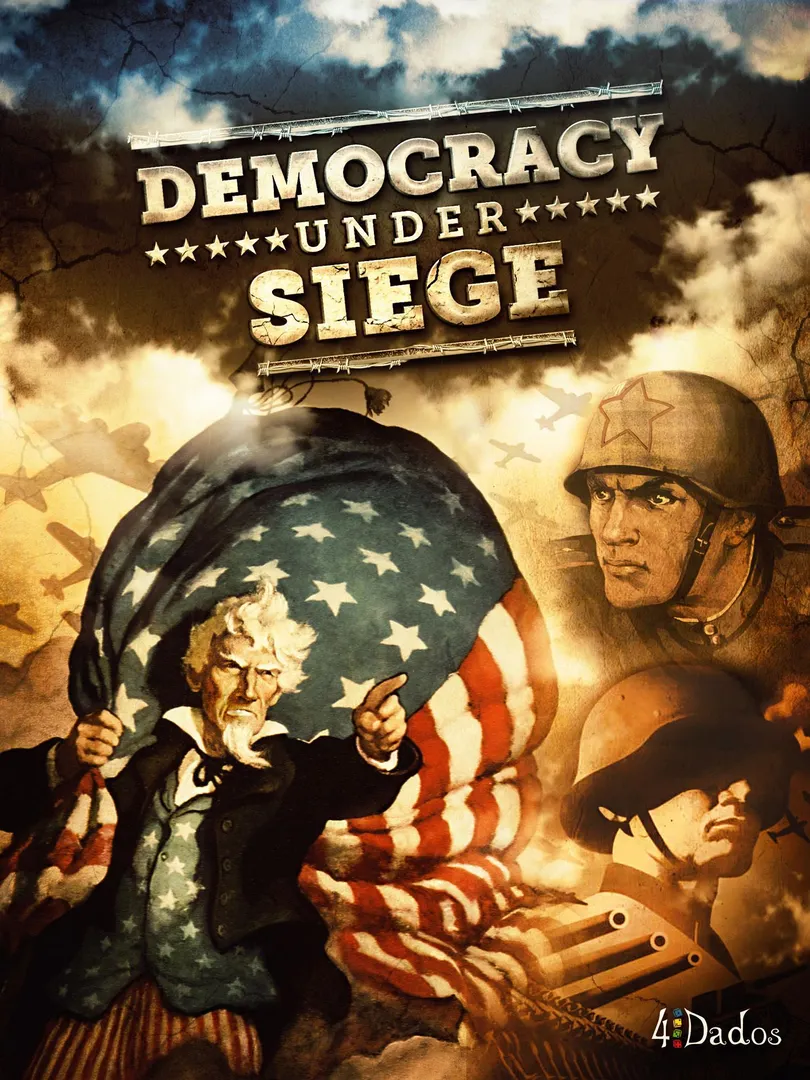
Democracy under Siege to gra planszowa wydana w 2011 roku dla 2–3 graczy, z rozgrywką trwającą 150–240 minut i dla osób od 12 lat. Projekt gry: Luca Cammisa. Główne mechaniki: Area Majority / Influence, Simulation i Action Points.




Po angielsku
Dateline: Germany, 1933 Jan. 30: Hindenburg names Hitler Chancellor. Feb. 27: The burning of the Reichstag. Hitler blames his political opponents and enacts repressive laws. Mar. 5: The Nazi Party wins the Federal elections amid a climate of fear and intimidation. From this point on, with a precise and constant rhythm, Hitler dismantles all of the democratic institutions of the fragile Weimar Republic and inaugurates a reign of terror, gradually establishing a ruthless and violent dictatorial regime. The above is history, but what would have happened if instead of bringing Europe into a maelstrom of war, the infamous Austrian corporal had abandoned his plan of global domination and taken the path of peace? Would World War II still have broken out? Or would the Nazi hierarchy and German industry still have pushed the Führer to war with Poland? What would the dream of a Greater Germany have been without Austria, Czechoslovakia, and the other German territorial claims? Would the Western plutocrats or the Soviet colossus have fought the fascist dictatorship anyway and nevertheless inexorably triggered global conflict? Democracy under Siege is an interactive simulation enabling you to explore all such questions. A card-driven strategy game, it reproduces the geopolitical conflicts and political struggles that led to the Second World War. The game covers the period 1933-1940 and is designed for two or three players. Each takes the role of one of the three ideologies — Democracy, Nazism and Communism — that struggled for power during the timeline of the game. (When played by two players, the two Ideologies exclusively under player control are Democracy and Nazism, while control of Communism alternates between the two players from turn to turn according to specific rules.) Each game turn represents one year and is divided into three or four rounds. Players choose one political action and one event per round and attempt to perform the political action by rolling a die and applying some modifiers. They can affect the outcomes of their attempts by expending the ideology's political prestige. Events are activated immediately before the political actions are attempted; no die roll is required. If the political action succeeds, the card effects are applied accordingly. In any case, even when the attempt is unsuccessful, the political action cards played provide a varying number of political points (PP) that can later be expended by the players to perform activities. After political actions, players perform their action round with the PP provided by political action cards. Players can influence the political allegiance of minor countries, exploit the economic resources belonging either to minor nations or to their controlled powers, recruit and activate coup cells to attempt coups d'etat to overthrow a minor country regime, send military forces to local conflicts or intervene in a civil war in a minor nation. All of these activities, as well as the effects of successful political actions, can bring victory points (VP) when the political allegiances of minor countries come under the influence or the control of Ideologies, or when territories or nations are conquered. At the end of each round, players check the outcomes of coup attempts, then proceed to a new round. During the clean-up phase at the end of each turn, players perform end-turn checks and calculate the production of military resources (MR) by the exploitation of economic resources claimed on the map. MR are put in the ideologies' force pool and expended to maintain the minor nations allegiances. The remaining MR provide additional VP and can be employed during the subsequent turns to intervene in local conflicts and civil wars. Democracy under Siege offers an accurate and detailed historical context, supported by 108 strategy cards. Players exploit historical events and political actions to achieve political supremacy. Wars are simulated by an abstract combat system that allows players to intervene and influence their outcomes. The main concepts reproduced in the game are the ideological struggles among the major powers, the race for armaments ahead of World War II and the buildup of a network of diplomatic links with minor nations. All of these elements combine to determine victory.
Według katalogu Democracy under Siege obsługuje od 2 do 3 graczy. Ten zakres odpowiada liczbie graczy podanej przez wydawcę, więc grę można przygotować dla dowolnej grupy w jego granicach. Przygotowanie, niektóre zasady i punktacja mogą jednak różnić się w zależności od liczby graczy; dokładną konfigurację sprawdź w instrukcji swojego wydania.
Podany czas rozgrywki w Democracy under Siege wynosi 150–240 minut. To szacunek wydawcy dla pełnej partii. Rzeczywisty czas zależy od grupy, liczby graczy i znajomości zasad: pierwsze partie zwykle trwają dłużej, a doświadczone grupy kończą szybciej. Przygotowanie gry i tłumaczenie zasad nie są wliczone w ten szacunek.
Katalog podaje dla Democracy under Siege wiek od 12 lat. To zalecenie wydawcy, które uwzględnia wymagania dotyczące czytania, złożoność zasad i drobne elementy, a nie tylko tematykę. Młodsi gracze często mogą dołączyć z pomocą dorosłego; sprawdź zalecenie wiekowe swojego wydania i weź pod uwagę doświadczenie grupy z grami planszowymi.
Democracy under Siege ma ocenę złożoności 3,7 na 5 według graczy BoardGameGeek, co czyni ją grą średnio złożoną. Ocena pokazuje, ile znajomości zasad, planowania i podejmowania decyzji wymaga typowa rozgrywka. Cięższe gry wymagają dłuższego pierwszego tłumaczenia, dlatego przed wieczorem z grami warto skorzystać z przewodnika przygotowania.
Democracy under Siege należy do tych kategorii: Wargame, Print & Play i Political. Główne mechaniki to Area Majority / Influence, Simulation i Action Points. Kategorie opisują temat i świat gry, a mechaniki to, co gracze faktycznie robią w swojej turze. Każda mechanika prowadzi do strony katalogu z podobnymi grami, co pomaga znaleźć coś porównywalnego na kolejny wieczór.
Autorzy wymienieni przy Democracy under Siege to: Luca Cammisa. Te informacje pochodzą z opublikowanych danych gry i wskazują osoby odpowiedzialne za jej projekt, a nie ilustratorów czy wydawców. Strony autorów w MeepleRules zbierają inne tytuły tych samych twórców, co pomaga, gdy gra ci się podoba i szukasz podobnych.
W katalogu Democracy under Siege figuruje jako gra podstawowa. Można w nią grać samodzielnie, korzystając z elementów z pudełka, bez żadnego innego tytułu. Dodatki, jeśli istnieją, dokładają nową zawartość lub zasady i są wymienione w katalogu osobno, z odnośnikiem do tej gry podstawowej.