
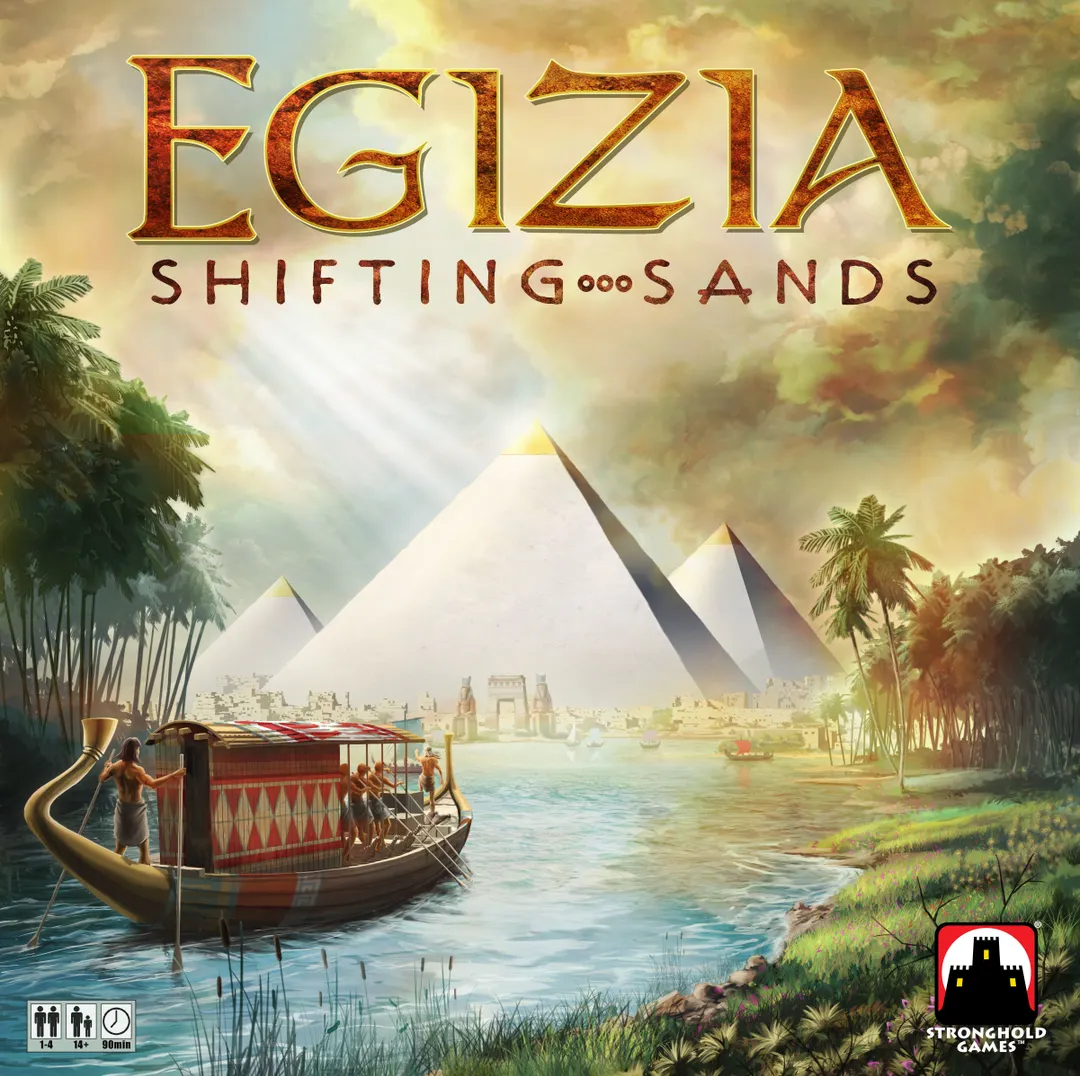
- Pozycja w BGG
- BGG #2120
- Ocena BGG
- 7,4
Egizia: Shifting Sands
- 2–4 graczy
- 90 min
- Złożoność 2,9/5
- 2019
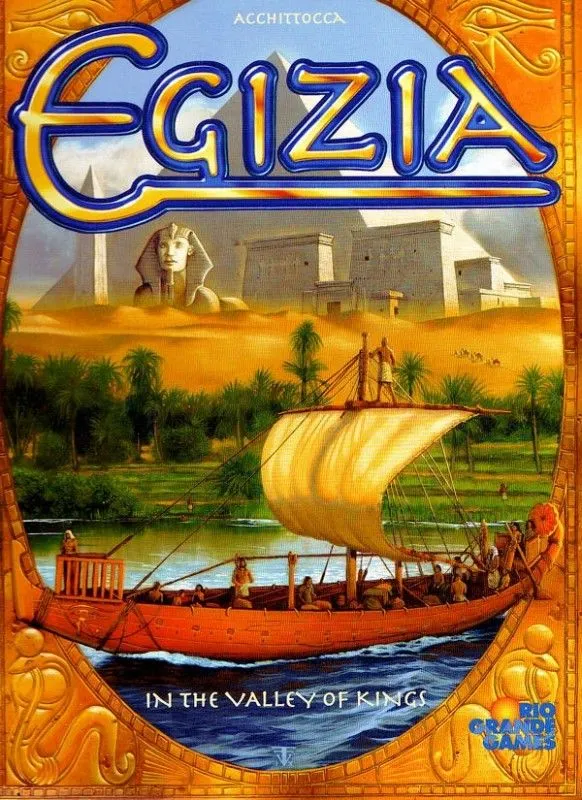
2009
Pomoc w zasadach gry Egizia
Zrozumiałe wyjaśnienia tur, efektów kart i spornych sytuacji z odnośnikami do oficjalnych źródeł i zapisaną historią pytań.
Dla 2 graczy
Co chcesz wiedzieć?
Odpowiedzi pochodzą z oficjalnej instrukcji, ze stroną do sprawdzenia.
Egizia to gra planszowa wydana w 2009 roku dla 2–4 graczy, z rozgrywką trwającą 90 minut i dla osób od 12 lat. Projekt gry: Stefano Luperto, Acchittocca, Antonio Tinto, Virginio Gigli i Flaminia Brasini. Główne mechaniki: End Game Bonuses, Bias i Open Drafting.



Po angielsku
The players are builders in Ancient Egypt, competing to get the most fame building different monuments requested by the Pharaoh (the Sphinx, the Obelisk, the Temple, and the Pyramid). The game lasts 5 turns. In each turn, the players place their pawns on the board, along the banks of the Nile, getting the advantages shown on each square. On the right bank there are fixed squares where the players may get workers, improve their mercantile capabilities, influence the floods (and thus the fertility of the fields) and reserve the right to build the monuments (that are built only after all the placements are done). On the left bank the players may take cards that are deployed randomly on the 10 squares at the start of each turn; some of these cards are kept until the end of the game (cultivable fields, stone quarries, deities granting special advantages), while others are discarded after the use and offer multiple immediate advantages. In Egizia, the twist on the worker placement mechanic is that the players must place their pawns following the course of the Nile, moving northwards (from the top to the bottom of the board, that is seen from the Mediterranean Sea). In this way, each placement not only blocks the opponents from choosing the same square (except monuments, where multiple players are always allowed), but also forces the player to place his remaining pawns only on the squares below the one he just occupied (note that "pawns" are placed, since "workers" are one of the resources of the game, like grain and stones). When the placement phase is over, the workers of the players must be fed with the grain produced in the fields. The production of each field is based on the floods of the Nile, so some fields may not give grain each turn. If a player has not enough grain for all his workers, he has to buy it with Victory Points (the ratio is better for players with improved mercantile capabilities, recorded on a specific track on the board). After that, stones are received from the owned quarries and used to build the monuments (if the right to do was reserved earlier) along with the workers. When the game ends, the points scored during the game (mainly building the monuments) are added to the bonuses obtained fulfilling certain conditions on the Sphinx cards. Whoever has the highest total is the winner. Online Play Yucata (turn-based)
Według katalogu Egizia obsługuje od 2 do 4 graczy. Ten zakres odpowiada liczbie graczy podanej przez wydawcę, więc grę można przygotować dla dowolnej grupy w jego granicach. Przygotowanie, niektóre zasady i punktacja mogą jednak różnić się w zależności od liczby graczy; dokładną konfigurację sprawdź w instrukcji swojego wydania.
Podany czas rozgrywki w Egizia wynosi 90 minut. To szacunek wydawcy dla pełnej partii. Rzeczywisty czas zależy od grupy, liczby graczy i znajomości zasad: pierwsze partie zwykle trwają dłużej, a doświadczone grupy kończą szybciej. Przygotowanie gry i tłumaczenie zasad nie są wliczone w ten szacunek.
Katalog podaje dla Egizia wiek od 12 lat. To zalecenie wydawcy, które uwzględnia wymagania dotyczące czytania, złożoność zasad i drobne elementy, a nie tylko tematykę. Młodsi gracze często mogą dołączyć z pomocą dorosłego; sprawdź zalecenie wiekowe swojego wydania i weź pod uwagę doświadczenie grupy z grami planszowymi.
Egizia ma ocenę złożoności 2,8 na 5 według graczy BoardGameGeek, co czyni ją grą raczej lekką. Ocena pokazuje, ile znajomości zasad, planowania i podejmowania decyzji wymaga typowa rozgrywka. Cięższe gry wymagają dłuższego pierwszego tłumaczenia, dlatego przed wieczorem z grami warto skorzystać z przewodnika przygotowania.
Egizia należy do tych kategorii: Ancient i Farming. Główne mechaniki to End Game Bonuses, Bias i Open Drafting. Kategorie opisują temat i świat gry, a mechaniki to, co gracze faktycznie robią w swojej turze. Każda mechanika prowadzi do strony katalogu z podobnymi grami, co pomaga znaleźć coś porównywalnego na kolejny wieczór.
Autorzy wymienieni przy Egizia to: Stefano Luperto, Acchittocca, Antonio Tinto, Virginio Gigli i Flaminia Brasini. Te informacje pochodzą z opublikowanych danych gry i wskazują osoby odpowiedzialne za jej projekt, a nie ilustratorów czy wydawców. Strony autorów w MeepleRules zbierają inne tytuły tych samych twórców, co pomaga, gdy gra ci się podoba i szukasz podobnych.
W katalogu Egizia figuruje jako gra podstawowa. Można w nią grać samodzielnie, korzystając z elementów z pudełka, bez żadnego innego tytułu. Dodatki, jeśli istnieją, dokładają nową zawartość lub zasady i są wymienione w katalogu osobno, z odnośnikiem do tej gry podstawowej.