
- Pozycja w BGG
- BGG #31 482
- Ocena BGG
- 3,0
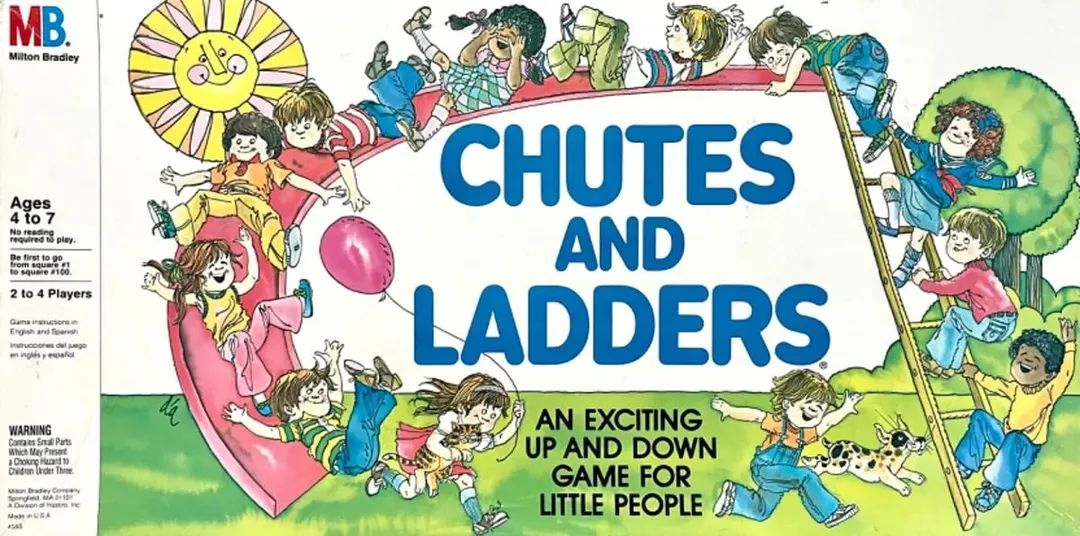
Chutes and Ladders
- 2–6 graczy
- 30 min
- Złożoność 1,1/5
- -200

1587
Pomoc w zasadach gry Game of Goose
Zrozumiałe wyjaśnienia tur, efektów kart i spornych sytuacji z odnośnikami do oficjalnych źródeł i zapisaną historią pytań.
Co chcesz wiedzieć?
Odpowiedzi pochodzą z oficjalnej instrukcji, ze stroną do sprawdzenia.
Game of Goose to gra planszowa wydana w 1587 roku dla 2–6 graczy, z rozgrywką trwającą 20 minut i dla osób od 5 lat. Główne mechaniki: Race, Roll / Spin and Move i Lose a Turn.



Po angielsku
The Game of Goose is an ancient children's classic, possibly tracing its roots all the way to the Ancient Egyptian game of Mehen which was played in early Old Kingdom times. Francesco de Medici in Italy sent a copy of this game to King Felipe II of Spain during the 16th century. It became one of the most popular games in Europe during that time. Circa 1600, Benoît Rigaud's heirs printed in Lyon "Le Jeu de l'oye, renouvellé des Grecs, jeu de grand plaisir, comme aujourd'huy princes & grands seigneur" [sic] "le pratiquent" - Le jeu de l'oie, renewed from the Greeks, game of great pleasure, as today princes and great lord [sic] play it -, the oldest French copy known. Father Claude-François Menestrier describes the game in his "Bibliothèque curieuse et instructive" (1704) : 'There's another type of game, that seems easier to learn, and easier to play; it's the game of goose so common and it is said to come from the Greeks, though nothing can be found about it in their authors. This game is much easier than cards game, because it's always wholly displayed to the players, and, being in the form of a snail or spirally folded snake, it's appropriate to print the things that one wants to learn...'. The game became an instant hit in France in the 1600s, and engendered a lot of variants (educational, commemorative, ...) up to the present day. It turned up later in England about 1750, according to Whitehouse, under the title "Royall & most pleasant game of the goose - Invented at the Consistory in Rome and are printed and sold by H. OVERTON at Ye White Horse without Newgate where all sorts of Fine Prints and maps are Sold and Framed at Reasonable Rate". By 1851 it had been copied by the American publisher J.P. Beach of New York who entitled it The Jolly Game of Goose. An 1855 edition was called simply The Game of Goose. It is a simple game of racing, using a spiral track with lovely illustrations. The main principle is one shared with Snakes and Ladders as well as the later Game of Life: virtue is rewarded and vice is punished. Schmidt Spiele rates their Gänsespiel for ages 5 and up. Bibliography Whitehouse, F. R. B. (1971) [1951]. Table games of Georgian and Victorian days. Birmingham: Priory Press Ltd. 'Jeux de princes, jeux de vilains', edited by Eve Netchine, Bibliothèque nationale de France / Seuil (2009). --gameplay description from Wikipedia: The board consists of a track with consecutively numbered spaces (usually 63), and is often arranged in a spiral with the starting point at the outside. Each player's piece is moved according to throws of one or two dice. Scattered throughout the board are a number of spaces on which a goose is depicted; landing on a goose allows the player to move again by the same distance. Additional shortcuts, such as spaces marked with a bridge, move the player to some other specified position. There are also a few penalty spaces which force the player to move backwards or lose one or more turns, the most recognizable being the one marked with a skull and symbolizing death; landing on this space results in the player being sent back to start. On Spanish boards the reverse is usually a Pachisi board. Many themed versions of the game have been created, depicting topics as diverse as ice skating, Richard Nixon, and sewage pumps. These can be valued for their historical or artistic merits even by those who have no interest in the game itself, with some editions having been sold for thousands of dollars at auction or displayed in museums.
Według katalogu Game of Goose obsługuje od 2 do 6 graczy. Ten zakres odpowiada liczbie graczy podanej przez wydawcę, więc grę można przygotować dla dowolnej grupy w jego granicach. Przygotowanie, niektóre zasady i punktacja mogą jednak różnić się w zależności od liczby graczy; dokładną konfigurację sprawdź w instrukcji swojego wydania.
Podany czas rozgrywki w Game of Goose wynosi 20 minut. To szacunek wydawcy dla pełnej partii. Rzeczywisty czas zależy od grupy, liczby graczy i znajomości zasad: pierwsze partie zwykle trwają dłużej, a doświadczone grupy kończą szybciej. Przygotowanie gry i tłumaczenie zasad nie są wliczone w ten szacunek.
Katalog podaje dla Game of Goose wiek od 5 lat. To zalecenie wydawcy, które uwzględnia wymagania dotyczące czytania, złożoność zasad i drobne elementy, a nie tylko tematykę. Młodsi gracze często mogą dołączyć z pomocą dorosłego; sprawdź zalecenie wiekowe swojego wydania i weź pod uwagę doświadczenie grupy z grami planszowymi.
Game of Goose ma ocenę złożoności 1,1 na 5 według graczy BoardGameGeek, co czyni ją grą lekką. Ocena pokazuje, ile znajomości zasad, planowania i podejmowania decyzji wymaga typowa rozgrywka. Cięższe gry wymagają dłuższego pierwszego tłumaczenia, dlatego przed wieczorem z grami warto skorzystać z przewodnika przygotowania.
Game of Goose należy do tych kategorii: Animals, Children's Game i Racing. Główne mechaniki to Race, Roll / Spin and Move i Lose a Turn. Kategorie opisują temat i świat gry, a mechaniki to, co gracze faktycznie robią w swojej turze. Każda mechanika prowadzi do strony katalogu z podobnymi grami, co pomaga znaleźć coś porównywalnego na kolejny wieczór.
W katalogu Game of Goose figuruje jako gra podstawowa. Można w nią grać samodzielnie, korzystając z elementów z pudełka, bez żadnego innego tytułu. Dodatki, jeśli istnieją, dokładają nową zawartość lub zasady i są wymienione w katalogu osobno, z odnośnikiem do tej gry podstawowej.