
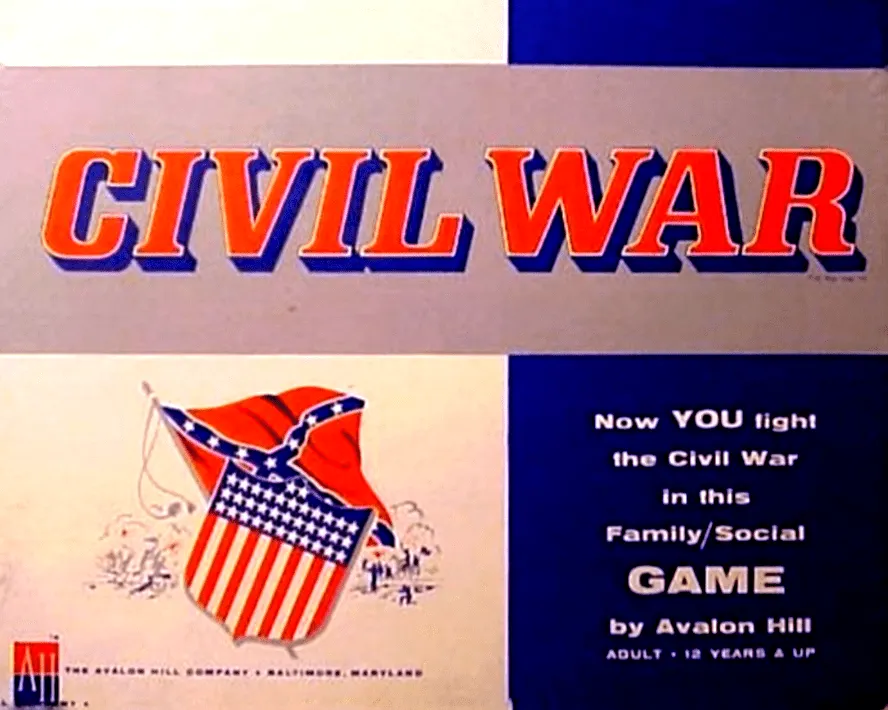
- Pozycja w BGG
- BGG #24 972
- Ocena BGG
- 5,8
Civil War
- 2 graczy
- 90–180 min
- Złożoność 1,6/5
- 1961
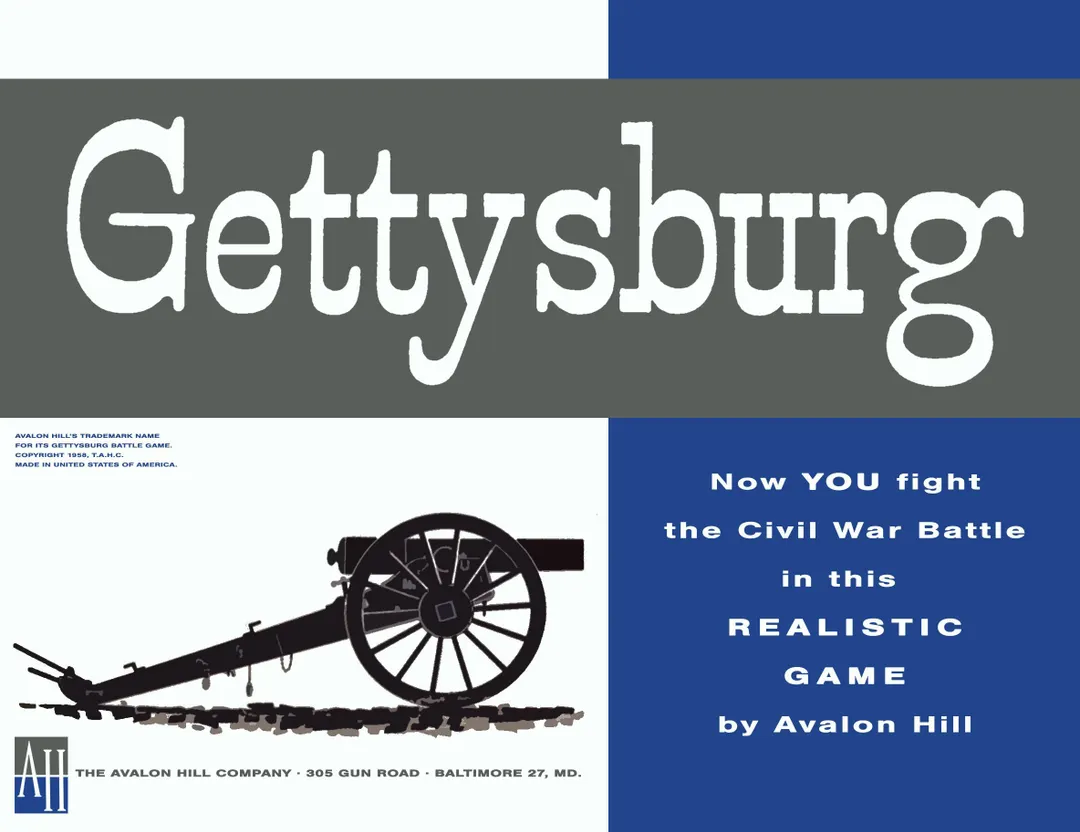
1958
Pomoc w zasadach gry Gettysburg
Zrozumiałe wyjaśnienia tur, efektów kart i spornych sytuacji z odnośnikami do oficjalnych źródeł i zapisaną historią pytań.
Dla 2 graczy
Co chcesz wiedzieć?
Odpowiedzi pochodzą z oficjalnej instrukcji, ze stroną do sprawdzenia.
Gettysburg to gra planszowa wydana w 1958 roku dla 2 graczy, z rozgrywką trwającą 120–240 minut i dla osób od 12 lat. Projekt gry: Charles S. Roberts. Główne mechaniki: Dice Rolling, Square Grid i Grid Movement.
Po angielsku
One of the original set of Avalon Hill "Adult Games" that includes U-Boat, Tactics II, Verdict, and Dispatcher. This is one of the earliest "typical" wargames, with movement/strength counters, order of appearance chart, CRT, etc. Board has square grid with squares 1" = 1/4 mile. One hour turns. 27 Confederate counters 41 Union counters Units include infantry, artillery, cavalry, HQs (but had no use), and outposts (pickets, not in '64 Ed.). Roberts redesigned this game in 1961 with hexagons. Although it sold out, Roberts wasn't happy with it. He then re-released it in 1964 with squares again, like the 1958 version. However, the rules were significantly changed. The 1958 version was basically a miniatures game on a map. You used range cards (shown in the illustration) both to move your units and then to check their firing range. Units could rotate on their centers before checking with a range card, which was placed along the front side of the rectangular pieces. You got better odds hitting from a flank. Artillery had double range the of infantry or cavalry (this was only optional as far as I know). There were at least 3 slightly different rule books for the '58, '59, & '60 Ed., all were basically the '58 one. The game also had optional rules for hidden movement. You left the room while your opponent put his pieces on the board and moved them, recorded their new positions and removed them again! If they came within sight of a unit (including an outpost unit), he had to tell you where they were seen, or leave them on the board if still in sight. Line of sight rules for all this. The 1964 version required you to keep your units aligned with the square grid rather than the free form miniatures style movement of the 1958 version. This really didn't work well. Units facing diagonally had to be adjacent to form a solid wall of ZOC sqs. to their front and could not therefore protect their flanks if they spread out any at all. This made doubled and tripled attacks easily possible. Every version would benefit from a road movement bonus rule, x3 at a minimum (but x4 would be better, units that move this fast should not be able to attack that turn, though).
Według katalogu Gettysburg obsługuje 2 graczy. To liczba graczy podana przez wydawcę, więc gra jest zaprojektowana dokładnie dla takiej liczby uczestników. Warianty dla grup innej wielkości, jeśli w ogóle istnieją, opisano w instrukcji twojego wydania; sprawdź ją uważnie, zanim przygotujesz inną konfigurację stołu.
Podany czas rozgrywki w Gettysburg wynosi 120–240 minut. To szacunek wydawcy dla pełnej partii. Rzeczywisty czas zależy od grupy, liczby graczy i znajomości zasad: pierwsze partie zwykle trwają dłużej, a doświadczone grupy kończą szybciej. Przygotowanie gry i tłumaczenie zasad nie są wliczone w ten szacunek.
Katalog podaje dla Gettysburg wiek od 12 lat. To zalecenie wydawcy, które uwzględnia wymagania dotyczące czytania, złożoność zasad i drobne elementy, a nie tylko tematykę. Młodsi gracze często mogą dołączyć z pomocą dorosłego; sprawdź zalecenie wiekowe swojego wydania i weź pod uwagę doświadczenie grupy z grami planszowymi.
Gettysburg ma ocenę złożoności 2,2 na 5 według graczy BoardGameGeek, co czyni ją grą raczej lekką. Ocena pokazuje, ile znajomości zasad, planowania i podejmowania decyzji wymaga typowa rozgrywka. Cięższe gry wymagają dłuższego pierwszego tłumaczenia, dlatego przed wieczorem z grami warto skorzystać z przewodnika przygotowania.
Gettysburg należy do tych kategorii: Wargame, Civil War i Post-Napoleonic. Główne mechaniki to Dice Rolling, Square Grid i Grid Movement. Kategorie opisują temat i świat gry, a mechaniki to, co gracze faktycznie robią w swojej turze. Każda mechanika prowadzi do strony katalogu z podobnymi grami, co pomaga znaleźć coś porównywalnego na kolejny wieczór.
Autorzy wymienieni przy Gettysburg to: Charles S. Roberts. Te informacje pochodzą z opublikowanych danych gry i wskazują osoby odpowiedzialne za jej projekt, a nie ilustratorów czy wydawców. Strony autorów w MeepleRules zbierają inne tytuły tych samych twórców, co pomaga, gdy gra ci się podoba i szukasz podobnych.
W katalogu Gettysburg figuruje jako gra podstawowa. Można w nią grać samodzielnie, korzystając z elementów z pudełka, bez żadnego innego tytułu. Dodatki, jeśli istnieją, dokładają nową zawartość lub zasady i są wymienione w katalogu osobno, z odnośnikiem do tej gry podstawowej.