

- Pozycja w BGG
- BGG #9028
- Ocena BGG
- 7,2
Great War at Sea: Jutland
- 2 graczy
- 30–120 min
- Złożoność 3,1/5
- 2006
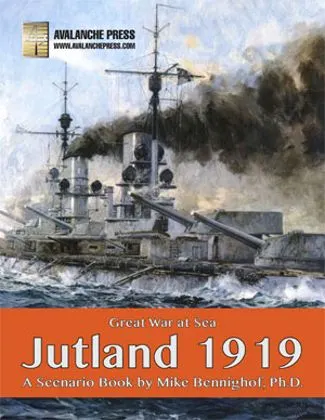
Pomoc w zasadach gry Great War at Sea: Jutland 1919
Zrozumiałe wyjaśnienia tur, efektów kart i spornych sytuacji z odnośnikami do oficjalnych źródeł i zapisaną historią pytań.
Co chcesz wiedzieć?
Odpowiedzi pochodzą z oficjalnej instrukcji, ze stroną do sprawdzenia.
Great War at Sea: Jutland 1919 to dodatek do gry Great War at Sea: High Seas Fleet wydany w 2018 roku dla 2 graczy, z rozgrywką trwającą 30–240 minut i dla osób od 12 lat. Projekt gry: Michael Bennighof. Główne mechaniki: Dice Rolling, Secret Unit Deployment i Hexagon Grid.









Po angielsku
Imperial Germany laid down her last dreadnought in January 1915, and never completed her. But planning continued for new classes of battleships, battle cruisers, armored cruisers and scout cruisers. All understood that they could not possibly be built during the course of the ongoing First World War, but would be laid down afterwards. Reflecting the lessons first of the battles of the Falklands, Coronel and Helgoland Bight, and eventually those of Jutland, the new German designs continued to emphasize protection. At the urging of sea officers, the new ships also now carried armament equal to that of the British, and would make much higher speeds as well. Across the North Sea, the British Admiralty had no clear idea of what the Germans might be planning to build, but could state with certainty that they and other potential enemies would continue to improve their warships. New British dreadnoughts would carry ever-more-powerful armaments, including a new, secret 18-inch gun. Jutland 1919 is a supplement for our Great War at Sea: Jutland game, studying these drawing-board battleships that would never actually be launched. It includes background essays, forty new scenarios, and 80 new silky-smooth die-cut playing pieces (60 double-sized "long" ship pieces and 20 square ones). It is not playable by itself; you’ll need our Jutland game and High Seas Fleet book to play the scenarios. You can, of course, just read the essays and fondle the pieces without owning either. We won’t tell. New pieces include three classes of German battleships designed but never built: a fast battleship with eight 15-inch guns, a battleship with ten 15-inch guns in five turrets, with three of them in a unique triple-stacked arrangement. And an even larger ship with 16.5-inch guns. There are two new classes of battle cruiser, one with 15-inch guns, one with 16.5-inch guns. And two variations on the fast armored cruiser proposed after the Battle of Jutland, one with ten 8.2-inch guns, and one with twenty (20) 5.9-inch guns. Plus there are additional scout cruisers and destroyers. The British for their part receive their improved but slower Queen Elizabeth class, with ten 15-inch guns, and the massive ships proposed to carry eight 18-inch guns apiece, based on the Hood design but slower with battleship-scale protection. Plus their own fast armored cruiser. These are powerful new ships, and now you can lead them into battle. -description from publisher's website
Według katalogu Great War at Sea: Jutland 1919 obsługuje 2 graczy. To liczba graczy podana przez wydawcę, więc gra jest zaprojektowana dokładnie dla takiej liczby uczestników. Warianty dla grup innej wielkości, jeśli w ogóle istnieją, opisano w instrukcji twojego wydania; sprawdź ją uważnie, zanim przygotujesz inną konfigurację stołu.
Podany czas rozgrywki w Great War at Sea: Jutland 1919 wynosi 30–240 minut. To szacunek wydawcy dla pełnej partii. Rzeczywisty czas zależy od grupy, liczby graczy i znajomości zasad: pierwsze partie zwykle trwają dłużej, a doświadczone grupy kończą szybciej. Przygotowanie gry i tłumaczenie zasad nie są wliczone w ten szacunek.
Katalog podaje dla Great War at Sea: Jutland 1919 wiek od 12 lat. To zalecenie wydawcy, które uwzględnia wymagania dotyczące czytania, złożoność zasad i drobne elementy, a nie tylko tematykę. Młodsi gracze często mogą dołączyć z pomocą dorosłego; sprawdź zalecenie wiekowe swojego wydania i weź pod uwagę doświadczenie grupy z grami planszowymi.
Great War at Sea: Jutland 1919 ma ocenę złożoności 3,0 na 5 według graczy BoardGameGeek, co czyni ją grą średnio złożoną. Ocena pokazuje, ile znajomości zasad, planowania i podejmowania decyzji wymaga typowa rozgrywka. Cięższe gry wymagają dłuższego pierwszego tłumaczenia, dlatego przed wieczorem z grami warto skorzystać z przewodnika przygotowania.
Great War at Sea: Jutland 1919 należy do tych kategorii: Wargame, Nautical i Expansion for Base-game. Główne mechaniki to Dice Rolling, Secret Unit Deployment i Hexagon Grid. Kategorie opisują temat i świat gry, a mechaniki to, co gracze faktycznie robią w swojej turze. Każda mechanika prowadzi do strony katalogu z podobnymi grami, co pomaga znaleźć coś porównywalnego na kolejny wieczór.
Autorzy wymienieni przy Great War at Sea: Jutland 1919 to: Michael Bennighof. Te informacje pochodzą z opublikowanych danych gry i wskazują osoby odpowiedzialne za jej projekt, a nie ilustratorów czy wydawców. Strony autorów w MeepleRules zbierają inne tytuły tych samych twórców, co pomaga, gdy gra ci się podoba i szukasz podobnych.
W katalogu Great War at Sea: Jutland 1919 figuruje jako dodatek do Great War at Sea: High Seas Fleet. Dodatki dokładają nową zawartość, zasady lub scenariusze do gry podstawowej i zwykle nie nadają się do samodzielnej gry, więc do korzystania z niego potrzebujesz gry Great War at Sea: High Seas Fleet. Sprawdź, czy twoje wydanie gry Great War at Sea: High Seas Fleet jest zgodne, bo niektóre dodatki zmieniano między wydaniami.