

- Pozycja w BGG
- BGG #1403
- Ocena BGG
- 7,8
Falling Sky: The Gallic Revolt Against Caesar
- 1–4 graczy
- 180–360 min
- Złożoność 4,0/5
- 2016
2008
Pomoc w zasadach gry History of the Roman Empire
Zrozumiałe wyjaśnienia tur, efektów kart i spornych sytuacji z odnośnikami do oficjalnych źródeł i zapisaną historią pytań.
Dla 2 graczy
Co chcesz wiedzieć?
Odpowiedzi pochodzą z oficjalnej instrukcji, ze stroną do sprawdzenia.
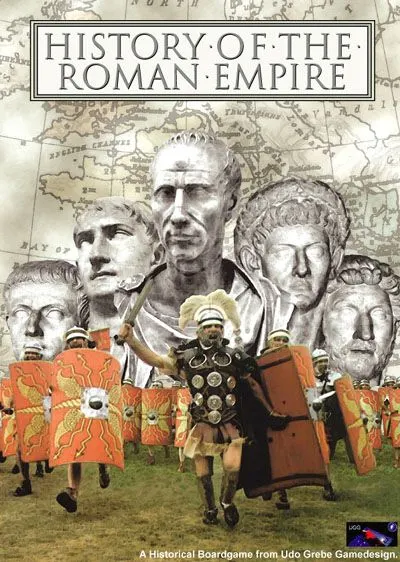
History of the Roman Empire to gra planszowa wydana w 2008 roku dla 2–4 graczy, z rozgrywką trwającą 180 minut i dla osób od 12 lat. Projekt gry: Marco Broglia. Główne mechaniki: Area Movement, Dice Rolling i Area Majority / Influence.


Po angielsku
(From the Publishers Website: P500 production) "The History of the Roman Empire" covers the time-period from the Rise to the Fall of the Roman Empire in seven game turns starting in 60 BC (the first Triumvirate composed of Caesar, Crassus and Pompeus) until the last [Western] Emperor (Romulus Augustus) in 476 AD. The map contains the entire Mediterranean area as well as a part of Asia Minor. Each of the up to four Players takes the role of one Roman Faction and one group of "Barbarian" Peoples (non-Romans), and by playing certain event cards you can gain control over minor Kingdoms. The game is best suited for 4 Players but can be played by 3 or 2 Players as well. Since every Player controls a Roman Faction and a "Barbarian" People it is not possible to completely remove a Player from the Game (The Roman Faction that Player controls can be eliminated but the Barbarians can not). The Game "History of the Roman Empire" is not strictly historic but offers "a great lot of Flavor" with its 42 Roman Emperors (and Pretenders) and the 34 different "Barbarian" Peoples and minor Kingdoms. Since every Player controls Romans as well as Barbarians you will get all kinds of situations like Romans vs. Barbarians, Romans fighting among themselves, or Barbarians fighting other Barbarians. The Emperor for each Roman Faction changes every Game Turn as well as the Barbarian Peoples that the Players control. With its easy to learn rules - players who are familiar with "Hispania", "Britannia" or "History of the World" will find some similarities and some new features - and the constantly changing Barbarians, "The History of the Roman Empire" can be great fun. The Players will have to decide how to use their Roman Legions as well as how to use the armies of their Barbarians and of course where to plan new Cities and Forts (for the Roman Factions). Since it is worth many more Victory Points to control all areas of one color, soon everyone will try to establish his own small empire (and of course to disturb the others), until the more powerful Barbarians like the Goths or the Huns arrive and threaten to take control of the map. Each turn the Roman Factions spend some of their Victory Points on new Legions and/or Forts or Fortresses. The Barbarians do not use their Victory Points for recruiting Units but rather "mobilize" up to a certain number of Armies (how many units depends on the Barbarian People). Every game will present you with new situations since the Players will work on and change their strategies and the 45 random cards will influence every game in a unique way. At the end of the seventh turn, the players total their victory points and determine the winner. Will the Roman Empire rise to Glory or will it be crushed by the overwhelming Barbarians? It's up to YOU…
Według katalogu History of the Roman Empire obsługuje od 2 do 4 graczy. Ten zakres odpowiada liczbie graczy podanej przez wydawcę, więc grę można przygotować dla dowolnej grupy w jego granicach. Przygotowanie, niektóre zasady i punktacja mogą jednak różnić się w zależności od liczby graczy; dokładną konfigurację sprawdź w instrukcji swojego wydania.
Podany czas rozgrywki w History of the Roman Empire wynosi 180 minut. To szacunek wydawcy dla pełnej partii. Rzeczywisty czas zależy od grupy, liczby graczy i znajomości zasad: pierwsze partie zwykle trwają dłużej, a doświadczone grupy kończą szybciej. Przygotowanie gry i tłumaczenie zasad nie są wliczone w ten szacunek.
Katalog podaje dla History of the Roman Empire wiek od 12 lat. To zalecenie wydawcy, które uwzględnia wymagania dotyczące czytania, złożoność zasad i drobne elementy, a nie tylko tematykę. Młodsi gracze często mogą dołączyć z pomocą dorosłego; sprawdź zalecenie wiekowe swojego wydania i weź pod uwagę doświadczenie grupy z grami planszowymi.
History of the Roman Empire ma ocenę złożoności 2,6 na 5 według graczy BoardGameGeek, co czyni ją grą raczej lekką. Ocena pokazuje, ile znajomości zasad, planowania i podejmowania decyzji wymaga typowa rozgrywka. Cięższe gry wymagają dłuższego pierwszego tłumaczenia, dlatego przed wieczorem z grami warto skorzystać z przewodnika przygotowania.
History of the Roman Empire należy do tych kategorii: Wargame, Ancient i Civil War. Główne mechaniki to Area Movement, Dice Rolling i Area Majority / Influence. Kategorie opisują temat i świat gry, a mechaniki to, co gracze faktycznie robią w swojej turze. Każda mechanika prowadzi do strony katalogu z podobnymi grami, co pomaga znaleźć coś porównywalnego na kolejny wieczór.
Autorzy wymienieni przy History of the Roman Empire to: Marco Broglia. Te informacje pochodzą z opublikowanych danych gry i wskazują osoby odpowiedzialne za jej projekt, a nie ilustratorów czy wydawców. Strony autorów w MeepleRules zbierają inne tytuły tych samych twórców, co pomaga, gdy gra ci się podoba i szukasz podobnych.
W katalogu History of the Roman Empire figuruje jako gra podstawowa. Można w nią grać samodzielnie, korzystając z elementów z pudełka, bez żadnego innego tytułu. Dodatki, jeśli istnieją, dokładają nową zawartość lub zasady i są wymienione w katalogu osobno, z odnośnikiem do tej gry podstawowej.