

- Pozycja w BGG
- BGG #2670
- Ocena BGG
- 7,0
Rise and Decline of the Third Reich
- 2–6 graczy
- 240–720 min
- Złożoność 4,3/5
- 1974
1978
Pomoc w zasadach gry Kharkov: The Soviet Spring Offensive, 1942
Zrozumiałe wyjaśnienia tur, efektów kart i spornych sytuacji z odnośnikami do oficjalnych źródeł i zapisaną historią pytań.
Dla 2 graczy
Co chcesz wiedzieć?
Odpowiedzi pochodzą z oficjalnej instrukcji, ze stroną do sprawdzenia.
Kharkov: The Soviet Spring Offensive, 1942 to gra planszowa wydana w 1978 roku dla 2 graczy, z rozgrywką trwającą 240 minut i dla osób od 12 lat. Projekt gry: Stephen B. Patrick. Główne mechaniki: Dice Rolling, Grid Movement i Hexagon Grid.








Po angielsku
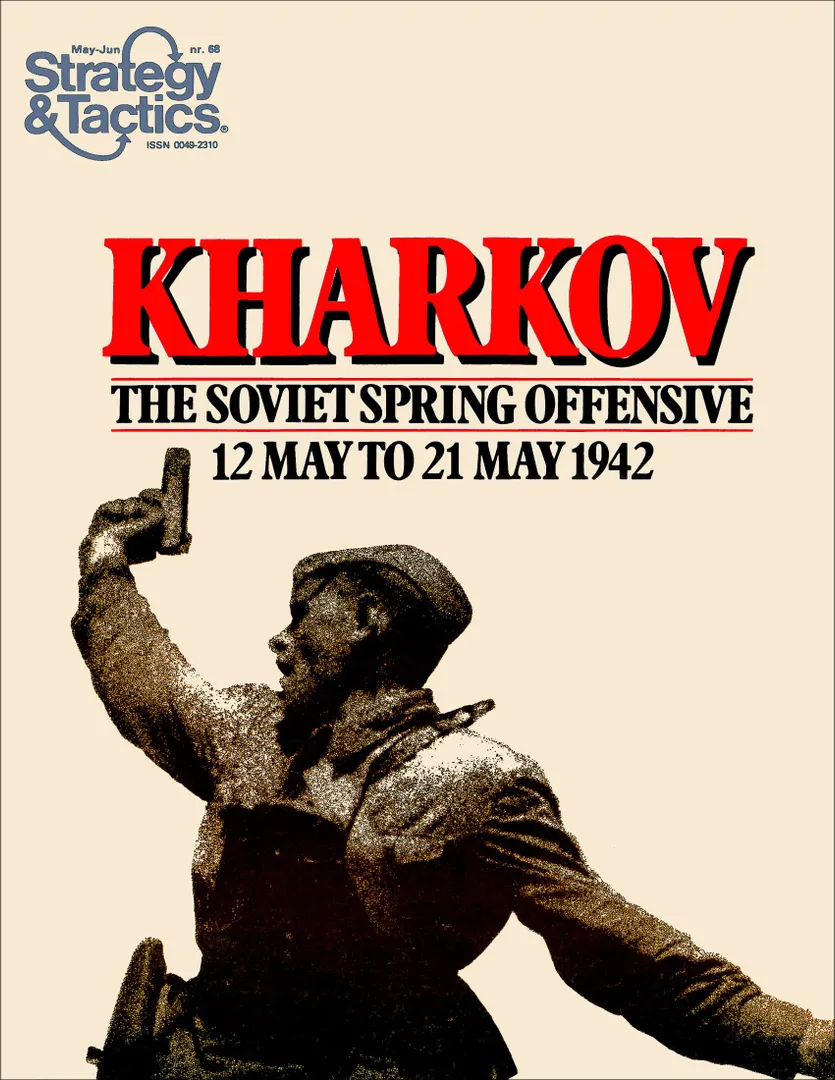
"Kharkov: The Soviet Spring Offensive 12 May to 21 May 1942", is a brigade/Division level simulation of the Spring 1942 Soviet strategic offensive. The Second Battle of Kharkov or Operation Fredericus was an Axis counter-offensive in the region around Kharkov against the Red Army Izium bridgehead offensive conducted 12–28 May 1942, on the Eastern Front during World War II. Its objective was to eliminate the Izium bridgehead over Seversky Donets or the "Barvenkovo bulge" which was one of the Soviet offensive's staging areas. After a winter counter-offensive that drove German troops away from Moscow but depleted the Red Army's reserves, the Kharkov offensive was a new Soviet attempt to expand upon their strategic initiative, although it failed to secure a significant element of surprise. On 12 May 1942, both the Soviet Southwestern and Southern Fronts under the command of Marshal Semyon Timoshenko launched an offensive against the German 6th Army from a salient established during the winter counter-offensive. After a promising start, the offensive was stopped on 15 May by massive airstrikes. Critical Soviet errors by several staff officers and by Joseph Stalin, who failed to accurately estimate the 6th Army's potential and overestimated their own newly raised forces, facilitated a German pincer attack on 17 May which cut off three Soviet field armies from the rest of the front by 22 May. Hemmed into a narrow area, the 250,000-strong Soviet force inside the pocket was exterminated from all sides by German armored, artillery and machine gun firepower as well as 7,700 tonnes of air-dropped bombs. After six days of encirclement, Soviet resistance ended as their troops were killed or taken prisoner. The battle was an overwhelming German victory, with 280,000 Soviet casualties compared to just 20,000 for the Germans and their allies. The German Army Group South pressed its advantage, encircling the Soviet 28th Army on 13 June in Operation Wilhelm and pushing back the 38th and 9th Armies on 22 June in Operation Fridericus II as preliminary operations to Case Blue, which was launched on 28 June as the main German offensive on the Eastern Front in 1942. Kharkov uses the Panzergruppe Guderian system. Situation on the Soviet counter-offensive in Summer 1942. Makes use of untried Soviet units - neither player knows their strength until they enter combat for the first time. Unlike PGG, there are no '0' strength units. Originally published in Strategy & Tactics magazine #68, May/June 1978. Game Scale: Game Turn: 1 day Hex: 4.2 miles / 6.9 Kilometers Units: Regiment to Division Game Inventory: One 22 x 32" four color mapsheet One dual-side printed countersheet (200 1/2" counters) One 8-page rulebook One 6-sided dice Solitaire Playability: Medium Complexity Level: Medium Players: 2 or more Playing Time: 4-15
Według katalogu Kharkov: The Soviet Spring Offensive, 1942 obsługuje 2 graczy. To liczba graczy podana przez wydawcę, więc gra jest zaprojektowana dokładnie dla takiej liczby uczestników. Warianty dla grup innej wielkości, jeśli w ogóle istnieją, opisano w instrukcji twojego wydania; sprawdź ją uważnie, zanim przygotujesz inną konfigurację stołu.
Podany czas rozgrywki w Kharkov: The Soviet Spring Offensive, 1942 wynosi 240 minut. To szacunek wydawcy dla pełnej partii. Rzeczywisty czas zależy od grupy, liczby graczy i znajomości zasad: pierwsze partie zwykle trwają dłużej, a doświadczone grupy kończą szybciej. Przygotowanie gry i tłumaczenie zasad nie są wliczone w ten szacunek.
Katalog podaje dla Kharkov: The Soviet Spring Offensive, 1942 wiek od 12 lat. To zalecenie wydawcy, które uwzględnia wymagania dotyczące czytania, złożoność zasad i drobne elementy, a nie tylko tematykę. Młodsi gracze często mogą dołączyć z pomocą dorosłego; sprawdź zalecenie wiekowe swojego wydania i weź pod uwagę doświadczenie grupy z grami planszowymi.
Kharkov: The Soviet Spring Offensive, 1942 ma ocenę złożoności 2,6 na 5 według graczy BoardGameGeek, co czyni ją grą raczej lekką. Ocena pokazuje, ile znajomości zasad, planowania i podejmowania decyzji wymaga typowa rozgrywka. Cięższe gry wymagają dłuższego pierwszego tłumaczenia, dlatego przed wieczorem z grami warto skorzystać z przewodnika przygotowania.
Kharkov: The Soviet Spring Offensive, 1942 należy do tych kategorii: Wargame i World War II. Główne mechaniki to Dice Rolling, Grid Movement i Hexagon Grid. Kategorie opisują temat i świat gry, a mechaniki to, co gracze faktycznie robią w swojej turze. Każda mechanika prowadzi do strony katalogu z podobnymi grami, co pomaga znaleźć coś porównywalnego na kolejny wieczór.
Autorzy wymienieni przy Kharkov: The Soviet Spring Offensive, 1942 to: Stephen B. Patrick. Te informacje pochodzą z opublikowanych danych gry i wskazują osoby odpowiedzialne za jej projekt, a nie ilustratorów czy wydawców. Strony autorów w MeepleRules zbierają inne tytuły tych samych twórców, co pomaga, gdy gra ci się podoba i szukasz podobnych.
W katalogu Kharkov: The Soviet Spring Offensive, 1942 figuruje jako gra podstawowa. Można w nią grać samodzielnie, korzystając z elementów z pudełka, bez żadnego innego tytułu. Dodatki, jeśli istnieją, dokładają nową zawartość lub zasady i są wymienione w katalogu osobno, z odnośnikiem do tej gry podstawowej.