
- Ocena BGG
- 6,7
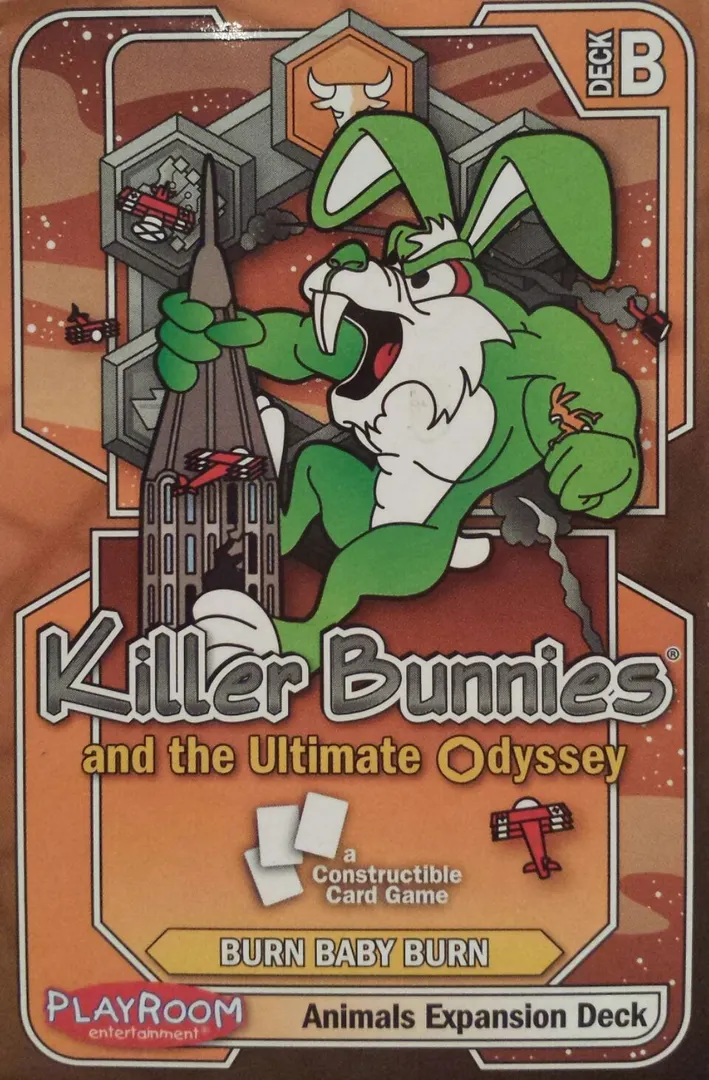
Killer Bunnies and the Ultimate Odyssey: Animals Expansion Deck B
- 2–6 graczy
- 30 min
- 2010

2010
Pomoc w zasadach gry Killer Bunnies and the Ultimate Odyssey
Zrozumiałe wyjaśnienia tur, efektów kart i spornych sytuacji z odnośnikami do oficjalnych źródeł i zapisaną historią pytań.
Co chcesz wiedzieć?
Odpowiedzi pochodzą z oficjalnej instrukcji, ze stroną do sprawdzenia.
Killer Bunnies and the Ultimate Odyssey to gra planszowa wydana w 2010 roku dla 2–6 graczy, z rozgrywką trwającą 30 minut i dla osób od 13 lat. Projekt gry: Jeffrey Neil Bellinger. Główne mechaniki: Hand Management.











Po angielsku
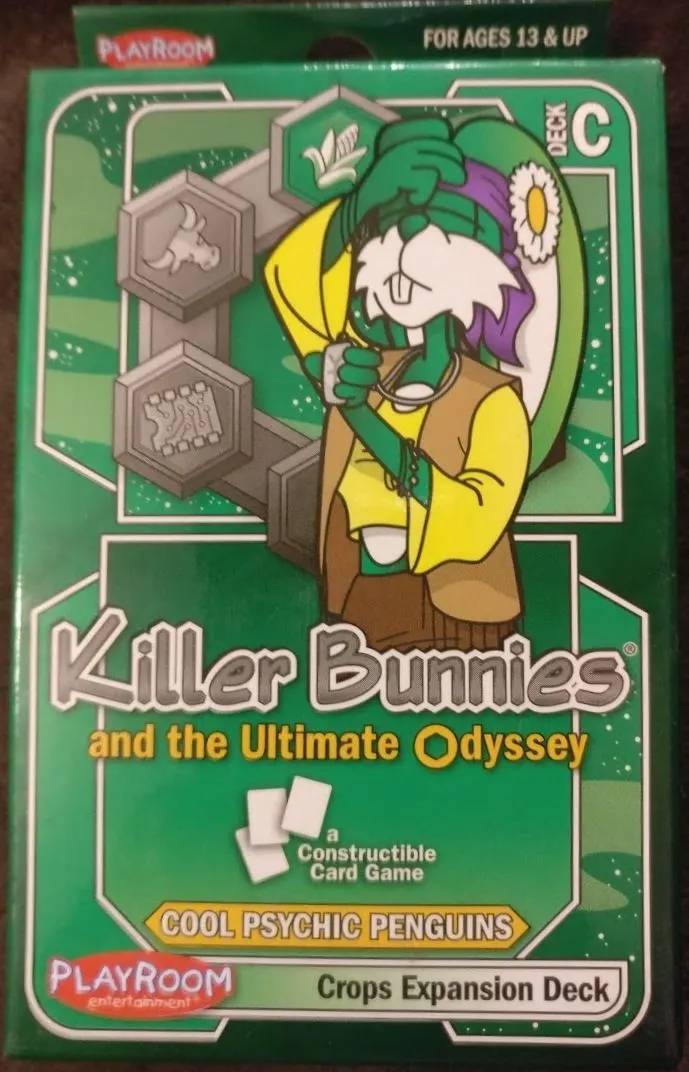
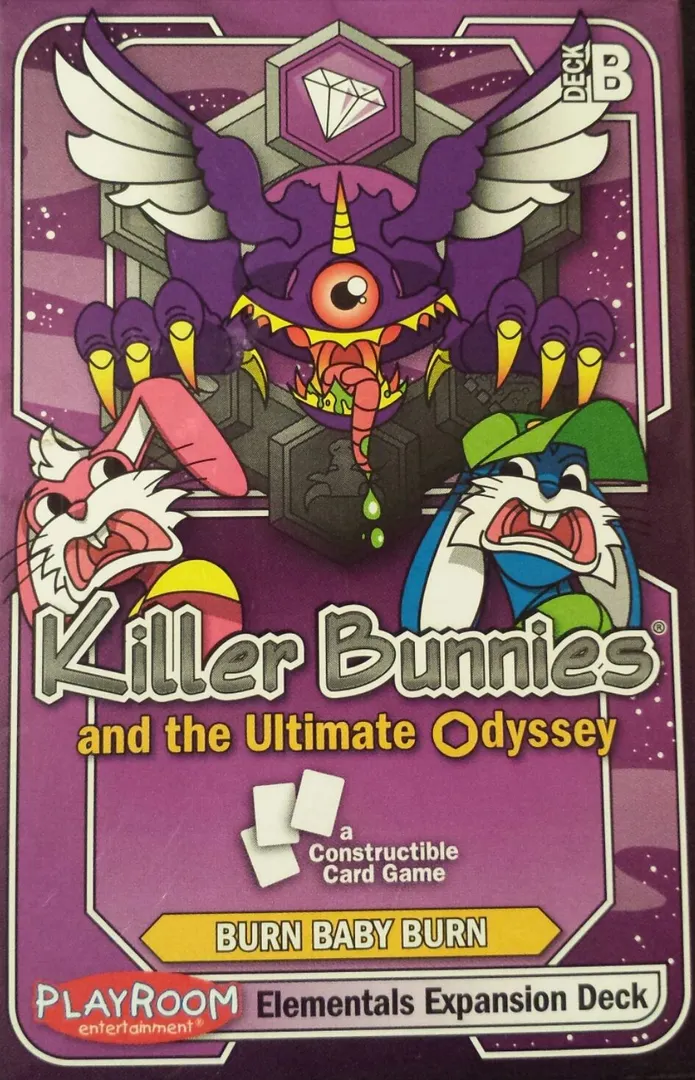
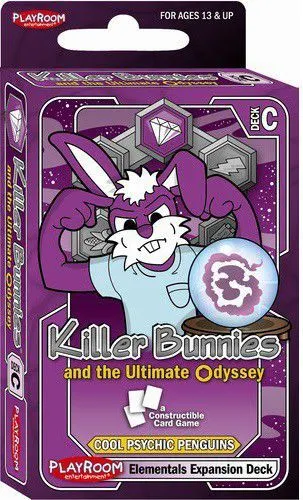
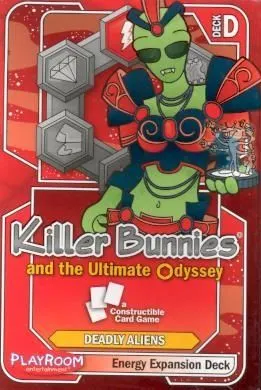
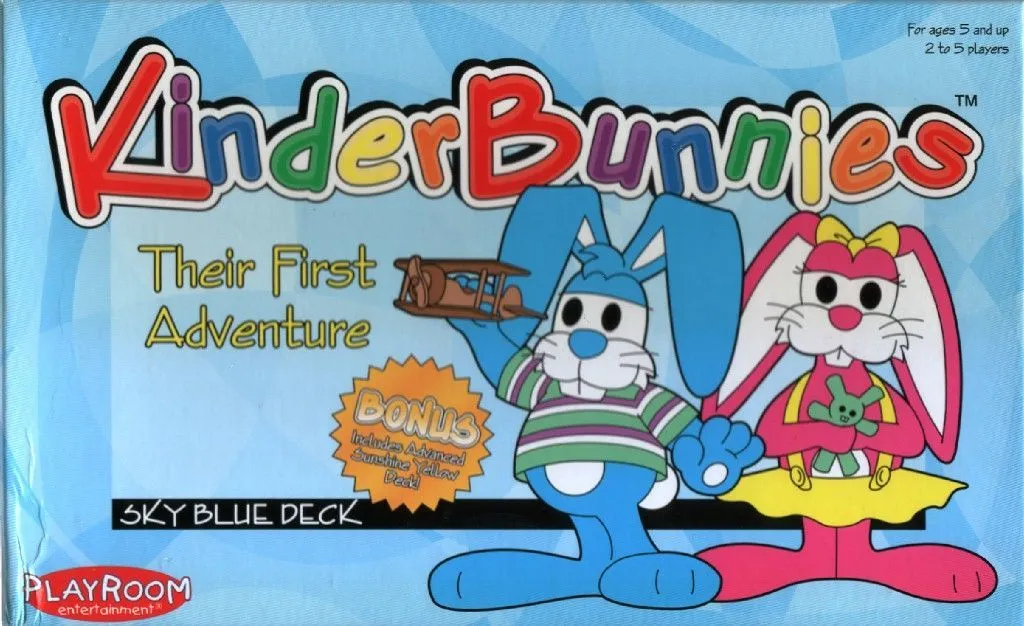
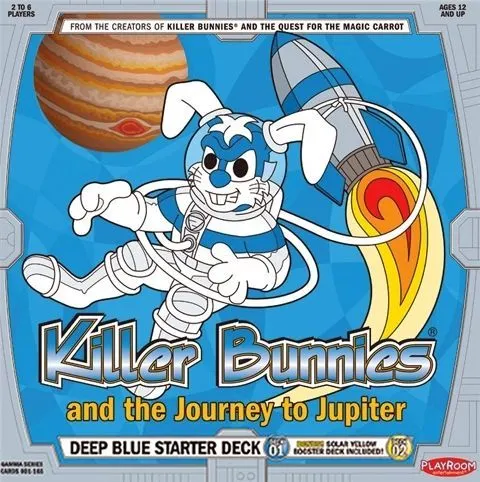
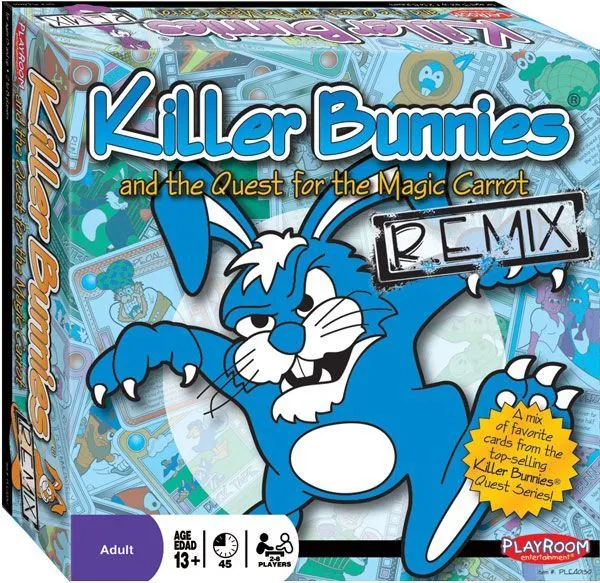
GAME SYSTEM This entry is to allow for discussion/rating of the game system as a whole. It is not for a specific product or release. Versions will appear on the individual item pages. Killer Bunnies and the Ultimate Odyssey is a new take on the collectible non-collectible KB line, with Jeffrey Neil Bellinger once again putting the rabbits through the grinder. Six new starter decks Animals, Crops, Elementals, Energy, Land and Technology will be available, and players can construct personalized decks of no less than 60 cards, with the cards from any deck. When the insatiable appetite of Killer Bunnies game fans demanded more, Playroom looked to Killer Bunnies creator and game designer Jeffrey Neil Bellinger to coordinate the development of, like other games in the Killer Bunnies family, a non-collectible game that can offer variations through different color nick-named deck options. However, this time a new desire expressed by the huge Killer Bunnies fan-base has been fulfilled: Killer Bunnies now has a constructable game variation. Though still not collectible or random, players can now buy starter decks and booster expansions for Killer Bunnies and the Ultimate Odyssey and then use any combination of those cards to form their own constructed decks to play against opponents. Unlike in Killer Bunnies and the Quest for the Magic Carrot, where up to eight players play with the same deck of cards, all sharing the same draw pile, Killer Bunnies and the Ultimate Odyssey has players each draw only from their own constructed deck of 60 cards. There are not any random packs, so players will always know which cards they are purchasing in a deck and they can buy the right products for their planned deck. For Killer Bunnies and the Ultimate Odyssey six brand new starter decks (red, violet, blue, yellow, green, or orange) allow players to construct a personalized deck with any of the cards of any deck. The setting for the new game is an ultimate race to build a bunny society on planet Earth. Killer Bunnies and the Ultimate Odyssey pits players against each other as they struggle to gain Civilization Points, by building cities and increasing their bunny populations. Players gain points by developing their own civilizations or by using zany weapons and hilarious scenarios to destroy their opponents. Killer Bunnies and the Ultimate Odyssey is the latest in the family of Killer Bunnies games which features, Killer Bunnies and the Quest for the Magic Carrot, Killer Bunnies and the Quest for the Magic Carrot: Remix, Kinder Bunnies: Their First Adventure and Killer Bunnies and the Journey to Jupiter. In addition to individual starter decks (A-decks) and expansion decks (B-, C-, D- and E-decks), the following products are offered. Each of the combination decks come with a promo card for each deck included. Heroic and Azoic (Violet, Red, and Blue A-decks) Lively and Spry (Green, Orange, and Yellow A-decks) Elementals vs. Animals (Violet and Orange A- and B-decks) Energy vs. Crops (Red and Green A- and C-decks) Technology vs. Land (Blue and Yellow A- and D-decks) Killer Bunnies: Heroes vs. Villains – Blue Starter Deck includes (in fact, consists of) the Blue, Green, and Yellow E-decks.
Według katalogu Killer Bunnies and the Ultimate Odyssey obsługuje od 2 do 6 graczy. Ten zakres odpowiada liczbie graczy podanej przez wydawcę, więc grę można przygotować dla dowolnej grupy w jego granicach. Przygotowanie, niektóre zasady i punktacja mogą jednak różnić się w zależności od liczby graczy; dokładną konfigurację sprawdź w instrukcji swojego wydania.
Podany czas rozgrywki w Killer Bunnies and the Ultimate Odyssey wynosi 30 minut. To szacunek wydawcy dla pełnej partii. Rzeczywisty czas zależy od grupy, liczby graczy i znajomości zasad: pierwsze partie zwykle trwają dłużej, a doświadczone grupy kończą szybciej. Przygotowanie gry i tłumaczenie zasad nie są wliczone w ten szacunek.
Katalog podaje dla Killer Bunnies and the Ultimate Odyssey wiek od 13 lat. To zalecenie wydawcy, które uwzględnia wymagania dotyczące czytania, złożoność zasad i drobne elementy, a nie tylko tematykę. Młodsi gracze często mogą dołączyć z pomocą dorosłego; sprawdź zalecenie wiekowe swojego wydania i weź pod uwagę doświadczenie grupy z grami planszowymi.
Killer Bunnies and the Ultimate Odyssey ma ocenę złożoności 1,2 na 5 według graczy BoardGameGeek, co czyni ją grą lekką. Ocena pokazuje, ile znajomości zasad, planowania i podejmowania decyzji wymaga typowa rozgrywka. Cięższe gry wymagają dłuższego pierwszego tłumaczenia, dlatego przed wieczorem z grami warto skorzystać z przewodnika przygotowania.
Killer Bunnies and the Ultimate Odyssey należy do tych kategorii: Card Game, Humor i Dice. Główne mechaniki to Hand Management. Kategorie opisują temat i świat gry, a mechaniki to, co gracze faktycznie robią w swojej turze. Każda mechanika prowadzi do strony katalogu z podobnymi grami, co pomaga znaleźć coś porównywalnego na kolejny wieczór.
Autorzy wymienieni przy Killer Bunnies and the Ultimate Odyssey to: Jeffrey Neil Bellinger. Te informacje pochodzą z opublikowanych danych gry i wskazują osoby odpowiedzialne za jej projekt, a nie ilustratorów czy wydawców. Strony autorów w MeepleRules zbierają inne tytuły tych samych twórców, co pomaga, gdy gra ci się podoba i szukasz podobnych.
W katalogu Killer Bunnies and the Ultimate Odyssey figuruje jako gra podstawowa. Można w nią grać samodzielnie, korzystając z elementów z pudełka, bez żadnego innego tytułu. Dodatki, jeśli istnieją, dokładają nową zawartość lub zasady i są wymienione w katalogu osobno, z odnośnikiem do tej gry podstawowej.