
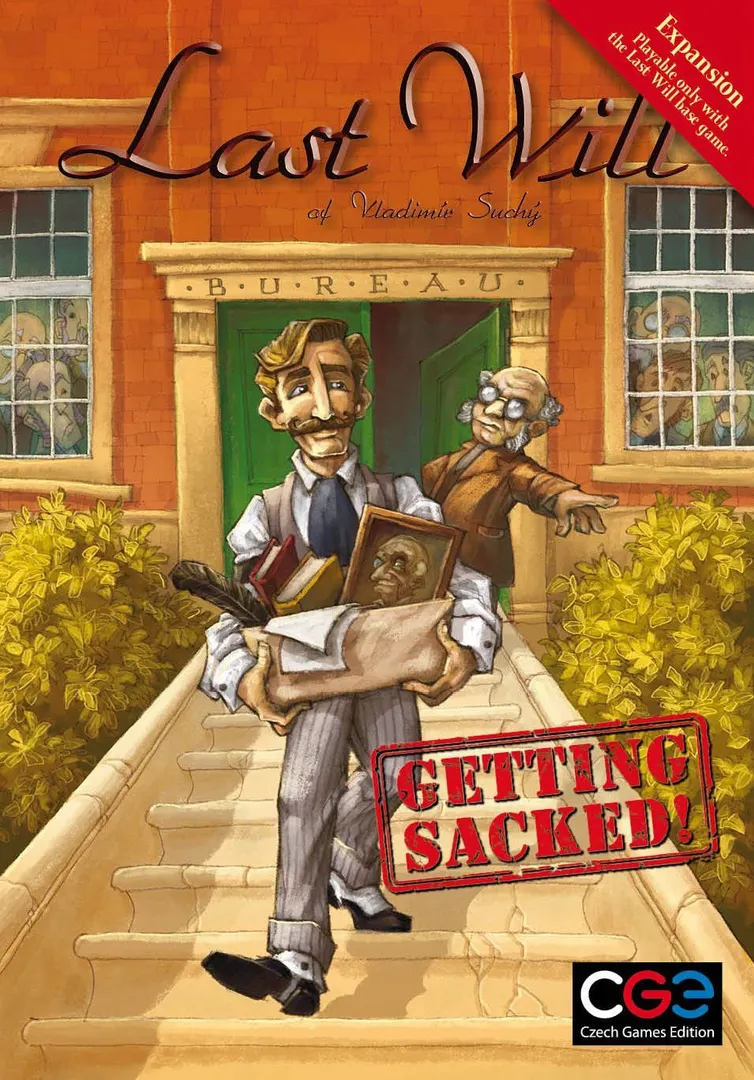
- Ocena BGG
- 7,5
Last Will: Getting Sacked
- 2–5 graczy
- 45–75 min
- Złożoność 2,7/5
- 2013
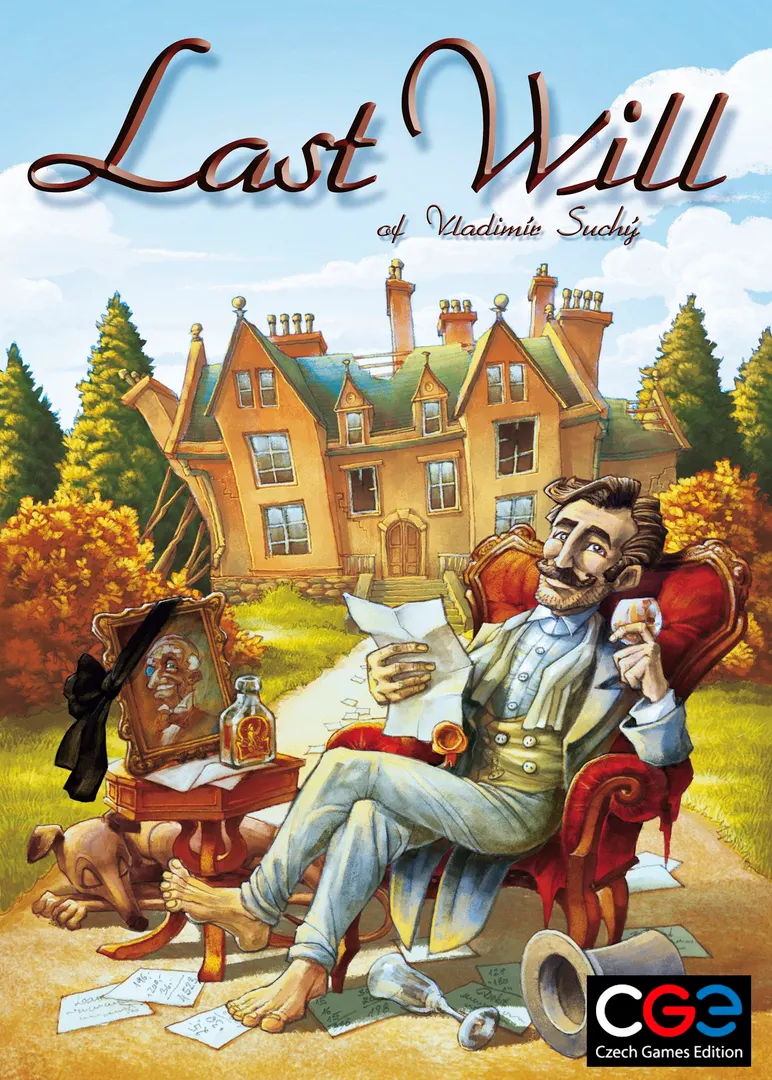
2011
Pomoc w zasadach gry Last Will
Zrozumiałe wyjaśnienia tur, efektów kart i spornych sytuacji z odnośnikami do oficjalnych źródeł i zapisaną historią pytań.
Dla 2 graczy
Co chcesz wiedzieć?
Odpowiedzi pochodzą z oficjalnej instrukcji, ze stroną do sprawdzenia.
Last Will to gra planszowa wydana w 2011 roku dla 2–5 graczy, z rozgrywką trwającą 45–75 minut i dla osób od 14 lat. Projekt gry: Vladimír Suchý. Główne mechaniki: Hand Management, Action Points i Worker Placement.








Po angielsku
In his last will, your rich uncle stated that all of his millions will go to the nephew who can enjoy money the most. How to find out which nephew should be rich? You will each be given a large amount of money and whoever can spend it first will be the rightful heir. Visit the most exclusive theatres or eat in the most expensive restaurants. Buy old properties for the price of new ones and sell them as ruins. Host a huge party in your mansion or on your private boat. Spend like your life would depend on it. Spend to become rich! If you're the first to run through the money on hand, you'll receive the rest of his inheritance – oh, and win the game. In Last Will, each player starts with a certain amount of money, an individual player board, two errand boys and two cards in some combination of properties and helpers. At the start of each round, lay out cards from the appropriate decks on the offering boards; the four regular decks are properties, companions, events, helpers and expenses, with special cards forming a deck of their own. The particular mix of cards varies by round and by the number of players. Each player then chooses a plan for the round, with each plan indicating the number of cards the player draws (drawn immediately from the four regular decks in any combination), how many errand boys he can use later (one or two), the number of actions available to him that round, and his spot in the playing order that round. In the playing order for that round, players then take turns choosing an action with their errand boy(s), with those actions being: Take a card on display and add it to your hand. Draw a card from any regular deck – This can be chosen only once by each player. Visit the opera and spend $2. Adjust the value modifiers in the property market. Take a player board extension, thereby giving you room to play more cards. Players then take actions in the playing order for that round, with each player having as many actions as indicated on his plan. Actions let you play one-time events (which have a cost, possibly variable); helpers and recurring expenses (which are placed on your individual player board); and properties (which cost money and may depreciate over time). You can often play companions with events or recurring expenses – of course you should bring a date to the opera or a horse on your yacht! – to increase their cost. You can also use actions to activate cards on your player board, possibly with one or more companions and always with the goal of spending money. Helpers and special cards can provide you with unique powers to further boost your profligacy. At the end of each round, you must discard down to two cards in hand, and properties that can depreciate do so; this is good as a player cannot go bankrupt if he owns properties, and the only way to get rid of properties is to sell them, which regretably puts money back in your hands unless the depreciation was intense or you manipulate the market. If a player has no money and no properties, he declares bankruptcy and the game ends at the conclusion of that round; otherwise the game ends after seven rounds. The player who has the least money (or even who is most in debt) wins.
Według katalogu Last Will obsługuje od 2 do 5 graczy. Ten zakres odpowiada liczbie graczy podanej przez wydawcę, więc grę można przygotować dla dowolnej grupy w jego granicach. Przygotowanie, niektóre zasady i punktacja mogą jednak różnić się w zależności od liczby graczy; dokładną konfigurację sprawdź w instrukcji swojego wydania.
Podany czas rozgrywki w Last Will wynosi 45–75 minut. To szacunek wydawcy dla pełnej partii. Rzeczywisty czas zależy od grupy, liczby graczy i znajomości zasad: pierwsze partie zwykle trwają dłużej, a doświadczone grupy kończą szybciej. Przygotowanie gry i tłumaczenie zasad nie są wliczone w ten szacunek.
Katalog podaje dla Last Will wiek od 14 lat. To zalecenie wydawcy, które uwzględnia wymagania dotyczące czytania, złożoność zasad i drobne elementy, a nie tylko tematykę. Młodsi gracze często mogą dołączyć z pomocą dorosłego; sprawdź zalecenie wiekowe swojego wydania i weź pod uwagę doświadczenie grupy z grami planszowymi.
Last Will ma ocenę złożoności 2,7 na 5 według graczy BoardGameGeek, co czyni ją grą raczej lekką. Ocena pokazuje, ile znajomości zasad, planowania i podejmowania decyzji wymaga typowa rozgrywka. Cięższe gry wymagają dłuższego pierwszego tłumaczenia, dlatego przed wieczorem z grami warto skorzystać z przewodnika przygotowania.
Last Will należy do tych kategorii: Card Game, Humor i Economic. Główne mechaniki to Hand Management, Action Points i Worker Placement. Kategorie opisują temat i świat gry, a mechaniki to, co gracze faktycznie robią w swojej turze. Każda mechanika prowadzi do strony katalogu z podobnymi grami, co pomaga znaleźć coś porównywalnego na kolejny wieczór.
Autorzy wymienieni przy Last Will to: Vladimír Suchý. Te informacje pochodzą z opublikowanych danych gry i wskazują osoby odpowiedzialne za jej projekt, a nie ilustratorów czy wydawców. Strony autorów w MeepleRules zbierają inne tytuły tych samych twórców, co pomaga, gdy gra ci się podoba i szukasz podobnych.
W katalogu Last Will figuruje jako gra podstawowa. Można w nią grać samodzielnie, korzystając z elementów z pudełka, bez żadnego innego tytułu. Dodatki, jeśli istnieją, dokładają nową zawartość lub zasady i są wymienione w katalogu osobno, z odnośnikiem do tej gry podstawowej.