
- Ocena BGG
- 7,1
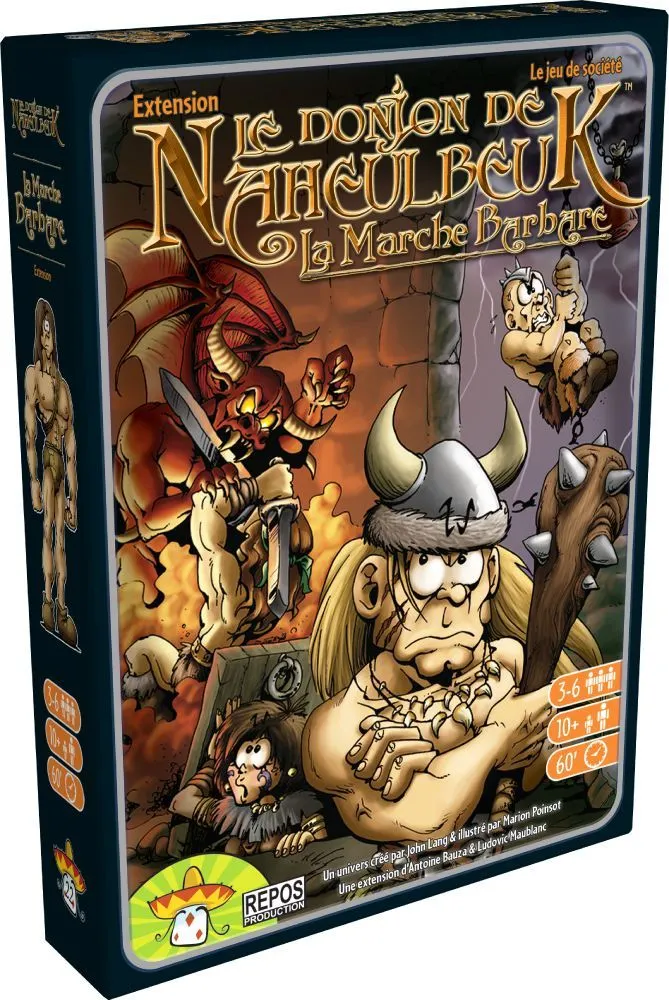
Le Donjon de Naheulbeuk: La marche Barbare
- 3–6 graczy
- 60 min
- Złożoność 1,0/5
- 2012
2010
Pomoc w zasadach gry Le Donjon de Naheulbeuk
Zrozumiałe wyjaśnienia tur, efektów kart i spornych sytuacji z odnośnikami do oficjalnych źródeł i zapisaną historią pytań.
Dla 3 graczy
Co chcesz wiedzieć?
Odpowiedzi pochodzą z oficjalnej instrukcji, ze stroną do sprawdzenia.
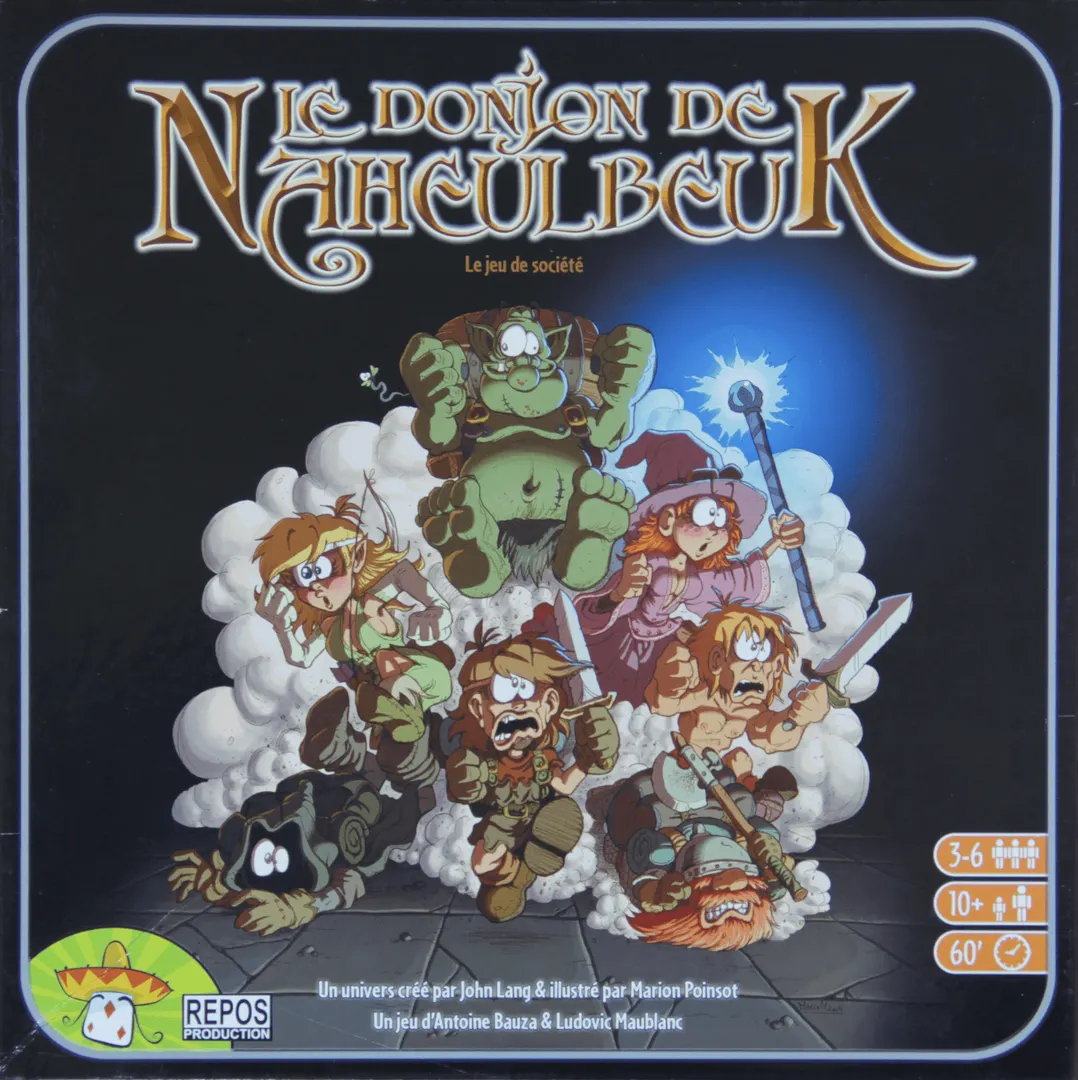
Le Donjon de Naheulbeuk to gra planszowa wydana w 2010 roku dla 3–6 graczy, z rozgrywką trwającą 60 minut i dla osób od 10 lat. Projekt gry: Antoine Bauza i Ludovic Maublanc. Główne mechaniki: Variable Player Powers i Cooperative Game.

Po angielsku
"Le Donjon de Naheulbeuk" is a cooperative game in which the players try to recover the last of Gladeulfeurha's statuettes. Players embody adventurers in this dungeon-crawling quest, each with a different class, skill and personality: there're the stupid barbarian, the belching ogre, the haughty sorceress, the dumb elf, the coward thief, the ever-singing bard, the cranky dwarf and the ranger who wishes he were a leader… (all the characters and elements of the game are inspired by the audio and comics saga by the same name, parodies of Fantasy RPG — à la Munchkin). In each game, the group must go through 14 of the 56 available dungeon rooms in order to defeat the powerful sorcerer Zangdar. In every room, players will face choices, skill checks or battles, and maybe rewards (as xp, gold or loot cards) There're 8 kind of skill checks, and each checks can slightly differ from the others of the same kind (number of players involved, special rule, etc.). Most of the skill checks use Destiny Tiles (which are 16 thick cards, which also represents monsters) and a special timer (with 3 difficulty levels) Balance Check: the player must put a Destiny Tile on the top of his head, walk/run around and sit down again without letting the tile fall. Climbing Check: the player must put a Destiny Tile on the top of his head, stand up on his chair, then sit down again without letting the tile fall. Dexterity Check: the player must build a house of cards using Destiny Tiles. Speed Check: the player must put a Destiny Tile on the edge of the table, then slap it up the air and catch it before it falls back down. Precision Check: a player stands 3 steps from the table, holding the game box, and the others must throw Destiny Tiles into the box from the other side of the table. Intelligence Check: players play a memory game with the 16 Destiny Tiles Coordination Check: players stands a step from the table, and must circle all the Destiny Tiles around the table, throwing them from one player to the next. Stamina Check: the player must stand on one leg, with a Destiny Tile on his other knee and another one on both of his forefingers, without dropping down either one. The battles are also timed and are played with Letter Cards, that can be exchanged one by one between 2 players. They are used to spell special words (several different words for each character) as blows to the enemy. Every time a player plays cards to spell a word, he draw 3 new cards and keep on playing. At the end of the battle, if there're enough blows, the enemy is defeated. For instance, the sorceress can cast a spell by spelling "wazaaa" with any number of a's at the end, wounding the enemy for every extra a's. The barbarian can misspell a letter in each of his word. The bard and the ranger can make other players draw cards. And so on… For every 3 cards played with a punch symbol on it, a player takes one wound him/herself. Using gold and/or xp, characters can level up (up to level 3) and gain access to more powerful attacks or skills. The party can rest up to 3 times a game to recover from one wound each. If a player dies, he shuffles his character sheet with the other available sheets and pick one : if it's the same, he recovers all his health and keep all his loot, gold and xp; if it's another one, he dies, loses everything, and continues the game as a totally new character. If the players defeat Zangdar the Sorcerer in the 14th room (4 tiles with different rules so every game doesn't end the same way), they win the game.
Według katalogu Le Donjon de Naheulbeuk obsługuje od 3 do 6 graczy. Ten zakres odpowiada liczbie graczy podanej przez wydawcę, więc grę można przygotować dla dowolnej grupy w jego granicach. Przygotowanie, niektóre zasady i punktacja mogą jednak różnić się w zależności od liczby graczy; dokładną konfigurację sprawdź w instrukcji swojego wydania.
Podany czas rozgrywki w Le Donjon de Naheulbeuk wynosi 60 minut. To szacunek wydawcy dla pełnej partii. Rzeczywisty czas zależy od grupy, liczby graczy i znajomości zasad: pierwsze partie zwykle trwają dłużej, a doświadczone grupy kończą szybciej. Przygotowanie gry i tłumaczenie zasad nie są wliczone w ten szacunek.
Katalog podaje dla Le Donjon de Naheulbeuk wiek od 10 lat. To zalecenie wydawcy, które uwzględnia wymagania dotyczące czytania, złożoność zasad i drobne elementy, a nie tylko tematykę. Młodsi gracze często mogą dołączyć z pomocą dorosłego; sprawdź zalecenie wiekowe swojego wydania i weź pod uwagę doświadczenie grupy z grami planszowymi.
Le Donjon de Naheulbeuk ma ocenę złożoności 1,8 na 5 według graczy BoardGameGeek, co czyni ją grą lekką. Ocena pokazuje, ile znajomości zasad, planowania i podejmowania decyzji wymaga typowa rozgrywka. Cięższe gry wymagają dłuższego pierwszego tłumaczenia, dlatego przed wieczorem z grami warto skorzystać z przewodnika przygotowania.
Le Donjon de Naheulbeuk należy do tych kategorii: Fantasy, Humor i Comic Book / Strip. Główne mechaniki to Variable Player Powers i Cooperative Game. Kategorie opisują temat i świat gry, a mechaniki to, co gracze faktycznie robią w swojej turze. Każda mechanika prowadzi do strony katalogu z podobnymi grami, co pomaga znaleźć coś porównywalnego na kolejny wieczór.
Autorzy wymienieni przy Le Donjon de Naheulbeuk to: Antoine Bauza i Ludovic Maublanc. Te informacje pochodzą z opublikowanych danych gry i wskazują osoby odpowiedzialne za jej projekt, a nie ilustratorów czy wydawców. Strony autorów w MeepleRules zbierają inne tytuły tych samych twórców, co pomaga, gdy gra ci się podoba i szukasz podobnych.
W katalogu Le Donjon de Naheulbeuk figuruje jako gra podstawowa. Można w nią grać samodzielnie, korzystając z elementów z pudełka, bez żadnego innego tytułu. Dodatki, jeśli istnieją, dokładają nową zawartość lub zasady i są wymienione w katalogu osobno, z odnośnikiem do tej gry podstawowej.